De Voogt Naval Architects
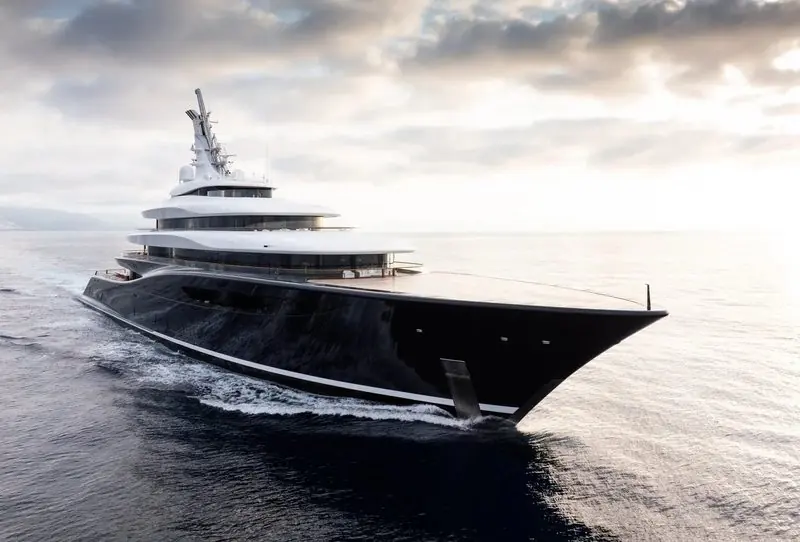
| Gründer | Henri de Voogt |
|---|---|
| Ursprünge | 1913, Feadship 1949 gegründet |
| Sitz | Niederlande (Raum Haarlem) |
| Team | rund 180 Personen |
| Disziplin | Konstruktion und Technik |
| Rolle | Gestaltungs- und Konstruktionszentrum für jede Feadship |
| Prägende Yachten | Anna (110 m), Symphony (101,5 m), Savannah (83,5 m) |
| Disciplines | naval architecture and engineering, plus exterior design on more than half the Feadship fleet |
| Largest Feadship | Breakthrough, 118.8 m, launched May 2024, with exterior and interior by RWD |
| Anna, 110 m, delivered 5 October 2018 and listed since as Ambassador: De Voogt naval architecture under a Michael Leach Design exterior | |
| Savannah, 83.5 m, 2015 | exterior by De Voogt with CG Design, and Feadship's first hybrid yacht |
| Savannah's package | one medium-speed main engine on a single centreline shaft, three generators, batteries and a contra-rotating azimuthing stern thruster, with a claimed 30 per cent fuel saving |
| No separate design fee. The naval architecture is inside the Feadship build price and is not negotiated by the owner | |
| The owner still appoints and pays the exterior and interior studios himself, at a market band of 1 to 5 per cent of build cost for a designer, plus 2 to 4 per cent for project management, both outside the yard price (SuperYachtReview 2026 price guide, updated March 2026) | |
| Ocean Independence names Feadship first among the Northern European yards that hold market confidence on build quality, engineering pedigree and long-term support (11 May 2026) | |
Ein Jahrhundert niederländischer Konstruktion
Das Studio führt seine Ursprünge auf 1913 zurück, als der Konstrukteur Henri de Voogt in den Niederlanden sein eigenes Büro gründete. Zwischen den Kriegen baute er seinen Ruf mit großen Motoryachten auf, darunter eine 54 Meter lange Yacht, die 1936 an den Schah von Persien abgeliefert wurde. 1949 half De Voogt, Feadship zu gründen, einen Exportverbund der Werften Royal Van Lent und De Vries. Das Konstruktionsbüro trägt diese Partnerschaft seither. Diese Größe spiegelt die technische Tiefe, die eine moderne Feadship heute verlangt.
Heute ist De Voogt Naval Architects ein großes Team aus Designern, Konstrukteuren und Ingenieuren mit Sitz in den Niederlanden. Es liefert Konstruktion und Technik für jede Feadship-Yacht. Diese Rolle stellt es in das technische Zentrum eines der angesehensten Namen im Yachtbau. Das Studio ist auf rund 180 Personen gewachsen. Die Arbeit des Studios entscheidet darüber, wie leise und effizient sich eine Yacht bewegt, bevor irgendjemand das Interieur sieht.
Zuerst die Technik
Die Disziplin von De Voogt ist die Konstruktion, die Wissenschaft vom Rumpf, seiner Struktur, seiner Stabilität und seinem Verhalten auf See. Das Studio entwirft Rümpfe, die effizient und leise sind und den strengsten Klasse- und Sicherheitsvorschriften genügen. Seine Arbeit bleibt Gästen oft unsichtbar, bestimmt aber, wie eine Yacht sich bewährt. Solide Technik ist das Fundament, auf dem jede Feadship gebaut wird. Die Konstruktion richtig hinzubekommen ist der schwierigste und am wenigsten sichtbare Teil des Yachtbaus.
Das Büro entwickelt häufig die Konstruktion, während ein externer Stylist das Profil über der Wasserlinie formt. Es ist in dieser unterstützenden Rolle zu Hause und stellt die Plattform für das Exterieur eines anderen Designers. Auf vielen Yachten trägt es auch zu Exterieur und Generalplan bei. Seine oberste Sorge gilt stets einem Schiff, das auf See makellos funktioniert. Das Büro stellt bereitwillig die Plattform, auf der das Profil eines anderen Designers sitzen kann.
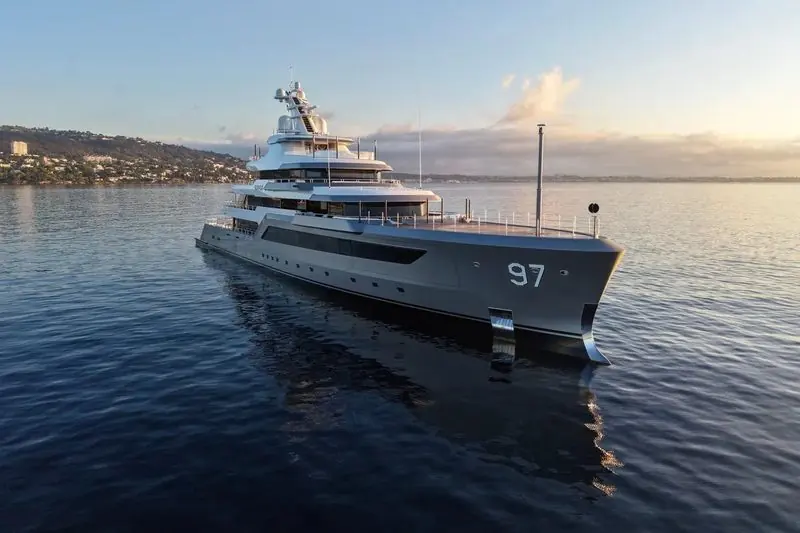
Das hundertjährige technische Rückgrat hinter jeder Feadship-Yacht.
Anna, Symphony und Savannah
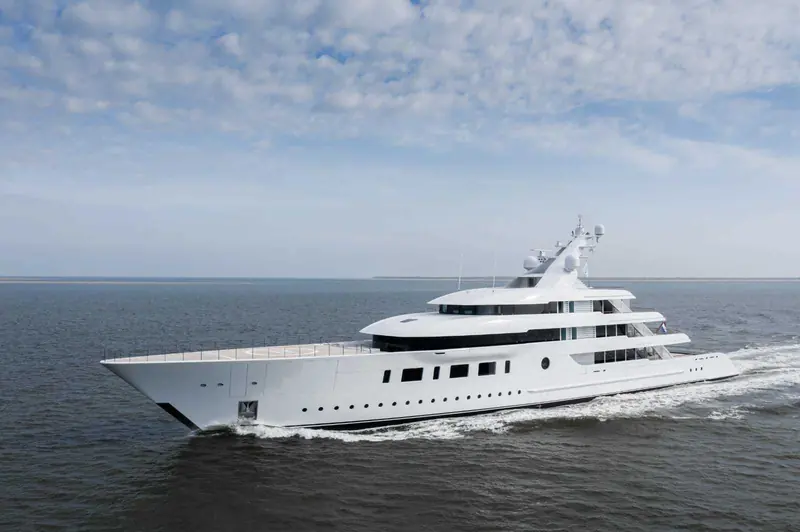
Die 110 Meter lange Anna ist die größte Yacht, die Feadship je abgeliefert hat, mit De Voogt verantwortlich für die Konstruktion. Die 101,5 Meter lange Symphony hielt diesen Rekord vor ihr und stützte sich ebenfalls auf die Technik von De Voogt, mit einem Exterieur von Tim Heywood. Die 83,5 Meter lange Savannah betrat als frühe Yacht mit Hybridantrieb Neuland, erneut mit einer Konstruktion von De Voogt. Jede zeigt das Studio an der Grenze von Größe oder Technologie. Es sind Punkte auf einer langen Kurve stetigen Fortschritts und keine Einzelleistungen.
Diese Yachten stehen in einer langen Reihe von Feadships, die dasselbe Büro über viele Jahrzehnte geformt hat. Die Technik des Studios hat Rekordgrößen und wegweisende Antriebe gleichermaßen ermöglicht. Seine Beständigkeit über Generationen von Yachten hinweg ist bemerkenswert. Der Name De Voogt steht hinter einer Flotte, die den niederländischen Yachtbau bestimmt. Generation um Generation von Feadships hat sich auf dasselbe Konstruktionsbüro gestützt.
Im System von Feadship
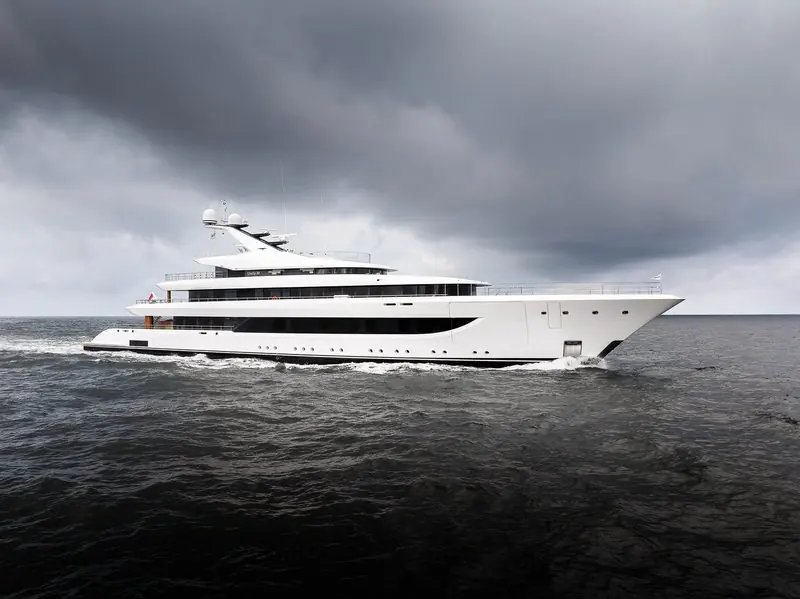
De Voogt arbeitet nicht als unabhängiges Studio zur freien Beauftragung, wie es die meisten Namen hier tun. Es ist das gemeinsame Gestaltungs- und Konstruktionszentrum für die beiden Bauwerften von Feadship. Diese Verzahnung bedeutet, dass die Konstrukteure nah bei den Menschen sitzen, die die Yachten bauen. Es ist ein seltenes Modell von Designer und Werft unter einem Dach. Diese Nähe zwischen Zeichenbüro und Werkhalle trägt einen großen Teil der Qualität von Feadship.
Das Büro arbeitet oft mit führenden Exterieur- und Interieurstudios zusammen, die der Eigner ausgewählt hat. Es stellt das technische Rückgrat, während jene Studios formen, was Eigner sehen. Diese Arbeitsteilung hat viele der meistbewunderten Yachten auf dem Wasser hervorgebracht. Das System hängt davon ab, dass De Voogt die Grundlagen richtig löst. Die berühmten Exterieurs funktionieren nur, weil die Plattform darunter solide ist.
Das Rückgrat von Feadship
Der Rang von De Voogt ist vom Ruf Feadships für Qualität nicht zu trennen. Das Jahrhundert an Konstruktionsarbeit des Studios ist eine der längsten Bilanzen im Fach. Seine Technik trägt Yachten, die weithin als die bestgebauten überhaupt gelten. Diese stille Autorität ist sein Kennzeichen. Seine Linie zurück bis 1913 gehört zu den längsten ununterbrochenen Bilanzen der Branche.
Das Büro treibt Größe und Effizienz mit jeder neuen Feadship weiter. Seine Rolle als technisches Herz der Werft hält es zentral für den niederländischen Yachtbau. Nur wenige Studios können eine so lange und ununterbrochene Linie für sich beanspruchen. De Voogt ist das Rückgrat einer der großen Yachtwerften. Jeder neue Stapellauf fügt einem über mehr als ein Jahrhundert aufgebauten Werk an Konstruktionsarbeit etwas hinzu.
Breakthrough
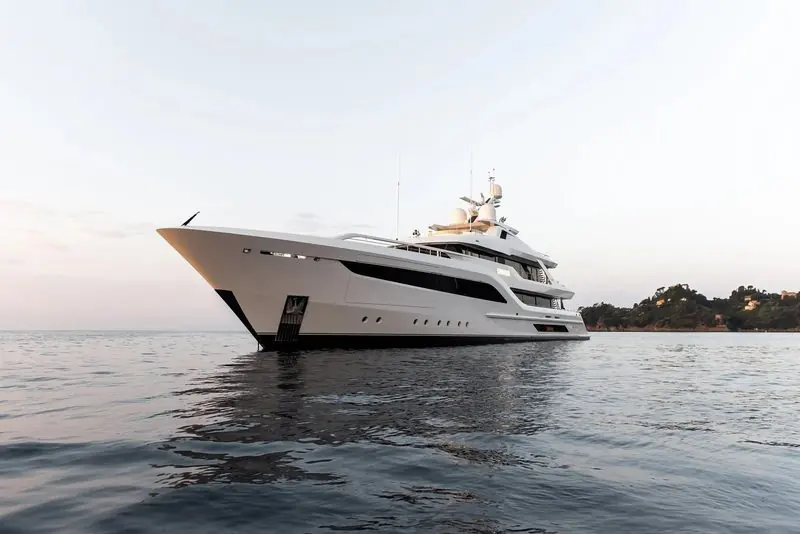
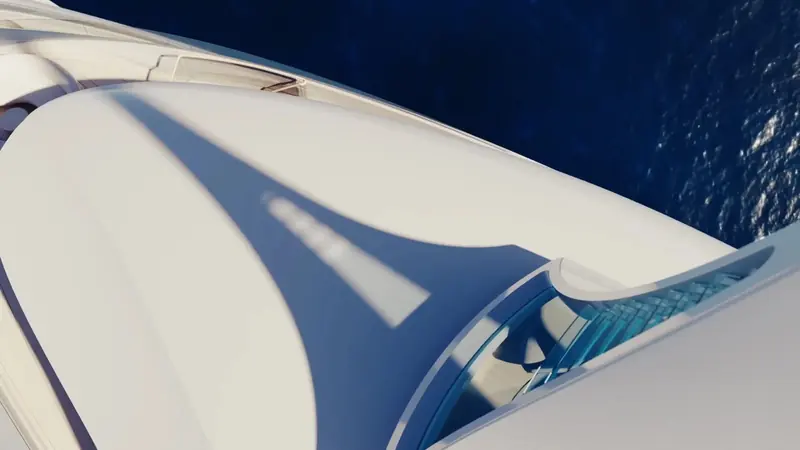
Feadship launched Breakthrough on 4 May 2024 at 118.8 metres and 7,247 GT, taking the yard's size record from Anna and becoming the largest superyacht ever launched in the Netherlands. RWD drew both the exterior and the interior. Her power comes from a 3.2 megawatt fuel-cell system running on cryogenic liquid hydrogen, with a hybrid arrangement allowing conventional diesel-electric operation as well.
The engineering problem was not the fuel cells. It was the hydrogen, which has to be stored at minus 253 degrees Celsius and occupies far more volume than diesel for the same energy, inside a hull that also had to carry fourteen balconies and seven unfolding platforms. Getting that arrangement past a classification society with no precedent to point at is naval architecture in its purest form. Five years of development went into it.
Where the naval architect's responsibility begins and ends
An owner should be clear about what this office guarantees. Speed, range, fuel consumption, noise and vibration levels and sea-keeping behaviour are the numbers that live in a build contract, and they rest on the naval architecture. Interior joinery, artwork and finish do not. If a yacht is loud at 12 knots or wet in a following sea, that is a hull and systems problem and the responsibility lies here.
The corresponding limitation is that De Voogt cannot fix a poor layout or an ugly profile chosen by somebody else. Where an outside studio holds the styling, the boundary between the two offices runs through the window line, the deck edge and the superstructure profile. On a Feadship that boundary is managed inside one project team, which removes the most common source of build disputes elsewhere in the industry.
How an owner meets De Voogt, and what it costs
There is no independent commission here. An owner does not appoint De Voogt. He orders a Feadship, and the naval architecture arrives as part of the yard's proposition, with the engineering fee inside the build price and not separately negotiated. That is a genuinely different commercial arrangement from every other studio in this directory, and it is worth pricing. On a custom project elsewhere the owner carries a designer's fee of 1 to 5 per cent of build cost and project management at a further 2 to 4 per cent, both outside the yard's number, per the SuperYachtReview guide updated March 2026. Here the first of those two lines is already inside the price for the engineering half of the job.
What an owner still chooses, and still pays for separately, is the exterior and interior studios, and Feadship is comfortable working with whoever he appoints. The sequence runs through a letter of intent, which reserves a slot, to the yacht building agreement, which is the commitment to price and delivery, as Oceanco describes the same industry practice in its owner's guide published by BOAT International on 10 June 2024. A yacht of 100 metres and above is commonly four to five years from first sketch to handover. The owner deals with the yard's project team once building starts, with De Voogt continuing through engineering, trials and delivery, which is attendance an outside naval architect would bill by the hour.
Standing, and who it does not suit
De Voogt's reputation is inseparable from Feadship's, and Feadship is generally placed at or near the top of any serious ranking of build quality. More than a century of continuous naval architecture is a record nobody else in yachting can claim. The office's contribution is invisible in photographs and decisive in ownership, which is why it is chronically underrated by buyers and never by captains.
This is not an option for an owner building anywhere other than Feadship, which rules it out for most of the market on price alone. It does not do interiors and it is not the place to go for a decorative brief. Owners who want a designer they can hire, argue with and take to a different yard should look elsewhere entirely, because that is not what this office is.
The engineering is the part the second owner pays for
A Feadship is the strongest resale position available in yachting, and the naval architecture is a larger part of that than the styling. Ocean Independence, writing on 11 May 2026, states that yachts from established Northern European yards, naming Feadship first, continue to command strong market confidence on build quality, engineering pedigree and long-term support. A buyer inspecting a fifteen-year-old boat is buying noise levels at 12 knots, fuel burn on a crossing, the condition of the steel and the quality of the systems drawings he will need at every refit. All of those are this office's work, and none of them can be improved later at a sensible price.
The consequence is that the exterior and interior studios an owner appoints move the number at the margin while the yard and the engineering set the range. That cuts both ways. A dated interior on a Feadship is a discount and a refit. A dated interior on a boat with weak engineering is a reason not to bid. It is also why the drawings matter at resale in a way they do not on a series boat. A complete, current, native-format engineering set makes a refit yard's quotation cheaper and faster, and a buyer who has been through one refit without the drawings will pay for the boat that has them.
Praktische Angaben
| Design fee | no separate fee; the naval architecture is inside the Feadship build price and is not negotiated by the owner |
|---|---|
| What the owner still pays for | the exterior and interior studios he appoints himself, at the market band of 1 to 5 per cent of build cost plus 2 to 4 per cent project management, both outside the yard price (SuperYachtReview 2026 price guide, updated March 2026) |
| Contract sequence | letter of intent to reserve a build slot, then the yacht building agreement, which commits price and delivery date, the same sequence Oceanco describes in its owner's guide published by BOAT International on 10 June 2024 |
| Timeline | commonly four to five years from first sketch to handover at 100 metres and above |
| Where responsibility runs | speed, range, fuel burn, noise, vibration and sea-keeping sit with De Voogt and are written into the build contract; interior joinery, artwork and finish do not |
| Notable exteriors by outside studios on a De Voogt platform | Michael Leach Design (Anna), Tim Heywood (Symphony), RWD (Breakthrough), Sinot (Drizzle), Winch Design (Madame Gu) |
Was Eigner und Crew berichten
No independently attributable owner testimony found
Feadship owners rarely speak on the record about hull performance, and coverage of Savannah, Anna and Breakthrough draws on the yard's own engineers rather than on owners or captains; this research found no on-the-record quote from anyone who has run one of these yachts describing her sea-keeping or systems
Yotters research desk
Was gut ist und worauf zu achten ist
Stärken
- The longest unbroken naval architecture lineage in yachtingcontinuous operation since 1913, a record no other office in this directory can claim, carried through Frits de Voogt's near four decades at the head of the design side
- Naval architect and shipwright inside one organisationdrawings are checked against what the yard's own shop floor can build before they reach an owner, removing the referee role an owner normally has to play between separate design and build businesses
- Engineering that becomes the industry's reference pointSavannah's single-shaft hybrid drivetrain and Breakthrough's cryogenic hydrogen fuel-cell system were both solved at naval-architecture stage, years before either yacht's interior was chosen
- The strongest resale position the market offersOcean Independence names Feadship first among Northern European yards holding market confidence on build quality, engineering pedigree and long-term support
Worauf zu achten ist
- Not an independent hirean owner cannot appoint De Voogt directly; the naval architecture only comes as part of ordering a Feadship, which prices out most of the market before design even starts
- No interior, and exterior only on part of the fleeton more than half the fleet De Voogt also draws the exterior, but on the rest an owner appoints and funds a separate studio, and interiors are almost always somebody else's work
- Not for owners who want to shop the design elsewherethe naval architecture is bound to Feadship's yards; it cannot be taken to a different builder if an owner later changes his mind
- Long build times at the largest sizesa yacht of 100 metres and above is commonly four to five years from first sketch to handover
Für wen: Eigner, die eine Feadship in Auftrag geben und eine technische Herkunft wollen, die über ein Jahrhundert zurückreicht.