Diana Yacht Design
| Founded 1971 in Amstelveen, Netherlands, by naval architect Joost Beekman, marine engineer Cor van der Wiel and electrical engineer Kees Kolff; the name stood for the Dutch, Italian Association of Naval Architects | |
| Now based in Alkmaar, Havinghastraat 24C; led by Hans-Maarten Bais (creative director, joined 1998), Bart de Haan (operations director) and Jerry Lakeman (financial director); 12 people named on the studio's own team page | |
| More than 90 delivered yachts per the studio and trade profiles as of 2026, up from 71-plus credited by BOAT International at the 50 year mark in 2021; the two figures are not reconciled anywhere | |
| Early Feadship credits | C-Side (34.4m, 1979), Rio Rita (56m, 1984, exterior credit per one listing while another credits Feadship's own De Voogt Naval Architects for naval architecture) and Cleopatra C (57m, 1985, first collaboration with Jon Bannenberg) |
|---|---|
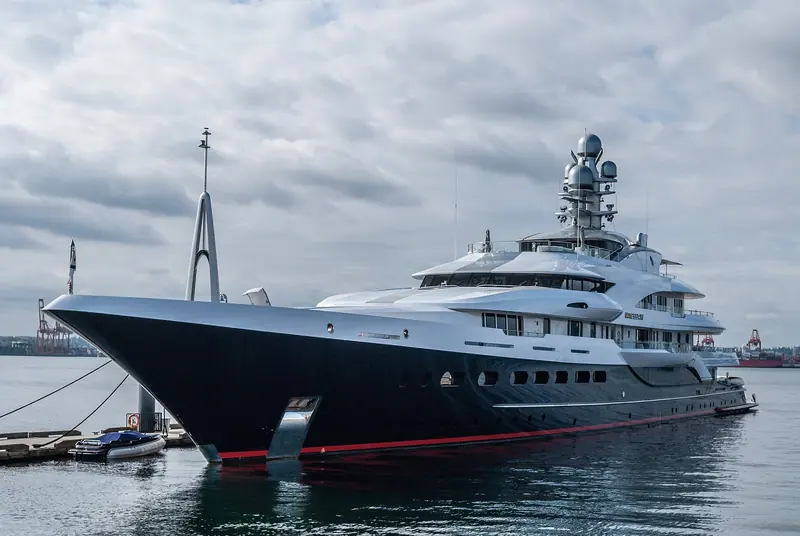
| Attessa IV | hull and systems survey feeding the 2007-2010 rebuild of the 1999 Evergreen at Vancouver Shipyards for owner Dennis Washington; Best Rebuilt Yacht, World Superyacht Awards 2011 |
| Explorer conversions and new builds | Legend (77.4m, ex icebreaker Giant/Dimant, built 1974 by IHC Verschure, converted by Icon Yachts for owner Jan Verkerk, delivered 2016, Rebuild winner World Superyacht Awards 2017) and Scout (63.72m Royal Hakvoort, delivered 2019 for owner James Berwind, exterior and interior by H2 Yacht Design) |
| Semi-custom naval architecture platform: Moonen 122 Martinique, more than 10 hulls delivered or building, exterior by Rene van der Velden, interior concept by Vripack | |
| So'Mar (37.9m, Tansu, 2014) won a Neptune trophy at the World Superyacht Awards 2015; Lalabe (35.31m, Van der Valk, naval architecture shared with Ginton Naval Architects) took a Judges Commendation at the World Superyacht Awards 2026 and Best Naval Architecture at the BOAT Design and Innovation Awards 2026 | |
| ASIA (61m, Royal Hakvoort, delivered May 2024) carries naval architecture by Diana with design by Sinot Yacht Architecture and Design | |
Three Engineers and a Name That Was Never a Person
The studio grew fast through the 1970s, reaching a reported 35 staff in the early 1980s before that decade's oil crisis forced a sharp cutback. Kees Kolff went on to spend 1972 to 1984 as chief electrical designer at Van Lent, the Feadship yard at Kaag, while remaining connected to Diana as a senior advisor, a dual relationship that put the young practice inside one of the world's most demanding yards close to its first year of trading. The lesson the studio drew from the 1980s contraction has stuck since: rebuild around a small core team and use outsourcing to flex for load, rather than staff up for every boom.
Coby Dijkman served as the original managing director alongside founder Kolff until both stepped aside for a new partnership more than fifteen years before the studio's own account of its history was published in 2021. The practice today is run by three directors: Hans-Maarten Bais, creative director and naval architect, who joined in 1998 and has led the design side since; Bart de Haan, operations director and naval architect; and Jerry Lakeman, financial director and marine engineer. All three work from the current office at Havinghastraat 24C in Alkmaar and, per the studio's own account, stay personally involved in projects from the first client meeting through to delivery rather than handing commissions off to junior staff.
The Feadship Years That Built the Early Name
C-Side, later chartered for years as Eleanor Allen, carries Diana Yacht Design's naval architecture credit on both Superyacht Times and BOAT International's own yacht directories, a rare case in this early period where two independent trade databases agree on the same credit. Rio Rita is a more layered case: the studio's own site lists her as a Diana project and BOAT International's history piece calls her one of the loveliest transom-stern motor yachts ever built, but a Superyachts.com listing credits her naval architecture specifically to De Voogt Naval Architects, Feadship's in-house office, with Diana's role given as exterior design only. This research could not resolve which credit is the fuller picture and reports both rather than picking one.
Cleopatra C, at 57 metres, put Diana alongside Bannenberg on a commission that period trade coverage frames as the studio's breakout into the kind of high-profile, high-budget project a small Dutch engineering office would not otherwise have reached in its first fifteen years. The throughline across all three yachts is the one that still defines the studio: Diana is named for engineering and naval architecture credit even where a separate name, whether De Voogt or Bannenberg, carries the styling.
Legend and Scout are not concept renderings of an explorer yacht. One is a converted Soviet icebreaker and one is a purpose-built steel explorer, and both are in active service today with named captains and owners on record about how they actually handle at sea.
Attessa IV: the Rebuild That Put Diana on the World Stage
Evergreen was originally built in 1999 for Taiwanese shipping magnate Chang Yung-fa and designed by Diana at that scale, before Washington bought her in 2007 and renamed her Attessa IV. The rebuild brief, reported by BOAT International, called for a new bow, a new stern, a new foredeck tender garage, a new spa, an entirely new superstructure shape, a new helipad and a completely new interior layout including crew areas, growing the yacht from roughly 91 to 101.2 metres. Diana's survey of the existing hull and systems against the original documentation was the technical foundation the rest of the rebuild had to work against; naval architect Gregory K. Marshall was separately hired for the new decks and superstructure, and Glade Johnson led the interior and exterior design.
The World Superyacht Awards result in 2011 is confirmed independently by both BOAT International and Diana's own account of the project, agreement this research treats as settled rather than the studio's own claim standing alone. For a buyer weighing a major rebuild or conversion rather than a new build, Attessa IV is the clearest evidence in Diana's portfolio that its engineers can be trusted with an existing, aging hull's structural truth, not just a set of hydrostatics on a clean sheet.
Two Icebreakers Prove the Explorer Credentials
Legend began life as a Soviet-era icebreaking tug, known at various points as Dimant, Gigant, Giant and Giant I, before owner Jan Verkerk commissioned a twelve-month, roughly 100 tonne conversion at Icon Yachts for which Diana's Hans-Maarten Bais handled the naval architecture and exterior engineering. Verkerk has said the point was a vessel that can go anywhere in the world while still carrying the luxuries expected of a superyacht, and her captain, Bernard Vivegnis, has described her as handling nice and easy in any sea state, a specific, checkable claim about seakeeping rather than a marketing line. Legend won the Rebuild category at the World Superyacht Awards in 2017 and still carries her Class 1 ice pedigree today.
Scout was a new build rather than a conversion, the largest yacht by length and volume that the hundred-year-old Royal Hakvoort yard had delivered at the time, with exterior and interior design by H2 Yacht Design and naval architecture by Diana. Owner James Berwind has described the brief plainly: a capable, comfortable explorer to travel the world, delivered as a long-range, ice-classed yacht with ample crew and guest areas and advanced systems for fuel efficiency and waste management. Between Legend and Scout, Diana can point to one converted icebreaker and one purpose-built ice-classed explorer, both currently in active service rather than laid up or unsold.
A Semi-Custom Route That Does Not Announce Itself
The Moonen 122 Martinique series pairs an exterior by Rene van der Velden and an interior concept by Vripack with naval architecture that stays with Diana across every hull, so a buyer gets a proven 37.4 metre steel platform, in its tenth-plus build, with the engineering risk already worked out rather than re-derived per yacht. Moonen's own announcements of each milestone, hull by hull from YN205 through YN208, show a steady, checkable production cadence that a one-off design studio cannot offer.
Alongside that, Diana provides naval architecture on a run of Van der Valk custom motor yachts in the 21 to 38 metre range, including Jangada, Lalabe, Micamo, Pilot, Felis and Maravi, plus the Tansu-built So'Mar, a 37.9 metre semi-custom design that won a Neptune trophy at the World Superyacht Awards in 2015 on the strength of her clean lines and efficient long-range performance. None of these prices are published, but the pattern is the practical takeaway: an owner who wants Diana's engineering without waiting years for a flagship slot has real, delivered precedent to point to at Moonen and Van der Valk both.
The Studio Is Still Winning Against Current Competition
ASIA was delivered to her owners in May 2024 with exterior and interior by Sinot Yacht Architecture and Design and naval architecture by Diana, and went straight into a four-month Mediterranean maiden voyage, carrying 12 guests and 17 crew at a cruising range of 3,800 nautical miles. Lalabe shared her naval architecture credit between Diana and Ginton Naval Architects, with Guido de Groot handling exterior and interior design; the World Superyacht Awards judges praised her as a proper little ship with strong quality and great range, giving 17 knots and transatlantic capability on a 35.31 metre hull built for family life aboard rather than a big-yacht owner's flagship.
Both projects follow the same pattern the whole portfolio shows: Diana's name sits on the naval architecture line, and a separate studio carries the styling credit, whether that is Sinot, H2, Guido de Groot or, decades earlier, Jon Bannenberg. For a yard or a project manager assembling a team, that consistency is itself a kind of reference: Diana turns up as the engineering partner across a wide range of styling houses and yards rather than being tied to one design partner's aesthetic.
What a Commission Costs, and What Diana Does Not Publish
That band covers naval architecture and structural engineering specifically, a narrower scope and a smaller percentage than the 10 to 20 percent, sometimes 25 to 30 percent on a fully customised superyacht, that broader design-and-styling fees can run to when a separate studio is also billing for the exterior and interior. Because Diana is so often the naval architecture half of a two-studio team rather than the sole design credit, a buyer assembling a project should expect to budget for Diana's engineering fee and a separate styling studio's design fee as two distinct lines, not one combined number.
On contract structure and copyright, Diana publishes nothing specific, which puts it in the same position as most of its Dutch peers: the professional default across naval architecture practices is that the design office retains ownership of its drawings and licenses the client one hull, so an owner planning a sister ship or a heavy structural refit through a different yard should ask, in writing, whether that licence extends to reuse before assuming it does. Nothing found in this research states what either a Moonen 122 Martinique slot or a Van der Valk custom commission costs new, and the studio's own portfolio does not distinguish clearly between projects where it held sole naval architecture credit and projects, like Rio Rita and Lalabe, where that credit was shared.
Who Should Call Alkmaar
The strongest argument for Diana is the range of hard, checkable outcomes across more than fifty years: a Neptune-winning Feadship semi-custom design in the 1980s, a World Superyacht Award winning rebuild on Attessa IV in 2011, two delivered ice-classed explorers in Legend and Scout, a working ten-plus-hull semi-custom platform at Moonen, and current-year recognition in 2026 on Lalabe. Few independent Dutch naval architecture offices can point to that combination of longevity, explorer pedigree and an active semi-custom production line all at once, and Van Oossanen Naval Architects and De Voogt Naval Architects, Feadship's own in-house office, are the closest Dutch peers a buyer would also put on a shortlist for that kind of engineering-first commission.
The honest caution is structural rather than a specific complaint: Diana almost never carries the styling credit on its own biggest projects, so an owner who wants a single named studio behind both the engineering and the look, in the way Vripack or H2 Yacht Design often work, will usually need to pair Diana with someone else rather than commission Diana alone. No fee scale, no day rate and no headcount beyond the twelve people named on its own team page are published, so a serious inquiry starts with a direct conversation at the Alkmaar office rather than a published price list.
Praktische Angaben
| Design fee | not published by Diana Yacht Design; the general market band for naval architecture and structural engineering is roughly 3 to 5 percent of build price on a 60 metre yacht, against 10 to 20 percent or more for a full design-and-styling commission (Cad Crowd yacht design cost guide, 2026) |
|---|---|
| Semi-custom entry point | Moonen 122 Martinique platform, more than ten hulls delivered or under construction, 37.4 metres, steel; also a run of Van der Valk custom yachts from about 21 to 38 metres including Jangada, Lalabe, Micamo, Pilot, Felis and Maravi; no public prices for either route |
| Flagship and conversion route | not published; Attessa IV (rebuild), Legend (icebreaker conversion) and Scout (new-build explorer) are the documented scale of full custom and conversion work, with no public cost figure for any of the three |
| Contract structure and copyright | not published by Diana specifically; the professional default across naval architecture practices is that the design office keeps the drawings and licenses the client one hull, so ask in writing whether a licence extends to a sister ship or a refit at another yard |
| Yards and partners worked with | Feadship (De Vries and Van Lent), Moonen Yachts, Van der Valk Shipyard, Royal Hakvoort, Icon Yachts (conversions), Tansu Yachts, Vancouver Shipyards (Attessa IV rebuild), plus styling partners H2 Yacht Design, Sinot Yacht Architecture and Design, Guido de Groot, Vripack and Ginton Naval Architects on shared naval architecture credits |
| How to commission | direct contact through the Alkmaar office, Havinghastraat 24C, Alkmaar, Netherlands |
| What is not published | a fee scale, a confirmed current headcount beyond the twelve people named on the studio's own team page, a reconciled total delivered count (71-plus per BOAT International in 2021 against 90 to 95 claimed by 2026 trade profiles and the studio's own site), and which historic projects, such as Rio Rita, carried sole versus shared naval architecture credit |
Was Eigner und Crew berichten
Legend's owner describes her as built to go anywhere while still delivering full superyacht comfort
Jan Verkerk, the owner behind Legend's 2016 conversion, on the point of the project: I was able to create a vessel that can go anywhere in the world, but also provide luxuries standard in superyachting.
Jan Verkerk, owner, LegendLegend's captain reports specific, checkable seakeeping rather than a marketing line
Captain Bernard Vivegnis, on handling the converted 1974 icebreaker: Legend handles nice and easy in any sea state.
Bernard Vivegnis, captain, LegendScout's owner confirms the ice-classed explorer brief was actually delivered, not just promised
James Berwind, on the 63.72 metre Royal Hakvoort explorer built to his brief: Our wish list was to have a capable, comfortable explorer to travel the world, and we got a long-range ice-classed yacht with ample crew and guest areas, advanced systems for fuel efficiency, telecommunications and responsible waste management.
James Berwind, owner, Scout
Was gut ist und worauf zu achten ist
Stärken
- A fifty five year track record with real, checkable hulls, not a design-award cabinetfrom the 1979 Feadship C-Side through the 2024 Royal Hakvoort ASIA and the 2026 award season for Lalabe, Diana's credits trace to specific, named, delivered yachts rather than renderings, a rarer thing among independent naval architecture offices than the trade coverage volume suggests
- Two delivered, ice-classed explorer yachts, not conceptsLegend, a converted 1974 Soviet icebreaker, and Scout, a purpose-built 63.72 metre Royal Hakvoort explorer, are both in active service with named owners and captains on record describing their seakeeping and range
- A working semi-custom platform that de-risks a purchasethe Moonen 122 Martinique has passed ten hulls delivered or under construction with Diana's naval architecture unchanged across the run, giving a buyer a proven engineering base the way a builder's own semi-custom range does
- Still winning current, contested awards, not resting on 1980s and 1990s workLalabe's Judges Commendation at the World Superyacht Awards 2026 and Best Naval Architecture at the BOAT Design and Innovation Awards 2026 came decades after the studio's founding, against a field of active competitors
Worauf zu achten ist
- Almost never the styling credit on its own flagship projectsScout, ASIA, Lalabe and, on one listing, Rio Rita all carry a separate exterior or interior design credit alongside Diana's naval architecture, so an owner wanting one studio behind the whole look will usually end up assembling two
- No published fee scale, day rate or semi-custom pricingthe only figure this research could find anywhere is the general market band for naval architecture fees, not anything specific to Diana, and neither a Moonen 122 Martinique slot nor a Van der Valk custom commission has a public price
- A staff history that has swung sharply beforethe studio grew to a reported 35 people in the early 1980s and was cut back hard by that decade's oil crisis; today's team is 12 people named on its own site, and neither figure is independently audited
- Design credit on some of its own historic projects is disputed, not just unclearRio Rita's naval architecture is credited to Diana on the studio's own site and to De Voogt Naval Architects, Feadship's in-house office, on a Superyachts.com listing, and this research found no way to settle which account is the fuller picture
Für wen: Owners and project managers who need explorer-capable or conversion naval architecture from a genuine specialist, whether commissioning a one-off through Icon Yachts, Royal Hakvoort or Feadship or joining a running semi-custom platform at Moonen or Van der Valk, and who are comfortable pairing that engineering with a separate styling studio rather than expecting one office to carry both credits.