Sinot Yacht Architecture & Design
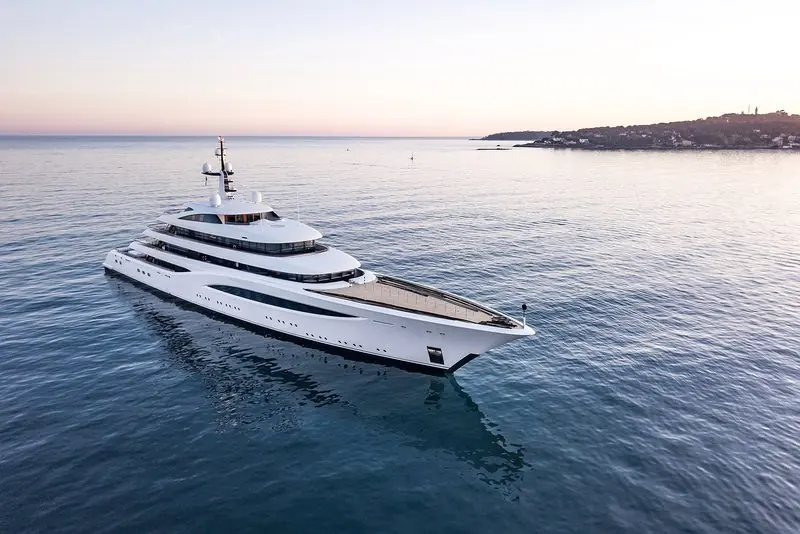
| Gründer | Sander Sinot, Industriedesigner |
|---|---|
| Gegründet | 1990er Jahre |
| Sitz | Niederlande, nahe Amsterdam |
| Team | rund 50 Personen |
| Disziplinen | Exterieur- und Interieurdesign, Yachtarchitektur |
| Prägende Yacht | Aquarius (92 m, Feadship, 2016) |
| Bemerkenswerte Konzepte | Aqua (Wasserstoff), Nature |
| Aquarius, 92 m, Feadship, 2016 | exterior and interior, naval architecture by De Voogt |
| Galactica Super Nova, 70.07 m, Heesen, 2016: interior, under an Espen Oeino exterior | |
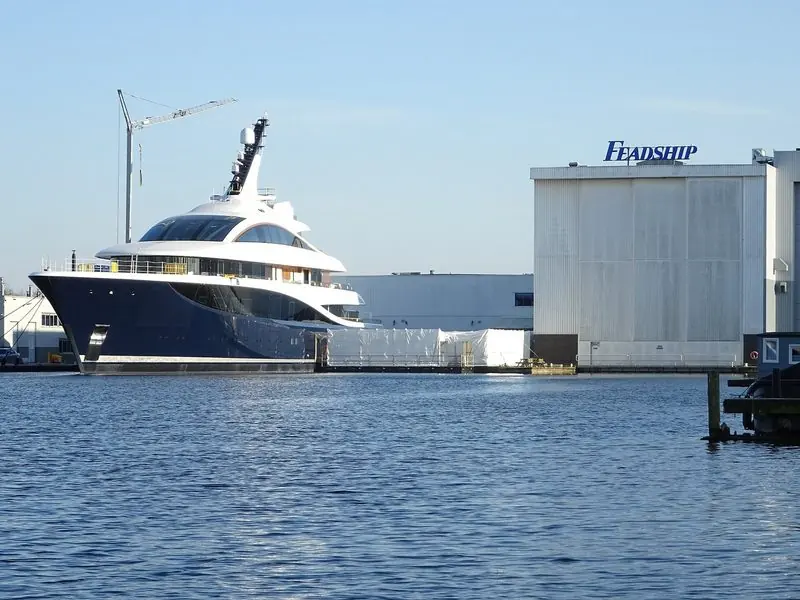
| Ulysses, 102.6 m, Feadship, 2024 | exterior and interior, naval architecture by Azure |
| Drizzle, 91.8 m, Feadship, 2024 | exterior and interior, naval architecture by De Voogt |
| Concepts | Nature (120 m, 2017), Aqua (112 m liquid hydrogen, 2019), Inspire (138 m, 2024) |
| Design fee | not published. Market band 1 to 5 per cent of build cost for the designer, plus 2 to 4 per cent for project management, both outside a yard's quoted price (SuperYachtReview 2026 price guide, updated March 2026) |
| Production consultancy through the build is an additional appointment, not part of the design fee. Naval architecture practice bills construction attendance separately and by the hour (ITIC standard trading conditions for naval architects, 8 July 2025) | |
| Copyright normally remains with the studio, with the owner licensed to build one hull unless the contract is negotiated further | |
Ein niederländisches Studio mit industriellem Blick
Sander Sinot wurde als Industriedesigner ausgebildet, bevor er sich Yachten zuwandte, und gründete sein eigenes Studio in den 1990er Jahren in den Niederlanden. Das Büro liegt eine kurze Fahrt von Amsterdam entfernt und ist auf ein Team von rund fünfzig Personen aus Architektur, Design und Technik gewachsen. Es deckt Interieur- und Exterieurdesign unter einem Dach ab. Dieser Ansatz aus einem Studio ist zentral für das nahtlose Erscheinungsbild, das es anstrebt. Interieur und Exterieur unter einem Dach zu halten vermeidet die sichtbaren Nähte, die entstehen, wenn zwei Büros sich eine Yacht teilen.
Der industriedesignerische Hintergrund zeigt sich in der Sorgfalt des Studios bei Ergonomie, Materialien und Fertigung. Sinot behandelt eine Yacht als ganzen Gegenstand und nicht als Rumpf, dem nachträglich Räume hinzugefügt werden. Das Team deckt neben dem reinen Entwurf auch Modellbau, Visualisierung und Fertigungsberatung ab. Diese Breite erlaubt dem Büro, eine Idee von der Skizze bis zum fertigen Detail zu verfolgen. Das Team kann ein Konzept formen, es konstruieren und das Detail lösen, ohne die Arbeit auf jeder Stufe weiterzureichen.
Ruhig, natürlich und minimal
Die Handschrift von Sinot ist Zurückhaltung, mit klaren Linien, natürlichen Materialien und einer starken Verbindung zwischen innen und außen. Das Studio bevorzugt ruhige Interieurs, in denen Licht, Stein und Holz die Arbeit tun statt Ornament. Seine Exterieurs sind leise und modern und überlassen der Proportion die Führung. Die Gesamtwirkung ist gelassen statt laut. Das Studio vertraut darauf, dass Material, Licht und Proportion einen Raum tragen, und nicht Schichten von Dekoration.
Die Natur ist ein wiederkehrendes Thema, und das Büro holt Grün, Wasser und Tageslicht oft tief in eine Yacht hinein. Das gibt seiner Arbeit eine auf Wohlbefinden bedachte, zeitgenössische Anmutung, die viele Eigner heute suchen. Das Studio verbindet natürliche und gebaute Elemente mit leichter Hand. Diese Balance ist zu seinem erkennbaren Merkmal geworden. Tageslicht und Grün tief in einen Rumpf zu holen ist weit schwieriger, als es von außen aussieht.
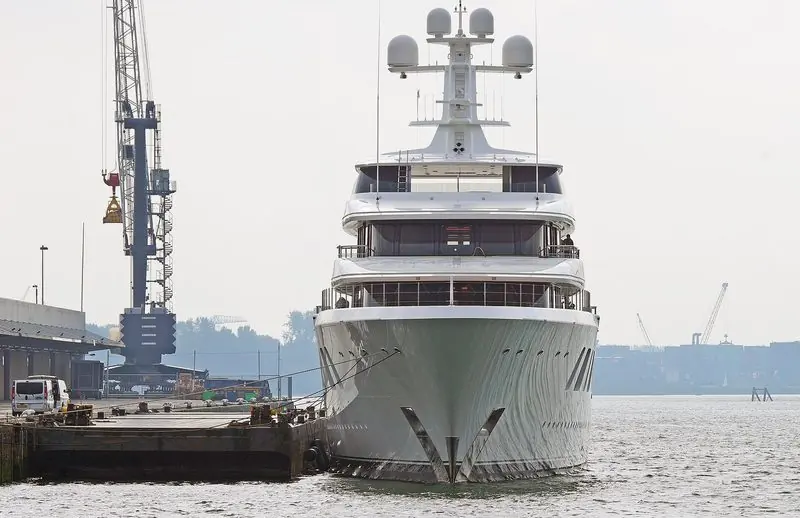
Ruhiger Minimalismus heute und ein ernsthaftes Argument für Wasserstoff morgen.
Aquarius und die Konzepte für saubere Energie
Die 92 Meter lange Aquarius, gebaut von Feadship und 2016 für Steve Wynn abgeliefert, ist die bekannteste Yacht des Studios, wobei Sinot für Exterieur und Interieur verantwortlich war. Der Entwurf verband minimalistische Gestaltung mit der Ingenieurleistung von Feadship, was breite Bewunderung fand. Sie bleibt ein starkes Beispiel für die ruhige Ästhetik des Studios im großen Maßstab. Die Yacht half, Sinot an der Spitze des Marktes zu etablieren. Sie zeigte, dass eine minimalistische Handschrift auch auf einer sehr großen Custom-Yacht bestehen kann.
Das Büro ist ebenso für vorausschauende Konzepte bekannt, die neue Ideen erproben. Aqua, 2019 vorgestellt, entwarf gedanklich eine 112 Meter lange Yacht, die mit flüssigem Wasserstoff fährt, und lenkte weltweite Aufmerksamkeit auf emissionsfreien Antrieb. Das 120 Meter lange Konzept Nature stellte einen lebenden Garten in das Herz des Entwurfs. Diese Studien zeigen an, wohin sich der Luxusyachtbau nach Ansicht des Studios entwickeln könnte. Die Konzepte lesen sich als ernsthafte technische Studien und nicht als Schaustücke für einen Messestand.
Die Partnerschaft mit Feadship
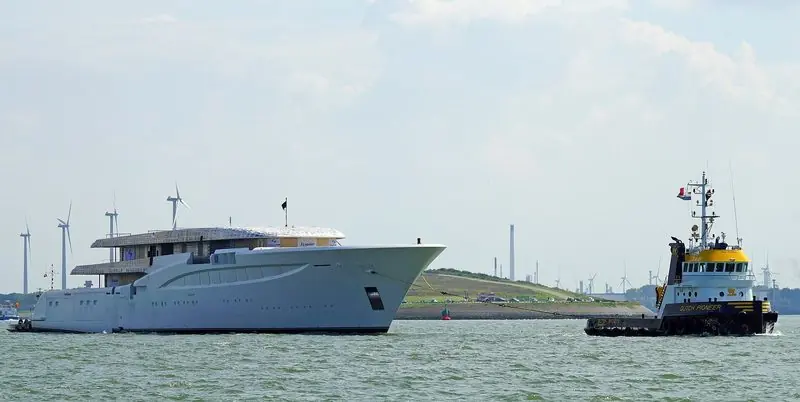
Die enge Arbeit von Sinot mit Feadship hat einen großen Teil des gebauten Portfolios und des Rufs geprägt. Die Beziehung verbindet die Gestaltung des Studios mit einer der genauesten Werften der Welt. Mit einer Werft dieses Kalibers zu arbeiten verlangt Präzision, und die industrielle Strenge des Studios passt dazu gut. Aus dieser Partnerschaft sind einige seiner geschlossensten Arbeiten hervorgegangen. Mit einer Werft dieses Niveaus zu bauen lässt im Detail wenig Spielraum für Fehler.
Das Büro führt mit Eignern ein ausführliches Gespräch darüber, wie sie auf See leben wollen. Seine auf Wohlbefinden und Natur ausgerichteten Themen kommen oft unmittelbar aus diesen Gesprächen. Das Studio begleitet ein Projekt durch den Bau, um die ruhige Absicht unversehrt zu halten. Dieser sorgfältige Prozess passt zu Eignern, die eine leisere Art von Luxus suchen. Diese Eigner schätzen eher Ruhe und ein Gefühl von Wohlbefinden als äußere Zurschaustellung.
Eine Stimme für die Yacht der Zukunft
Sinot hat sich eine klare Position als Studio der Zurückhaltung und der Ideen zur Nachhaltigkeit erarbeitet. Seine Konzepte haben die Diskussion der Branche über sauberen Antrieb stärker geprägt als die der meisten anderen. Diese gedankliche Führungsrolle steht neben einer angesehenen Bilanz abgelieferter Yachten. Das Büro wird an beiden Fronten ernst genommen. Abgelieferte Yachten und vorausschauende Konzepte verstärken einander im Ruf des Studios.
Der ruhige, natürliche Stil des Studios hat sich als einflussreich erwiesen, während sich der Geschmack vom Übermaß abgewandt hat. Seine Arbeit mit Feadship hält es nahe am Zentrum der niederländischen Szene. Sinot entwickelt weiterhin sowohl reale Yachten als auch Konzepte. Es ist zu einem Bezugspunkt für eine sauberere, leisere Vorstellung von der Superyacht geworden. Diese Position ist wertvoller geworden, seit Eigner die Wirkung ihrer Yachten abwägen.
The 2024 Feadships
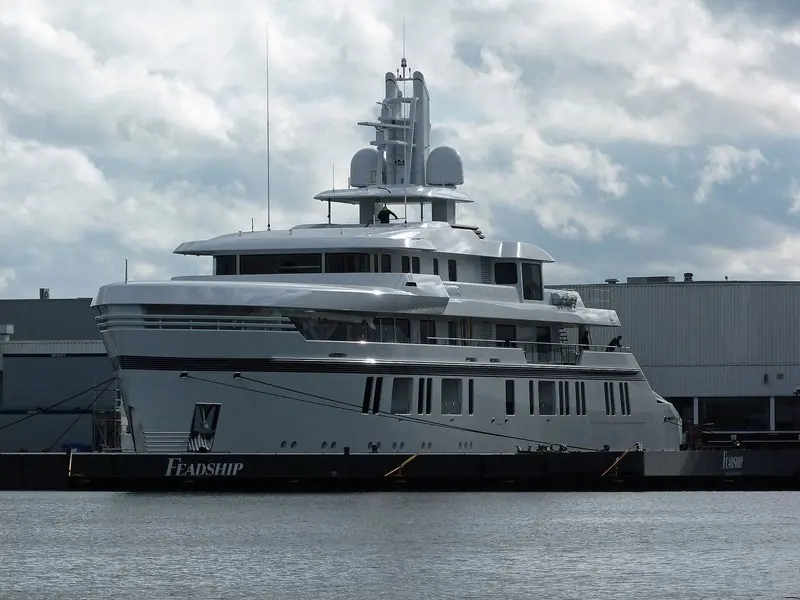
Two Feadships delivered in 2024 carry Sinot exterior and interior. Ulysses is 102.6 metres, with naval architecture by Azure Yacht Design and Naval Architecture, and she was one of the most tightly kept builds in recent Dutch memory. Drizzle is 91.8 metres, with naval architecture by De Voogt and a hybrid propulsion package.
Two boats of that size from one yard in one year, both inside and out from the same studio, is a serious statement about capacity. Feadship does not hand a designer two hulls at once on reputation. It matters to a prospective owner because it is evidence the office can staff a project properly and still answer the phone, which is the failure mode that catches out small studios when they win a big commission.
Aqua, Nature and the concepts
The studio is equally known for unbuilt work. Nature, a 120 metre concept shown at Monaco in 2017, put a climate-controlled garden at the centre of the yacht with a panorama deck above 900 square metres. Aqua, revealed at Monaco in 2019 at 112 metres, was drawn around liquid hydrogen stored in two cryogenic tanks and fuel cells, quoted at 17 knots and 3,750 nautical miles, with water as the only emission. Inspire, a 138 metre concept from 2024, carries an underwater observation room.
Concepts are easy to dismiss and this office has earned the right not to be. Aqua was published five years before Feadship launched an actual hydrogen fuel-cell yacht, and the arguments it forced into the trade press about tank volume, bunkering and range are the arguments the industry is now having in earnest. For an owner, the studio's concept work is a useful window into how it thinks. It is not a promise that any of it can be built to a budget.
How a commission runs, and what it costs
The studio works through a long dialogue about how an owner intends to live at sea, then moves through concept development to final design, with 3D visualisation used throughout to test whether an idea survives the technical and classification limits. Naval architects and yard staff join that conversation early, which is necessary when the studio does not hold the naval architecture itself. Commercially the work is bought in stages and paid for before a yard is contracted. The gates are worth naming. An owner can stop after concept for the price of the concept. A letter of intent reserves a slot. The yacht building agreement is the commitment, and from the day the yard starts engineering to these drawings, changing studio means paying for the same design twice.
No studio at this level publishes a fee scale, so the only current market figure is the SuperYachtReview 2026 price guide, updated March 2026, which puts a designer's fee at 1 to 5 per cent of build cost and project management at a further 2 to 4 per cent, both outside the yard's quoted price. On a EUR 200 million Feadship the designer's band alone is EUR 2 million to EUR 10 million. Exterior and interior from one office sits high in it, and still costs less than two appointments plus the interface between them. The studio's production consultancy is an additional service rather than part of the design fee, which is the normal way supervision is billed and, on a minimal interior, the money best spent.
Recognition, and who it does not suit
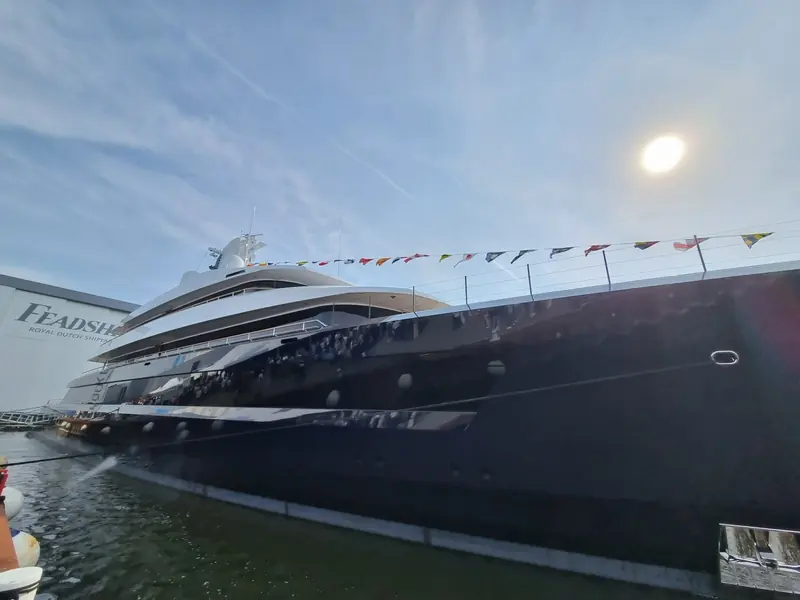
Sinot yachts have collected design awards consistently since Musashi, and the studio's concept work has taken it well beyond the trade press. The recognition is worth a narrow amount to an owner. It confirms the finish met a standard specialists would defend and it helps a broker at resale. It says nothing about behaviour in the second year of a build.
This studio does not suit an owner who wants a rich, layered, art-led interior, because the work runs the other way and a minimalist scheme executed half-heartedly looks cheap. It does not offer naval architecture, so anyone wanting hull form and styling under one contract should look elsewhere. It is not set up for boats below about 45 metres, and it is not a sailing yacht office.
The quiet interior is the one the market can absorb
A calm, daylight-led scheme is the most resale-friendly kind of authored interior in this directory, and for an unromantic reason. It does not impose a taste on the next owner, so the buyer pool is not narrowed by the decoration. Ocean Independence, writing on 11 May 2026, lists accommodation, layout, volume, technical specification and paint condition as the things that position a boat against its comparables, and a Sinot interior scores on all of them without asking a buyer to share an enthusiasm. Set against that, Feadship underneath is the real asset. Ocean Independence names the Northern European yards as those that continue to command market confidence, and a hull from one of them carries a valuation that a design signature does not.
The risk runs the other way, and it is a condition risk rather than a taste risk. Minimalism has nowhere to hide wear. A stone joint that has moved, a veneer that has faded unevenly, a cracked seal in a full-height glass panel are all invisible in a busy interior and glaring in this one. A ten-year-old Sinot boat that has been maintained looks new. One that has not looks tired in a way that costs real money to reverse, and the market does not usually give back the full cost of refit spending. The maintenance file is worth more on this boat than on almost any other in the directory.
Praktische Angaben
| Typical project size | 45 metres and above; the studio does not take smaller commissions |
|---|---|
| Design fee | Not published. Market band for a full exterior-plus-interior appointment at this level is 1 to 5 per cent of build cost (SuperYachtReview 2026 price guide), EUR 2 million to EUR 10 million on a EUR 200 million Feadship |
| Project management fee | A further 2 to 4 per cent of build cost, billed separately from the design fee |
| What is not included | Naval architecture is never part of the appointment. On Feadships it comes from De Voogt in-house; on other yards the owner must appoint a naval architect separately |
| Payment structure | Bought in stages: concept, then a letter of intent to reserve a slot, then the yacht building agreement as the binding commitment. Changing studios after the yard starts engineering means paying for the design twice |
| Where to find the studio | Vlierberg 3, Eemnes, Netherlands, about 20 minutes from Schiphol airport, inside the Dutch yacht-building cluster |
| Studio size | Close to 50 staff across architecture, interior architecture, industrial design, 3D visualisation, design engineering and production consultancy |
Was Eigner und Crew berichten
A two-year, hands-on brief
Steve Wynn worked through Aquarius's interior concept for two years alongside his own longtime designer Roger Thomas before Sinot executed it. It was an unusually long and direct client involvement for a yacht this size.
YachtBuyer
Was gut ist und worauf zu achten ist
Stärken
- One studio for the whole visible boatExterior and interior come from a single design language and a single contract, removing the friction that usually opens up at the window line between two separate designers.
- Production consultancy through the buildThe studio stays involved once the yard starts cutting, which matters most on the minimalist work it is known for, where a badly cut stone joint has nowhere to hide.
- Proven capacity at the largest sizesTwo Feadships over 90 metres delivered in the same year, 2024, both exterior and interior from this office, is evidence of staffing depth that smaller studios cannot show.
- Resale-friendly interiorsOcean Independence names calm, daylight-led schemes as the kind that do not narrow the buyer pool at resale, unlike a heavily authored, opinionated interior.
Worauf zu achten ist
- No naval architectureAn owner wanting hull form and styling under one contract has to look elsewhere. Every Sinot yacht carries a separate naval architecture credit, from De Voogt, Azure or others.
- Not for boats under about 45 metresThe studio's own build list starts there, so smaller commissions are out of scope entirely.
- Minimalism is unforgiving of wearA calm interior with little to distract the eye shows a moved stone joint or an unevenly faded veneer far more readily than a decorated one, and refit spending to fix it is not usually recovered in full at resale.
- No published fee scaleOwners are budgeting from a third-party market band (SuperYachtReview) rather than a rate card, so a real number only comes from asking the studio directly.
Für wen: Eigner, die ruhiges, minimalistisches Design suchen und ein Studio, das ernsthaft über saubereren Antrieb nachdenkt.