Studio F. A. Porsche
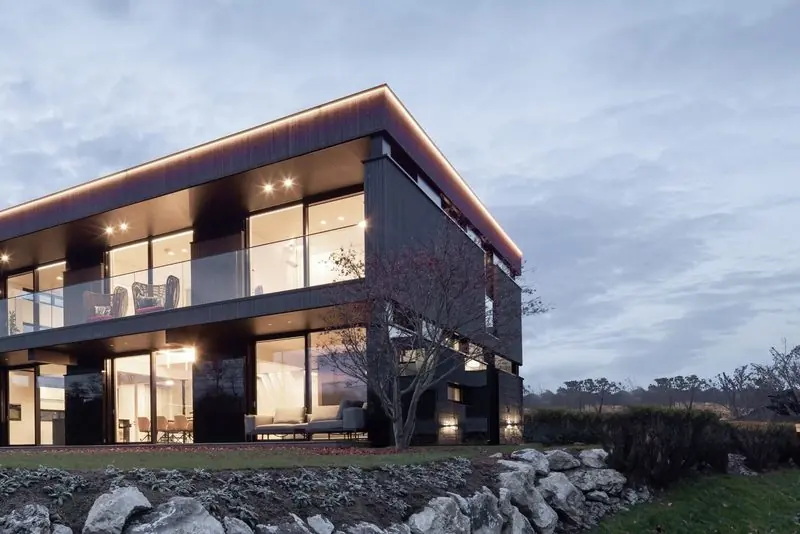
| Gründer | Ferdinand Alexander Porsche, Gestalter des Porsche 911 |
|---|---|
| Gegründet | 1972 (2015 umbenannt in Studio F. A. Porsche) |
| Sitz | Zell am See, Österreich |
| Disziplin | multidisziplinäres Produkt- und Yachtdesign |
| Prägende Yachten | Dynamiq GTT 115 (35,5 m), Royal Falcon RFF 135 |
| Haltung | Reduktion auf die wesentliche, von der Funktion geführte Form |
| Hinweis | die Yachtarbeit ist ein Strang eines breiten Designbüros |
| Dynamiq GTT 115, 35 metres, project completed 2017: a limited run of seven, listed from EUR 13.95 million at launch | |
| Royal Falcon One, 41.4 m power catamaran, delivered 2019: exterior by the studio, interior by Greenline of Dubai, naval architecture by Incat Crowther | |
| Royal Falcon One figures | 492 GT, twin MTU diesels driving waterjets, 37 knots top speed, ten guests |
| Frauscher x Porsche 850 Fantom Air | an 8.67 metre electric sports boat premiered at boot Dusseldorf in January 2024 |
| 850 Fantom Air | The 850 Fantom Air runs a 100 kWh battery and a powertrain built from Porsche Macan Turbo components, to above 45 knots |
| Team | the studio publishes no headcount, and none could be found in its own material or in the Porsche Design press office (checked 28 July 2026). It is a subsidiary of the Porsche Lifestyle Group with its headquarters at Zell am See in Austria and design offices in Berlin, Ludwigsburg, Los Angeles and Singapore |
| Marine is one strand of a product, mobility, spatial and digital design practice, so the relevant question is not the total headcount but how many people are on boats, which is also not published | |
| Design fee | inside the boat price and not disclosed. Published naval architecture practice prices repeat hulls at a royalty of roughly 1 to 1.5 per cent of each boat, which is the usual shape of a series arrangement (Marsh Design and Sponberg Yacht Design terms, read 28 July 2026) |
Vom 911 auf das Wasser
Ferdinand Alexander Porsche gestaltete den ursprünglichen Porsche 911, bevor er 1972 sein eigenes Designstudio gründete. Das Studio begann in Stuttgart und zog nach Zell am See in Österreich, wo es bis heute sitzt. 2015 wurde es zu Ehren seines Gründers in Studio F. A. Porsche umbenannt. Das Büro entwirft über viele Felder hinweg, von Uhren und E-Bikes bis zu Gebäuden und Yachten. Die Yachtarbeit sitzt innerhalb eines weit größeren Büros, das im Industrie- und Produktdesign verwurzelt ist.
Das Studio ist kein Yachtspezialist in dem Sinne, in dem es die übrigen Häuser hier sind, und die maritime Arbeit ist einer von vielen Strängen. Was es mitbringt, ist eine strenge Gestaltungshaltung, übertragen aus der Automobilwelt. Genau diese Sicht von außen zieht bestimmte Yachtkunden zu ihm. Der Name Porsche und sein gestalterisches Erbe sind Teil der Anziehungskraft. Eine Yacht, die diese Linie trägt, kommt mit einer erkennbaren Identität, noch bevor sie zu Wasser gelassen wird.
Reduktion und Präzision
Die Haltung des Studios ist Reduktion: einen Gegenstand auf seine wesentliche Form zurückzunehmen und die Funktion die Gestalt bestimmen zu lassen. Ferdinand Alexander Porsche war überzeugt, gutes Design solle leise sein und keine Dekoration brauchen. Dieses Denken übersetzt sich in eine klare, zweckbetonte Yachtgestaltung mit einem starken Gefühl für Technik. Der Look ist diszipliniert und modern statt verziert. Nichts wird des Effekts wegen hinzugefügt, und jede Linie soll ihren Platz im Ganzen verdienen.
Das Büro nähert sich einer Yacht wie einem Produkt, mit sorgfältiger Aufmerksamkeit für Proportion, Materialien und die Art, wie ein Käufer den Entwurf konfiguriert. Es hat Ideen wie aufeinander abgestimmte Farbkonzepte und Wahlmöglichkeiten nach Art eines Konfigurators aus der Automobilwelt auf das Wasser gebracht. Dieser methodische Ansatz hebt seine Yachtarbeit ab. Präzision bestimmt alles, was das Studio auf dem Wasser tut. Die Gewohnheiten der Automobilwelt bei Konfiguration und abgestimmter Farbgebung lassen sich sauber auf ein Boot übertragen.

Das Studio, das den 911 gestaltete, bringt Reduktion und Präzision auf das Wasser.
Die Yachten von Dynamiq und Royal Falcon
Der klarste Ausdruck der maritimen Arbeit des Studios ist die Dynamiq GTT 115, eine 35,5 Meter lange schnelle Yacht, gebaut in limitierter Auflage. Der Entwurf trägt bewusste Porsche-Zitate, von der Lackfarbe bis zur Form der Lufteinlässe und des Spiegels. Sie wurde für schnelles Fahren mit transatlantischer Reichweite ersonnen und verbindet Leistung mit Komfort. Die Yacht fand breite Aufmerksamkeit bei ihrer Premiere auf der Monaco Yacht Show. Ihre Porsche-Zitate gaben der Yacht eine klare Identität in einem Markt voller Einzelentwürfe.
Das Studio gestaltete außerdem die Royal Falcon RFF 135, eine auffällige Katamaran-Superyacht für einen in Singapur ansässigen Betreiber. Diese Projekte zeigen, wie das Büro seine Produktdesign-Methode auf einen sehr andersartigen Gegenstand anwendet. Die Ergebnisse wirken unverkennbar verwandt mit den übrigen Arbeiten des Studios. Sie geben dem Studio eine reale, wenn auch eng umrissene Präsenz im Yachtbau. Es handelt sich um definierte Modelle statt um Giganten vom weißen Blatt, was zur Methode des Studios passt.
Ein anderer Typ von Designpartner
Studio F. A. Porsche arbeitet mit Werften wie Dynamiq, die eine Gestaltungskultur von außen hereinholen wollen. Die Beziehung gibt einer Werft eine erkennbare Marke und einen frischen Blickwinkel. Für Eigner liegt der Reiz in einer Yacht, geformt von einem Studio mit tiefem technischem Erbe. Diese Überkreuzung ist das eigene Angebot des Studios. Nur wenige Werften können eine Gestaltungskultur mit so viel Gewicht dahinter hereinholen.
Das Büro arbeitet eher an definierten Modellen und limitierten Serien als an Einzelstücken in Gigantengröße. Das passt zu seiner produktorientierten Arbeitsweise, in der ein Entwurf verfeinert und wiederholt werden kann. Käufer erhalten eine Yacht mit klarer Identität und einer berühmten gestalterischen Handschrift. Es ist ein anderes Angebot als das der klassischen Custom-Studios. Käufer tauschen die Freiheit des weißen Blattes gegen einen klaren, erprobten Entwurf und einen berühmten Namen.
Gestalterisches Erbe als Argument
Der Rang des Studios im Yachtbau ruht weniger auf Menge als auf dem Gewicht seines gestalterischen Erbes. Nur wenige Namen tragen in irgendeinem Feld die Verbindung, die die Porsche-Designlinie mit sich bringt. Dieses Erbe verleiht seinen Yachten eine starke und vermarktbare Identität. Es ist eine seltene Überkreuzung aus der Automobilwelt auf das Wasser. Dieses Erbe ist der Hauptgrund, warum ein Käufer dieses Studio einem maritimen Spezialisten vorzieht.
Das Büro bleibt ein spezialisierter Gast im Yachtbau statt eines dort ansässigen Riesen. Seine maritimen Projekte sind ausgewählt und eng an die Studios gebunden, die sie beauftragen. Die reduktive Haltung, die es mitbringt, ist ein echter Unterschied. Für den richtigen Käufer ist genau dieser Blick von außen der Punkt. Das Studio erhebt keinen Anspruch, ein ansässiger Riese des Yachtbaus zu sein, und diese Offenheit gehört zu seinem Reiz.

The Frauscher electric boats
The most current marine work is with the Austrian builder Frauscher. The 850 Fantom Air, premiered at boot Dusseldorf in January 2024, keeps the 8.67 metre hull of Frauscher's existing day cruiser almost unchanged and puts a Porsche electric powertrain into it, built from standard Macan Turbo components with a 100 kWh battery set under the lounge for trim. It carries up to nine people and exceeds 45 knots.
Studio F. A. Porsche drew the helm stand, the steering wheel and the main console with its throttle and integrated displays. The initial edition was set at 25 boats, built at Frauscher's yard in Ohlsdorf. This is the studio doing what it is genuinely best at, which is taking an existing well-engineered platform and resolving the parts a person actually touches.
What the studio is hired for, and what it is not
There is no naval architecture here and no in-house marine engineering. Hull form, structure, stability and systems belong to the builder or to an outside specialist, which on Royal Falcon One meant Incat Crowther. The studio contributes styling, product design and brand identity. Performance guarantees live entirely in the build contract.
The office also does not work the way a custom yacht studio works. It engages with builders to create defined models and limited series, and the buyer arrives after the design is fixed. An owner who wants a designer sitting opposite him for two years shaping a boat around his family will not find that arrangement here, and should not expect it.
How a boat gets bought, and what it costs
Because these are series products, the commercial path is closer to buying a car than commissioning a yacht. A buyer chooses a model, a specification, a paint scheme and an option list, signs with the builder and takes delivery on a stated date. The design fee is inside the boat price and is not separately negotiated, which removes an entire category of cost uncertainty and also removes any visibility. Neither the studio nor the builders disclose what the arrangement is worth, and there is no reason they would. Published naval architecture practice prices repeat hulls to one design at a royalty of roughly 1 to 1.5 per cent of each boat, which is the shape of a series deal even where the number here is unknown.
That structure also removes the largest source of overrun on a custom project, which is an owner changing his mind after engineering has started. On a private commission the comparable exposure is a designer's fee of 1 to 5 per cent of build cost plus 2 to 4 per cent for project management, both outside the yard's price, per the SuperYachtReview guide updated March 2026, and none of that appears here. Against it, a buyer pays a premium for the badge and the limited numbers, and it is a premium the market may or may not return. The honest test is whether the boat would still be the right one with a different name on it.
Standing, and who it does not suit
The studio's weight in yachting comes from its design heritage, not from volume. Very few names in any field carry the association the Porsche design lineage does, and a yard that brings it in acquires an identity it could not build in a decade. That is worth something at the marina and something at resale, though nobody should mistake it for the record of a marine specialist.
This studio does not suit an owner commissioning a large custom yacht from a blank sheet, and it has no portfolio above about 41 metres. It does not suit anyone who wants a warm, layered, decorated interior. Owners who want a single office accountable for both the look and the performance of a boat need a different structure entirely. For a buyer who wants a defined fast boat with an outside design culture, it is close to the only option of its kind.
A badge premium is paid new and rarely recovered
A yacht carrying this name sells no better than the boat underneath it, and on the evidence available it may sell worse than an equivalent hull from a marine brand. Two things work against it. The runs are tiny, seven boats in the case of the Dynamiq GTT 115, so there are almost no comparables and a valuer has little to work from. And a premium paid for a badge at the point of sale is a premium the second buyer has no reason to pay again, because he can buy the same badge at the same discount everyone else can. Ocean Independence, writing on 11 May 2026, lists builder pedigree, specification and condition as what holds value, and does not list design authorship at all.
The counterweight is that a defined production boat is a liquid asset in a way a one-off is not. There is a known specification, a known delivery date, a known price and, in the Frauscher case, a marque with a real service network behind it. That matters more at 8 to 12 metres than it does at 35, where the GTT 115 sits in a thin part of the market with a badge instead of a fleet. A buyer who wants the object should buy it and enjoy it. A buyer who is quietly counting on the name to protect the money should look at what the same money buys from a builder whose boats trade every week.
Praktische Angaben
| Design fee | inside the boat price and not disclosed. Published naval architecture practice prices repeat hulls at a royalty of roughly 1 to 1.5 per cent of each boat, the usual shape of a series arrangement (Marsh Design and Sponberg Yacht Design terms, read 28 July 2026) |
|---|---|
| How a buyer actually gets one | through the builder's own sales channel (Dynamiq, Royal Falcon Fleet, Frauscher), not a direct design commission with the studio |
| Marine portfolio | Dynamiq GTT 115 (35 m, 2017, run of 7, from EUR 13.95 million), Royal Falcon One (41.4 m power catamaran, 2019, 492 GT, 37 knots), Frauscher x Porsche 850 Fantom Air (8.67 m electric sports boat, premiered January 2024) |
| What is NOT published | marine-specific headcount, the studio's day rate or fee structure, and any figure for what the Porsche name premium adds to a boat's price over an equivalent unbadged design |
| Parent structure | part of the Porsche Lifestyle Group, headquartered at Zell am See, Austria, with design offices in Berlin, Ludwigsburg, Los Angeles and Singapore |
Was Eigner und Crew berichten
Frauscher's own account of the collaboration, not an independent owner view
"our boat is perfect as a day cruiser for a relaxing bathing trip or, for example, when used as a tender for a super yacht, for a trip to a coastal town" - a comment on the finished 850 Fantom Air from the boatbuilder's side of the partnership, not a private buyer
Stefan Frauscher, quoted by PlugboatsNo independently attributable private-owner testimony found
search covered the Dynamiq GTT 115 (a run of seven, from EUR 13.95 million), the Royal Falcon One power catamaran and the Frauscher x Porsche 850 Fantom Air, and turned up only manufacturer and partner quotes; the studio's boats are new and low-volume enough that no named buyer review has surfaced
Yotters research desk
Was gut ist und worauf zu achten ist
Stärken
- An outside design culture most yards cannot offerStudio F. A. Porsche brings automotive and industrial-design thinking (the same lineage as the Porsche 911) to a marine brief, which is the entire reason a yard or buyer pays a premium for the name rather than using an in-house stylist
- Fixed-price, fixed-date limited seriesthe Dynamiq GTT 115 ran as seven hulls at a published from-price; a buyer of a limited series knows the number built and the entry price before committing, which a fully bespoke commission never offers
- Real engineering behind the styling on the electric boatthe 850 Fantom Air's powertrain is built from actual Porsche Macan Turbo components reaching over 45 knots, so the Porsche name is attached to genuine shared engineering, not just a badge on somebody else's hull
- A parent company that will still exist in twenty yearsunlike a single-founder studio, this practice sits inside the Porsche Lifestyle Group with offices in Zell am See, Berlin, Ludwigsburg, Los Angeles and Singapore; there is no key-person risk tied to one name's availability
Worauf zu achten ist
- Marine is a small side activity, not the main businessproduct, mobility, spatial and digital design plus brand strategy make up most of the studio's work; nobody, including the studio and the Porsche Design press office, publishes how many people work on boats specifically
- No naval architecturethe studio styles and a separate builder or engineering office (Incat Crowther on Royal Falcon One) does the hull; it is not a full-service yacht design practice
- Very few hulls to judge the marine work byseven Dynamiq GTT 115s, one Royal Falcon One and a small electric sports boat is a thin record next to the hundred-plus yacht portfolios of the dedicated studios elsewhere in this directory
- No published fee, and no obvious route to a bespoke commissionthe studio's marine projects to date have all been co-branded partnerships with a builder rather than a private commission an individual owner can simply buy
Für wen: Käufer, die eine Yacht aus limitierter Serie mit einer Gestaltungskultur von außen und berühmtem technischem Erbe wollen.