Awake
| Kategorie | elektrische Jetboards und eFoils |
|---|---|
| Gegründet | 2017 von Philip Werner, Daniel Aronsson und Mikael Kajbring, nach Werners früherem Elektrosurfboard-Unternehmen von 2013 |
| Herkunft | nach eigenen Worten des Unternehmens in Skandinavien entworfen und entwickelt |
| Jetboards | RAVIK Explore, RAVIK Adventure, RAVIK Ultimate, dazu eine limitierte BRABUS-Edition |
| RAVIK Explore | 21 kg, 121 Liter, 11 kW, bis 40 km/h, bis 60 Minuten, EUR 9.990 ohne Umsatzsteuer |
| RAVIK Adventure | 23 kg, 71 Liter, bis 50 km/h, bis 45 Minuten, EUR 13.990 ohne Umsatzsteuer |
| RAVIK Ultimate | 16 kg Carbonverbund, 51 Liter, bis 55 km/h, bis 35 Minuten, EUR 15.990 ohne Umsatzsteuer |
| eFoil | VINGA Carve für EUR 11.990 ohne Umsatzsteuer, mit Varianten Adventure und Ultimate |
| Akkus | Flex Battery LR 4 für EUR 2.990 und XR 4 für EUR 4.990, beide ohne Umsatzsteuer |
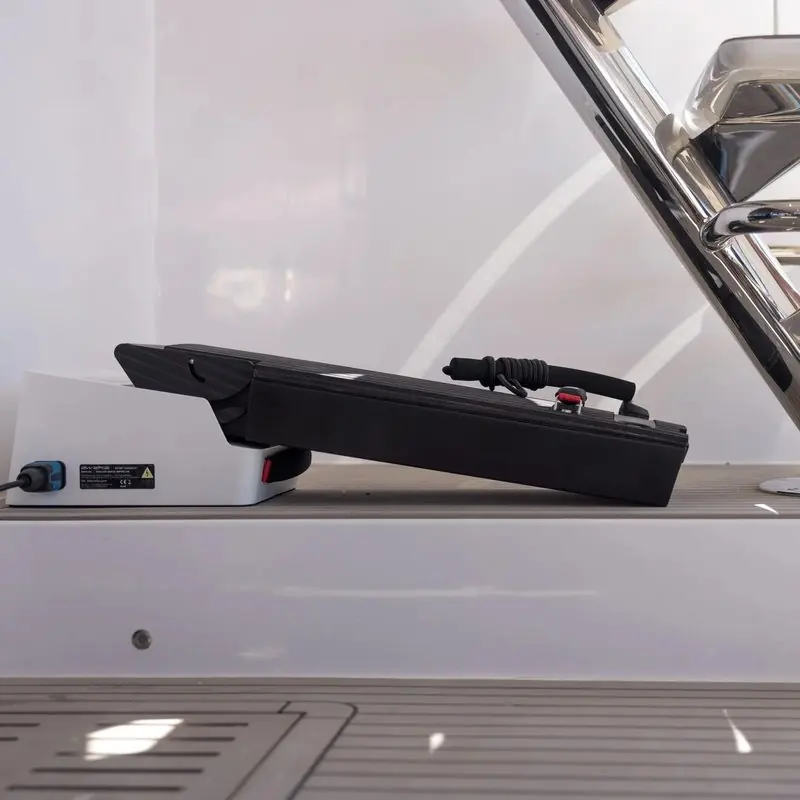
| Flex Battery XR 4 | 18,5 kg, rund eine Stunde Fahrzeit, wasserdicht bis 10 Meter, 5,5 kg leichter als der ersetzte Akku |
| Garantie | zwei Jahre auf Boards und Akkus |
| Kompatibilität | derselbe Flex-4-Akku und derselbe Handregler betreiben sowohl die Jetboards als auch die eFoils |
| Charge time | Awake publishes none on its own battery or charger pages. A dealer listing read in July 2026 gives the Flex Battery Charger at two hours or less, against about 60 minutes of riding on an XR 4 |
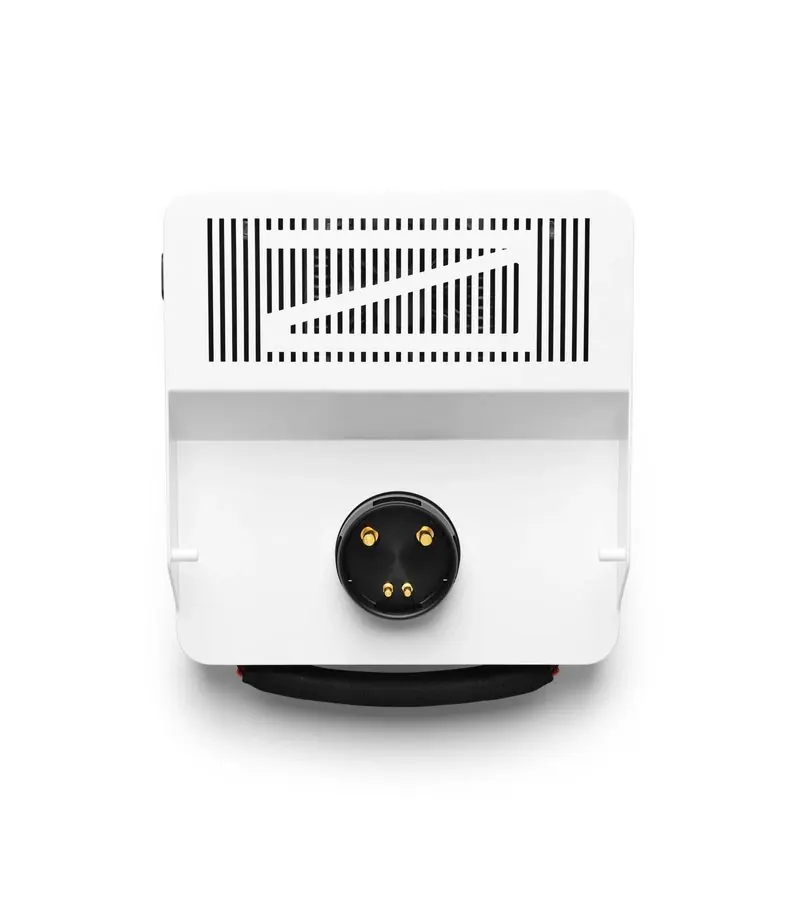
| Flex Battery Charger | USD 1,390 net on Awake's own United States store, July 2026. Awake sells only one charger and describes it as a speed charger |
| Flag reach | Part A Chapter 14 of the Red Ensign Group Yacht Code covers the United Kingdom, the Cayman Islands, Gibraltar, the Isle of Man and the other British Overseas Territories and Crown Dependencies |
| Marshall Islands | the 2026 edition of Yacht Code MI-103, effective 1 January 2026, adds specific rules for spaces used to store or charge lithium-ion powered toys and tenders |
| Malta | a Transport Malta Commercial Yachting Notice of 22 June 2022 and Information Notice 45 of 7 September 2022, written as strong recommendation, with the Commercial Yacht Code 2025 Revision 1 as the surveyed document |
| IMO | no mandatory instrument covering portable lithium battery powered craft aboard yachts as of July 2026. Class: DNV's Battery (Safety) notation triggers only above 50 kWh aggregate, and Lloyd's Register LR-GN-052 of 10 June 2025 is advisory |
| Charging locker | no marine manufacturer publishes a price. EN 14470-1 Type 90 industrial cabinets listed at EUR 3,270 net (asecos ION-CHARGE 90) and GBP 4,571.04 net (asecos ION-CORE-90), both July 2026, neither UK marine type approved |
Ein zweiter Anlauf auf dieselbe Idee
Philip Werner baute 2012 sein erstes elektrisches Surfboard und gründete 2013 ein Unternehmen um die Idee. Es wurde nicht das, was er wollte. 2017 setzte er Awake gemeinsam mit Daniel Aronsson und Mikael Kajbring auf, um elektrische Jetboards richtig zu bauen, und der zweite Anlauf ist der, der die Yachten erreicht hat. Die eFoil-Linie VINGA folgte im Frühjahr 2022 auf derselben Akku- und Regler-Architektur.
Awake ist über sich selbst ungewöhnlich still. Das Unternehmen beschreibt seine Boards als in Skandinavien entworfen und entwickelt und stellt wenig Unternehmensdetails auf die eigene Seite, was zu wissen sich lohnt, bevor ein Eigner in einem entfernten Markt auf die Unterstützung baut. Was es veröffentlicht, ist eine klare Spezifikation für jedes Board und jeden Akku, und das schaffen mehrere Wettbewerber nicht.
Die Jetboards der Reihe RAVIK
Drei Boards teilen sich einen Motor mit 11 kW und unterscheiden sich in Rumpf und Volumen. Das Explore ist mit 21 kg und 121 Litern das Anfängerboard, mit einem Rumpf mit zwei Kanälen, einer Höchstgeschwindigkeit von 40 km/h und bis zu einer Stunde Fahrzeit, für EUR 9.990 vor Umsatzsteuer. Das Adventure geht auf 71 Liter auf einem V-Rumpf herunter, wiegt 23 kg, läuft 50 km/h und steht mit EUR 13.990 in der Liste. Das Ultimate ist das Board aus Carbonverbund mit 16 kg und 51 Litern, gut für 55 km/h.
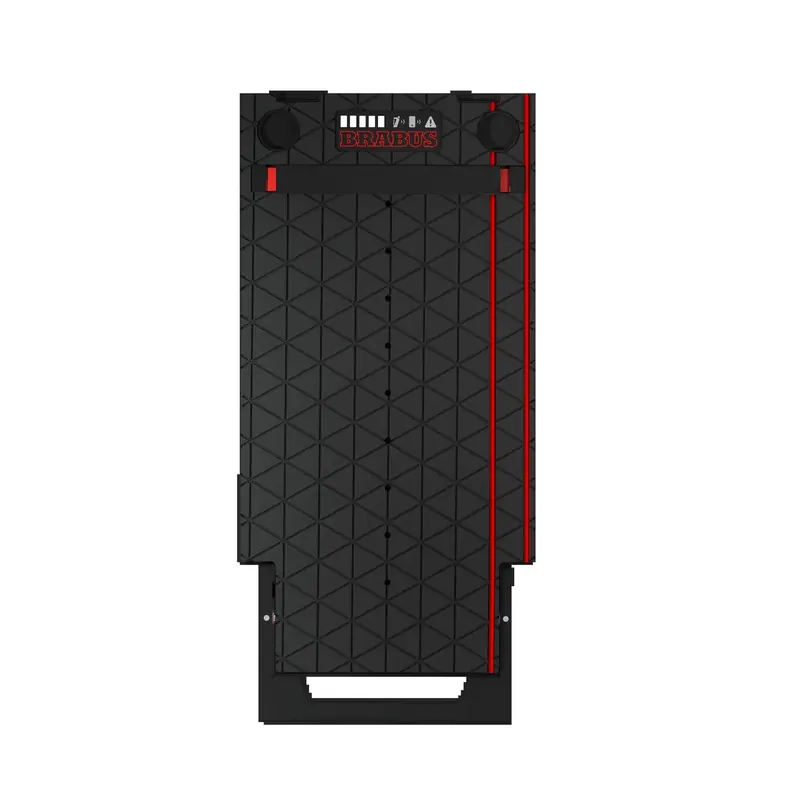
Das Ultimate kostet EUR 15.990 vor Umsatzsteuer und kauft 35 Minuten Fahrzeit, und das ist der Tausch, den die ganze Reihe sichtbar macht. Mehr Geschwindigkeit und weniger Volumen bedeuten weniger Zeit auf dem Wasser. Es gibt außerdem ein BRABUS x Awake Shadow Explore für EUR 15.900, eine limitierte Edition, gebaut mit dem deutschen Veredler, der auch die Tender von Brabus Marine baut. Es ist der Explore-Rumpf in anderen Kleidern.
Der Boardpreis ist die halbe Geschichte, und der Akku ist die andere Hälfte.
Flex 4, und was eine Einheit wirklich begrenzt
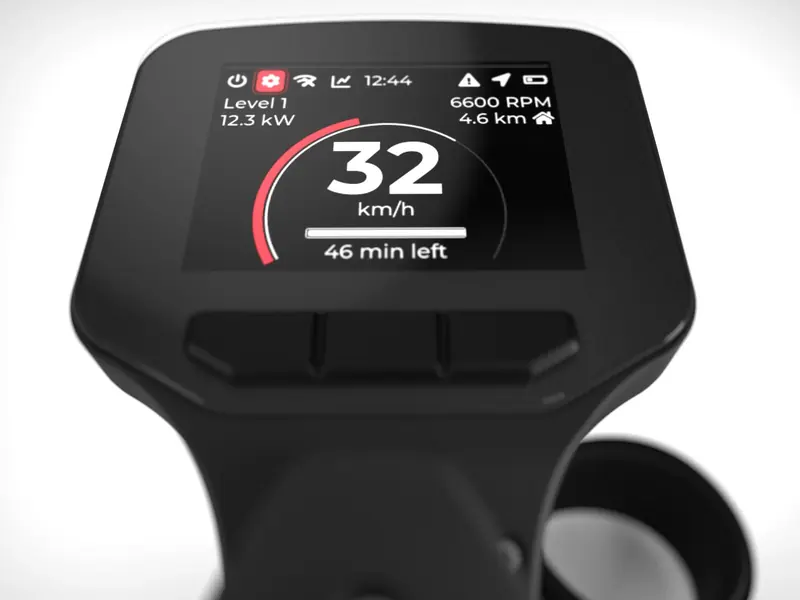
Jedes aktuelle Board fährt das System Flex 4, einen modularen Akku, der ohne Werkzeug ins Board klickt und sich automatisch mit dem Handregler HC 4 verbindet. Die Flex Battery LR 4 steht mit EUR 2.990 vor Umsatzsteuer in der Liste und die größere XR 4 mit EUR 4.990. Die XR 4 wiegt 18,5 kg, gibt rund eine Stunde Fahrzeit, ist bis 10 Meter wasserdicht und ist 5,5 kg leichter als der Akku, den sie ersetzt.
Das wichtige Detail für eine Yacht ist, dass ein Akku eine Einheit ist. Das Laden geht nicht schnell genug, um einen einzelnen Akku zwischen Gästen umzuschlagen, ein Board, das den ganzen Tag verfügbar sein soll, braucht also zwei oder drei. Zu je EUR 4.990 vor Umsatzsteuer können die Akkus so viel kosten wie das Board. Awake verkauft Akkus und Handregler im eigenen Shop als getrennte Artikel, ein Eigner sollte also vor der Unterschrift klären, was ein genannter Preis genau abdeckt.
VINGA, die eFoil-Seite
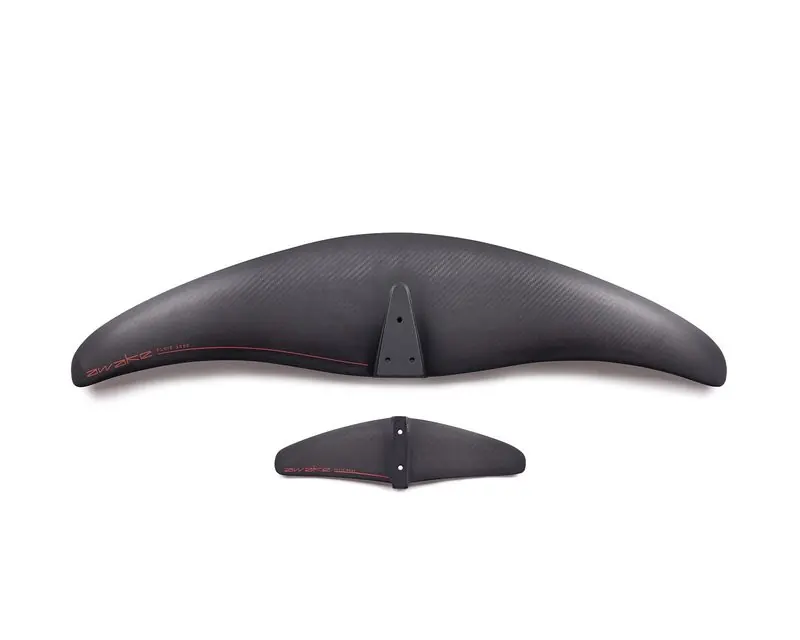
VINGA ist Awakes Antwort auf Lift und Fliteboard, 2022 eingeführt und darauf gebaut, denselben Flex-Akku und denselben Handregler wie die Jetboards zu nutzen. Das Carve ist mit EUR 11.990 vor Umsatzsteuer das Board für Fortgeschrittene, mit den Varianten Adventure und Ultimate darüber und darunter für Fahrten und für Leistung. Das System Click-to-Ride fügt die ganze Einheit ohne Werkzeug zusammen.
Den Akku über beide Produktlinien zu teilen ist das stärkste Argument dafür, überhaupt Awake zu kaufen. Eine Yacht mit zwei RAVIK-Jetboards und einem VINGA-eFoil braucht einen Akkutyp, ein Ladegerät und einen Ladeschrank, was genau den Teil des Wassertoy-Besitzes vereinfacht, der den meisten Ärger macht. Dagegen ist das VINGA ein neueres und weniger erprobtes eFoil als die Boards, gegen die es antritt.
Fahren, und wo es aufhört
Ein Jetboard ist im Einstieg leichter als ein Foil und in der Beherrschung schwerer. Der Fahrer liegt auf dem Board, kommt unter Leistung auf die Knie und stellt sich auf, wenn das Board gleitet, und das Gas ist ein Abzug in einer Hand. Das Explore ist wirklich gutmütig, und deshalb positioniert Awake es für Gäste ohne Lehrer und mit minimaler Aufsicht. Das Ultimate mit 51 Litern trägt einen Erwachsenen im Stand nicht und verlangt einen fähigen Fahrer.
Die Höchstgeschwindigkeiten von 40 bis 55 km/h sind real, aber der nutzbare Marschbereich liegt deutlich darunter. Kabbelsee bestraft ein Jetboard stärker als ein Foil, weil der Rumpf in Kontakt mit der Oberfläche bleibt. In einem vollen Augustankerplatz ist das Wasser meist nur früh gut. Die Fahrzeiten von 35 bis 60 Minuten gelten für einen leichten Fahrer bei guten Bedingungen, und ein schwerer Fahrer mit Vollgas sieht spürbar weniger.
An Bord bringen und rechtmäßig laden
Die Boards sind der leichte Teil. Mit 16 bis 23 kg ist ein RAVIK ein Einmanntransport und braucht ein Wandgestell oder ein Staufach von rund zwei Metern, ohne Kran, Davit oder Hebeplan. Der Flex-Akku kommt heraus und geht an einen Ladepunkt, und dort beginnt die Komplikation. Ein Akku von 18,5 kg ist nichts, was ein Gast eine Passerelle hinaufträgt.
Die Ladeseite ist reguliert. Die UK Maritime and Coastguard Agency veröffentlichte am 19. Dezember 2025 die MGN 681 (M) Amendment 1 zu Brandschutz, Lagerung und Laden kleiner elektrischer Fahrzeuge an Bord von Yachten unter Flaggen der Red Ensign Group, mit einer eigenen Schrankunterbringung für Ersatzakkus über 100 Wh und einer ab dem 1. Januar 2027 erforderlichen britischen Typgenehmigung für neue Ladebehälter. Die Akkus von Awake liegen weit über dieser Schwelle. Eine Crewschulung zum thermischen Durchgehen gehört jetzt zur Erwartung.
Was es kostet, und die Zahl unter der Schlagzeile
Die veröffentlichten Preise verstehen sich ohne Umsatzsteuer, die in den meisten europäischen Märkten ein Fünftel oder mehr auf den gelieferten Betrag legt. Eine realistische Yachtspezifikation sind ein Board, zwei Akkus und ein Ladegerät, und beim Adventure landet das vor Steuern nahe EUR 24.000. Das Ultimate mit zwei XR-4-Akkus liegt noch höher. Das sind kleine Zahlen gegen eine Yacht. Es ist aber auch rund das Doppelte dessen, was der Boardpreis allein nahelegt.
Die laufenden Kosten sind bescheiden. Der Strom für eine Ladung ist gegen den Tagesbedarf einer Yacht vernachlässigbar, und es gibt keinen Kraftstoff, kein Öl, keinen Verschleißring am Impeller in dem Sinn, in dem ein Benzinboard einen hat, und keinen saisonalen Motorservice. Das Verbrauchsteil ist der Akku, und Awakes Garantie von zwei Jahren ist der Maßstab dafür, wie lange ein Eigner erwarten sollte, dass ein Akku seine angegebene Leistung hält, bevor er ersetzt werden muss.
Service, Teile und die Verbindung zu Brabus
Awake verkauft über Händler und über die spezialisierten Wassertoy-Lieferanten, die Mittelmeer und Karibik bedienen, und Boards lassen sich über diese Kanäle in den meisten üblichen Revieren mieten oder betreuen. Das Unternehmen ist klein, was in zwei Richtungen schneidet. Der direkte Kontakt ist leicht, und Firmware-Updates kommen über die eigene App, aber es steht kein Teilenetz wie das von Brunswick oder BRP dahinter.
Die Beziehung zu BRABUS gibt der Marke einen zweiten Weg in die Yachtwelt, denn Brabus Marine baut Tender und Dayboats, die ohnehin neben größeren Yachten liegen. Der schwierige Fall bleibt ein defekter Akku. Lose Lithiumakkus reisen per Luftfracht als Gefahrgut nach UN3480, nur auf Frachtflugzeugen und auf 30 Prozent Ladezustand begrenzt, ein Ersatz ist in der Hochsaison also bestenfalls eine Sache von Tagen.
Gegen JetSurf, Radinn und die Foils
Die Benzinboards von JetSurf sind leichter, schneller wieder betankt und günstiger im Betrieb, und sie sind die Wahl für einen Fahrer, der eine Rennmaschine will. Radinn, ebenfalls schwedisch, konkurriert bei elektrischen Jetboards direkt mit Awake. Die eFoil-Hersteller Lift und Fliteboard konkurrieren um denselben Gast und gewinnen bei der Fahrzeit, denn ein Foil braucht für dieselbe Strecke einen Bruchteil der Energie.
Awake gewinnt mit der Kombination aus Stille, keinem Benzin an Bord und einer Akkufamilie für zwei Bootsarten. Es verliert bei der Ausdauer gegen ein Foil und bei der Servicetiefe gegen die großen Gruppen. Eine Lizenz ist zum Fahren in der Regel nicht nötig, aber ein motorisiertes Board ist für die meisten Hafenbehörden im Mittelmeer ein motorisiertes Fahrzeug, und die Abstandsregeln zu Stränden gelten. Die Reißleine mit Notausschalter am Handgelenk sollte jedes Mal getragen werden.
Class, the IMO, and the price of the locker
Nothing above the flag adds a binding requirement. The International Maritime Organization has no mandatory instrument reaching a portable battery aboard a yacht as of July 2026, and its lithium work sits in the Maritime Safety Committee's review of alternative fuels and new technologies, where MSC 109 added swappable traction battery containers to the list under review and identified nineteen regulatory gaps and MSC 110, sitting from 18 to 27 June 2025, closed the review of regulatory barriers. DNV's Battery (Safety) notation becomes mandatory only above 50 kWh of aggregate installed capacity, which no locker of jetboard packs approaches. Lloyd's Register published LR-GN-052, Guidance Notes on Lithium-Ion Battery Powered Crafts and Vehicles carried on Yachts, on 10 June 2025, addressed to designers, builders and operators as advice rather than rule. ISO 23625:2025 governs lithium-ion batteries above 500 Wh installed in small craft, which catches an electric tender and not a board.
The locker itself is the line nobody prices. The marine active-suppression systems sold against MGN 681, the RACLAN boxes and the modular RAMBSS, and the passive ZARGES BatterySafe cases, were all quotation only in July 2026, with no manufacturer publishing a figure. What is priced publicly is the shore-side industrial cabinet built to EN 14470-1 Type 90, one of the standards the note names. In July 2026 a German supplier listed an asecos ION-CHARGE 90 with pull-out shelves at EUR 3,270 net of VAT, with an internal envelope of 470 by 452 by 582 mm and shelves rated at 25 kg, and a United Kingdom supplier listed the taller asecos ION-CORE-90 at GBP 4,571.04 net or GBP 5,485.25 gross. An 18.5 kg XR 4 pack is the heaviest of the mainstream toy batteries and still inside that 25 kg shelf rating, though two per shelf is not. Neither cabinet carries UK marine type approval, the thing that becomes mandatory on UK-registered yachts from 1 January 2027, and MCA Safety Bulletin 35, updated 15 November 2024, found that a container advertised as fully MGN 681 compliant was not able to comply fully and warned that no international standard governs these products.
Praktische Angaben
| RAVIK Explore price | EUR 9,990 ex. VAT (about EUR 11,900 with 19% German VAT), per Awake's own EU store |
|---|---|
| RAVIK Adventure price | EUR 13,990 ex. VAT (about EUR 16,650 with VAT) |
| RAVIK Ultimate price | EUR 15,990 ex. VAT (about EUR 19,030 with VAT) |
| BRABUS x Awake SHADOW Explore (limited edition) | EUR 15,900 ex. VAT |
| VINGA Carve (eFoil) price | EUR 12,900 ex. VAT on Awake's own site; Ritz Marine's independent 2026 model guide puts the wider VINGA range (Carve through Adventure/Ultimate) at roughly EUR 11,900-14,990 |
| Extra or replacement battery | Flex Battery LR4 EUR 2,990 ex. VAT / Flex Battery XR4 EUR 4,990 ex. VAT on the EU store; the US store lists the same batteries at $3,990 and $5,990 ex. VAT respectively, so US pricing runs noticeably higher than the EUR list price even after currency conversion |
| Battery charger and accessories | Flex Battery Charger EUR 1,090 ex. VAT (EU) / $1,390 (US); Battery Backpack about $130; hand controllers EUR 590-690 ex. VAT |
| How to buy | Order directly at awakeboards.com or awakeboards.us (an account manager follows up after checkout), or through authorized dealers such as Luxury Surf (Fort Lauderdale), SHAKA Jetboards (Mystic, CT), and E-Surfer (Berlin); Awake and its retail partners offer free test rides at locations including Germany, Mallorca and Ibiza |
| Service and long-term reliability data | No public, standardized annual-service price could be confirmed from two independent sources, so no figure is given here; Awake publishes a global warranty policy covering material and workmanship defects, but buyers should confirm current service-plan cost with a dealer directly. No independent long-term reliability or durability track record is publicly available -- reviews so far are first-ride or short-term tests, not multi-season ownership reports |
| Comparable alternatives for price context | Fliteboard runs from about $6,995 for the entry Air up to roughly $14,000-20,000 for Ultra/designer editions; Lift Foils is priced around EUR 15,999 for a comparable set, positioning it near Awake's upper range; Radinn's X-Sport jetboard is the budget outlier at roughly EUR 6,000. This puts Awake in the same premium tier as Lift, above Fliteboard's entry-level options, and well above Radinn |
Angebot anfragen für Awake.
Nennen Sie uns das Modell und wohin es geliefert werden soll. Die Redaktion holt ein schriftliches Angebot beim Hersteller oder einem autorisierten Händler ein, prüft es gegen die auf dieser Seite veröffentlichten Preise und meldet sich per E-Mail. Unverbindlich und ohne Gebühr.
- 01Ein schriftliches AngebotIn Ihrer Währung, mit Mehrwertsteuer, Lieferung und Lieferzeit, kein Prospektpreis.
- 02Geliefert dorthin, wo die Yacht liegtIn die Marina, auf die Werft oder an Ihre Adresse, mit den Papieren, die ein Lithium-Akku oder ein Kranhub braucht.
- 03UnabhängigYotters ist an keinen Händler gebunden, das Angebot wird verglichen, bevor es Sie erreicht.
Was Eigner und Crew berichten
First-hand test found the entry jetboard genuinely easy to learn
Micah Toll tested the RAVIK 3, RAVIK S, and VINGA for Electrek and got up and riding the RAVIK 3 within his first attempts, calling it noticeably more beginner-friendly and stable than other electric surfboards he had tried. He struggled far more on the narrower RAVIK S and could not get up on the VINGA eFoil even after about 30 minutes, showing the learning curve rises sharply across Awake's own range.
Micah Toll, ElectrekRepeat industry tester rates the VINGA a clear step up
Mike Zed, who runs Jetsurfing Nation and had previously tested Awake's RAVIK ONE, RAVIK 3, and RAVIK S, reviewed the VINGA and concluded 'we have a winner here' and said he was excited to see Awake enter the eFoil category, though he gave no detailed breakdown of flaws in that particular piece.
Mike Zed, Jetsurfing NationHands-on European reviewer confirms strong high-speed handling but shorter real-world range than spec
E-Surfer's tester (roughly 90 kg) rode the RAVIK 3 and RAVIK S with the Flex XR battery and reported constant grip even on rough water and in radical curves and clean acceleration, but only got about 30 minutes of riding time with an aggressive style despite the XR battery being marketed for longer sessions. He also noted the board bag is sold separately and the board ships in a large wooden crate rather than a soft case.
Andreas, E-Surfer (Jetboard Experte)Review team flags weight and control layout as real day-to-day friction
Boat & Sail Magazine's reviewers (Christos Nicolaou, Bradley Axmith, and Torben Lonne) praised the RAVIK 3's speed and jump capability but called out the ~88 lb (with battery) board as cumbersome to carry on land, said the thumb throttle controller needs an adjustment period, and described the deck control layout as cluttered.
Boat & Sail Magazine
Was gut ist und worauf zu achten ist
Stärken
- Jet-drive propulsion holds grip in chop where prop-driven rivals struggleMultiple hands-on testers (E-Surfer, Electrek) specifically called out the linear jet drive for maintaining traction and control in rough water and tight turns, which is the main mechanical differentiator Awake cites against prop-based jetboard competitors.
- Genuinely accessible for a first-timer on the entry jetboardElectrek's Micah Toll, testing cold, got from prone to standing and riding on the RAVIK 3 within his first session and called it easier to learn than other electric surfboards he had tried, which supports Awake's beginner-friendly positioning for the Explore/RAVIK 3-class board specifically.
- Shared battery ecosystem across the whole lineAwake's own product pages show the RAVIK jetboards and VINGA eFoils draw on the same Flex battery family (LR4/XR4), so an owner who buys into both product lines is not maintaining two incompatible battery systems, a point also highlighted in Ritz Marine's 2026 brand comparison as a structural advantage over single-category rivals.
Worauf zu achten ist
- Price puts it well outside mainstream watersports spendEven the cheapest current model, the RAVIK Explore, lists at EUR 9,990 ex. VAT (about EUR 11,900 with German VAT) on Awake's own site, and the top RAVIK Ultimate and VINGA Adventure/Ultimate variants run well into the EUR 15,000-20,000 range with an XR battery. Electrek's Toll called cost a bigger barrier to entry than the riding skill itself, and GearJunkie's write-up said the high price caters to a slim, exclusive market.
- Heavy and awkward to move around on landBoat & Sail Magazine measured the RAVIK 3 with battery at roughly 88 lb and called it cumbersome to carry; forum discussion on the E-Surfer community forum flagged board weight (cited around 35 kg for an early model) as a recurring complaint, with posters wanting something closer to 25 kg.
- Top-performance model trades away range and beginner usabilityRitz Marine's 2026 model comparison notes the RAVIK Ultimate is rated for only up to 35 minutes of ride time on its standard battery and explicitly warns its low-volume hull makes it less stable at slow speeds and harder to mount from the water -- the fastest board in the range is also the least forgiving and shortest-legged one.
- eFoiling remains genuinely hard even on Awake's hardwareElectrek's Toll, who succeeded on the RAVIK jetboard the same day, could not get up on the VINGA eFoil even after about 30 minutes of attempts, illustrating that Awake's engineering does not remove the underlying difficulty of learning to foil, regardless of brand polish.
Für wen: Eigner, die ein schnelles Board ohne Benzin an Bord und ohne zu wartenden Motor wollen und bereit sind, den zweiten und dritten Akku gleich mitzukaufen.