Furuno
| Founded in 1938 as a family radio sales and repair shop in Nagasaki Prefecture, Japan, by Kiyotaka Furuno (1920-2013), who commercialized the world's first practical fish finder in 1948 from a war-surplus naval echo sounder | |
| Furuno Electric Co Ltd is a public company on the Tokyo Stock Exchange (ticker 6814), headquartered in Nishinomiya, Hyogo Prefecture, with group revenue of about JPY 140.62 billion for the fiscal year ended February 2026, up 10.76 percent year on year | |
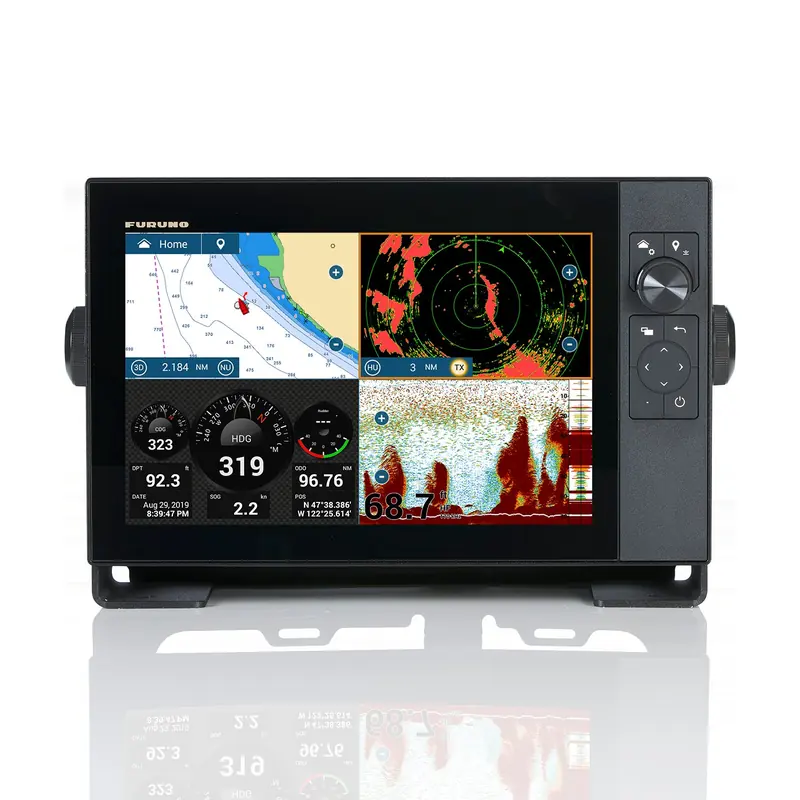
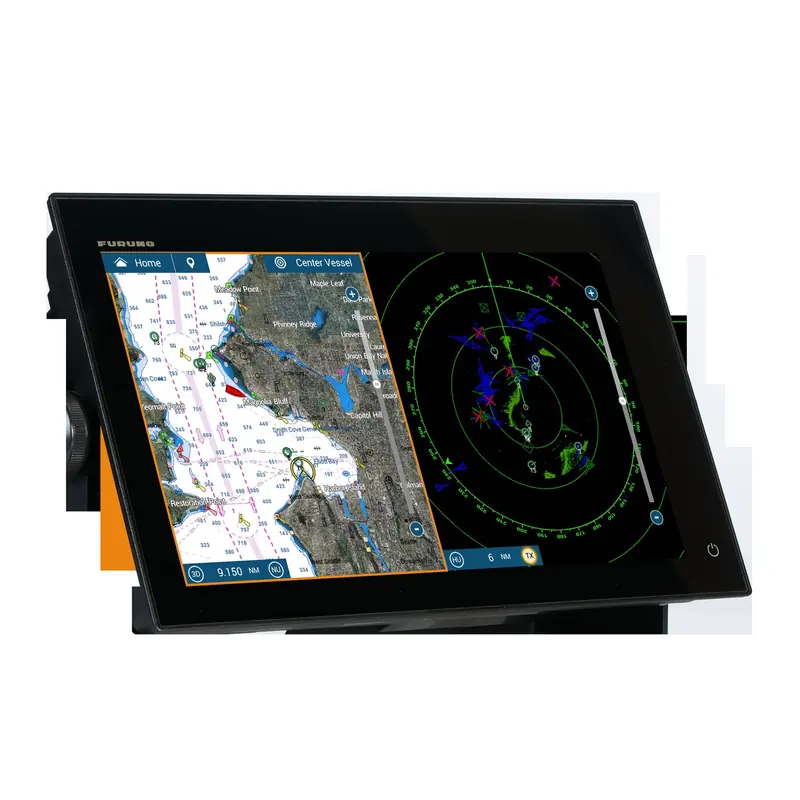
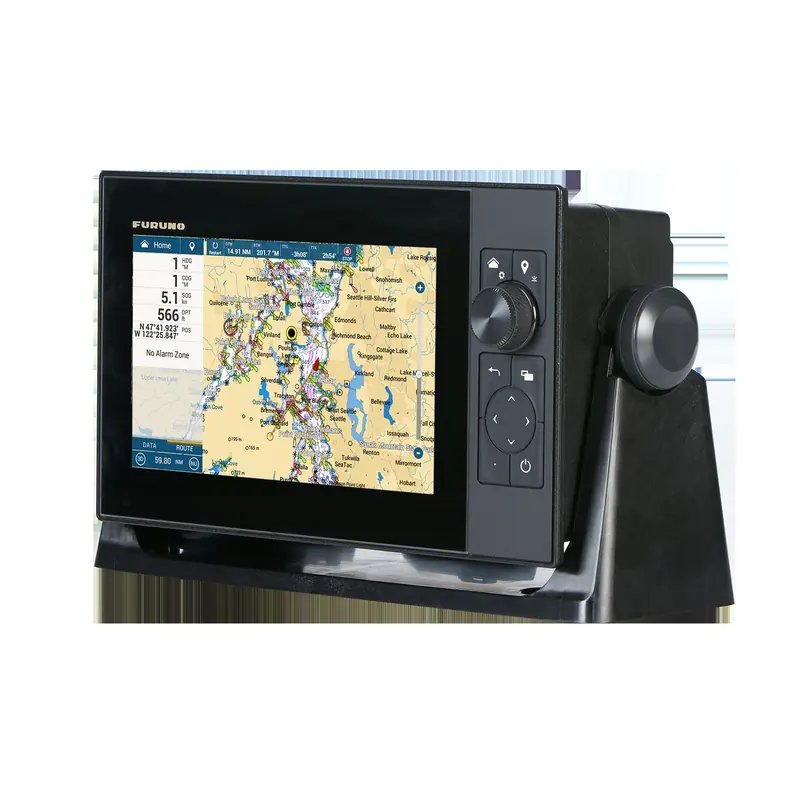
| TZtouch3 multifunction displays run TZT9F USD 2,195, TZT12F USD 3,195, TZT16F USD 4,295 and TZT19F USD 5,995; the 24-inch screen is sold as the newer TZtouchXL TZT24X at USD 11,995, not a TZT24F | |
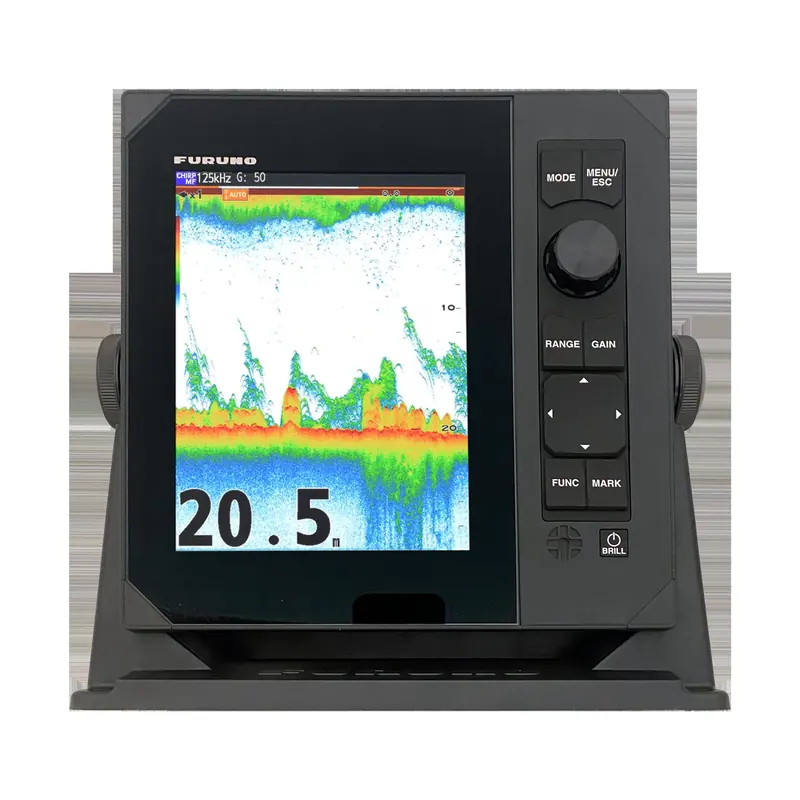
| Every TZtouch3 MFD includes a built-in 1kW dual-channel TruEcho CHIRP fishfinder as standard equipment | |
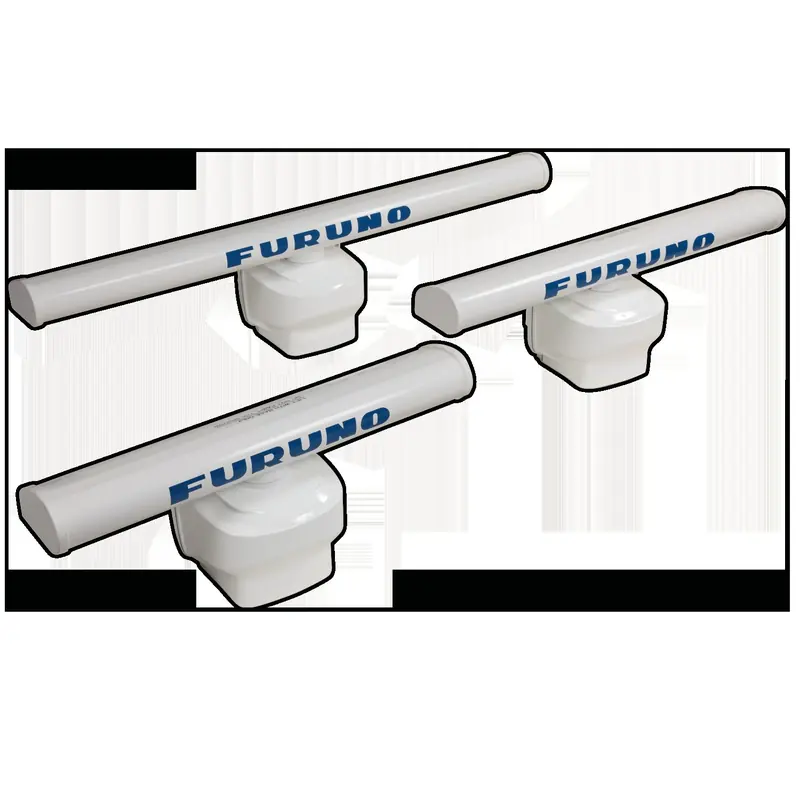
| Solid-state DRS-NXT radar | the 24-inch DRS4D-NXT dome reaches 48 nautical miles at 25W for USD 2,995; the DRS6ANXT open-array pedestal reaches 72nm for USD 5,795 before antenna and cable |
|---|---|
| Traditional magnetron X-Class radar scales up to 25kW and 96 nautical miles on the DRS25A open array, well beyond Raymarine's 24nm Quantum 2 dome and matching or beating Garmin's 48nm GMR Fantom domes | |
| Furuno charts run on a proprietary MapMedia format, not a standard Navionics or C-MAP cartridge; Navionics-cored MapMedia charts have not been sold new since 25 March 2022 | |
| National Fisherman reports the National Marine Electronics Association has named Furuno the industry's most trusted fish finder for 41 consecutive years, and Furuno won 205 NMEA awards at the 2012 convention alone | |
| NAVpilot 300 autopilot packages run about USD 2,195 to 2,595 depending on pump and sensor bundle; the FA-50 Class B AIS transponder lists around USD 1,050 in the US and GBP 974.95 in the UK | |
| Furuno builds SOLAS type-approved ECDIS and integrated bridge systems, including the F-Bridge for commercial yachts over 300 gross tons, with pricing for that tier never published and quoted per vessel | |
How Big Is Furuno's Marine Electronics Business, Really
Furuno Electric Co Ltd trades on the Tokyo Stock Exchange under ticker 6814 and is not a private or family-held company today, even though the Furuno name still sits over the president's office; Yukio Furuno leads the company in recent filings. Group revenue for the fiscal year ended February 2026 came to about JPY 140.62 billion, up 10.76 percent on the prior year's JPY 126.95 billion, according to the company's own financial disclosures compiled by stock-data tracker StockAnalysis. At roughly 150 yen to the US dollar that puts group turnover in the region of USD 930 million, smaller than Garmin's marine segment alone, which reported USD 1.18 billion for fiscal 2025 in its SEC 10-K, though the two numbers are not perfectly comparable since Garmin's figure is one segment of a much larger multi-category company and Furuno's total includes non-marine industrial electronics, GPS chips, ITS equipment and medical devices sold alongside its marine core.
The Marine Business, radar, sonar, fishfinders, chartplotters, communications and autopilot equipment for both commercial vessels and pleasure craft, is Furuno's founding business and remains its largest single segment, run alongside a smaller Industrial Business unit covering GPS receivers, intelligent transportation systems and medical ultrasound equipment that grew out of the same core sonar and signal-processing engineering. Furuno does not break out a separate leisure-yacht revenue figure the way Garmin does for its consumer-facing marine segment, so the precise size of Furuno's yacht and small-craft electronics business specifically, as distinct from its commercial fishing fleet, merchant shipping and coast guard equipment sales, is not published. What is published and independently verifiable is the group total and its steady double-digit growth two years running, plus a Tokyo Stock Exchange listing that makes Furuno's own financial statements a matter of public record in a way a private competitor's would not be.
Where Did Furuno Actually Come From
Kiyotaka Furuno, born in 1920, opened a radio sales and repair shop in Nagasaki Prefecture, on the southern Japanese island of Kyushu, in 1938, according to a company history reprinted by the Japanese government's own Highlighting Japan publication and corroborated by the IEEE Milestones Wiki's entry on Furuno. After the Second World War ended, Furuno acquired an ultrasonic echo sounder that the old Imperial Japanese Navy had released onto the civilian market, and he spent close to a year adapting it to detect schools of fish rather than the seabed or a submarine hull. That work reached the market in 1948, the year Furuno Electric Shokai commercialized what both sources describe as the world's first practical fish finder, sold initially to the fishing and cargo boats working out of Kyushu's ports before spreading nationally. Wikipedia's own entry on the company dates its formal establishment to 1948 rather than 1938, a difference this page treats as the gap between opening a radio repair shop and incorporating a fish-finder business, not a contradiction.
The company that grew from that single product now runs as Furuno Electric Co Ltd, headquartered in Nishinomiya, Hyogo Prefecture, and listed on the Tokyo Stock Exchange under ticker 6814, with Yukio Furuno holding the president's title in recent company filings, so the founding family's name still leads the business even though it is publicly owned rather than privately held. Furuno expanded into the US market in the late 1970s and later acquired eRide Inc, a San Francisco GPS chipset maker, in 2009, extending its own satellite-positioning technology in house rather than buying it in from a third party the way Garmin later bought Navionics for charts. That commercial-fishing and merchant-marine starting point, rather than a recreational-boating one, is the throughline the rest of Furuno's yacht electronics business, and its reputation, still traces back to.
The National Marine Electronics Association has named Furuno the industry's most trusted fish finder for 41 consecutive years.
What Is Actually In Furuno's Yacht Electronics Range Today
The NavNet TZtouch3 line runs four glass-bridge multifunction displays: the 9-inch TZT9F at USD 2,195, the 12-inch TZT12F at USD 3,195, the 16-inch TZT16F at USD 4,295 and the 19-inch TZT19F at USD 5,995, current US retail prices as listed by marine electronics dealers Amazon Marine, Fish307 and Citimarine Store. Every TZtouch3 unit ships with a built-in 1 kW dual-channel TruEcho CHIRP fishfinder as standard rather than an optional extra, a detail Furuno's own product pages and Panbo's hands-on review both confirm. A newer, larger-screen family, TZtouchXL, sits above TZtouch3 for bigger helms; the 24-inch TZT24X lists at USD 11,995 through The GPS Store and several other US dealers, and this page found no evidence of a model actually branded TZT24F, so buyers looking for a 24-inch Furuno screen should expect the TZT24X name, part of the newer XL family, rather than an F-suffix TZtouch3 unit.
Radar splits into two real families sold in parallel. The solid-state DRS-NXT/AX line uses Doppler processing to flag moving targets and needs no magnetron warm-up: the 24-inch DRS4D-NXT radome runs 25W to 48 nautical miles for USD 2,995 at The GPS Store, and the DRS6ANXT open-array pedestal, sold separately from its 3.5, 4 or 6-foot antenna, reaches 72 nautical miles at USD 5,795 for the pedestal alone. Alongside it, the traditional magnetron-based X-Class series scales further for bigger boats: the DRS4D/4DL X-Class radome runs 4kW to 36nm, and the DRS6A, DRS12A and DRS25A X-Class open arrays run 6kW to 48nm, 12kW to 96nm and 25kW to 96nm respectively, per Furuno's own published specification sheet. Sonar beyond the built-in CHIRP includes the DFF3D multi-beam black box, USD 1,197, giving a 120-degree port-to-starboard view to over 650 feet, and the DFF3-UHD high-power CHIRP module, EUR 2,959 including VAT through Furuno France, rated to depths of 15,000 feet. NAVpilot 300 autopilot packages run from about USD 2,195 to 2,595 depending on pump and sensor bundle, and the FA-50 Class B AIS transponder lists around USD 1,050 in the US and GBP 974.95 in the UK.
How Does Furuno's Radar Actually Compare To Garmin And Raymarine
Raymarine's own current radome, the WiFi-connected Quantum 2 at about 3.5 lb, maxes out at 24 nautical miles, half the range of Furuno's similarly sized DRS4D-NXT dome and a figure this page's own Raymarine entry flags directly as a genuine weakness against both Garmin and Furuno. Garmin's GMR Fantom domes, the 18-inch at USD 1,999.99 and the 24-inch at USD 2,799.99, both reach the same 48 nautical mile ceiling as Furuno's DRS4D-NXT, so the two brands are essentially tied on dome range at a lower price than Furuno's USD 2,995, while Furuno's open-array DRS6ANXT and the older X-Class magnetron arrays extend well beyond either rival, up to 96 nautical miles on the 12kW and 25kW X-Class units, a scale mainly relevant to larger motoryachts and commercial-style bridges rather than a typical center console or express cruiser.
All three brands now sell solid-state, Doppler-capable radar as their headline product, Furuno's Target Analyzer and Fast Target Tracking, Garmin's MotionScope, Raymarine's own Doppler processing on Cyclone, so the meaningful difference for a yacht buyer is less about whether Doppler moving-target detection exists and more about maximum range, beam width and true ARPA tracking depth, where Furuno's commercial and SOLAS-radar heritage still shows through at the open-array end of its range. Panbo's hands-on test of the DRS25A-NXT, a 25kW open array paired with a TZT3 display, reported the radar picking out a distant thunderstorm more than 95 miles away and a lone kayaker over a mile off, performance the reviewer described as a clear step up from a prior manufacturer's radar that had disappointed on both reliability and range over three years of use.
Why Doesn't Furuno Use Standard Navionics Or C-MAP Charts
Furuno's own TZtouch FAQ, published on Furuno USA's site, states plainly that Jeppesen and Navionics vector chart data is converted into Furuno's own MapMedia, or MM3D, format for use on TZtouch, TZtouch2 and TZtouch3, meaning a Navionics Platinum or C-MAP 4D chart card bought for a Garmin or Raymarine unit will not simply plug into a Furuno display the way it would on a competitor's chartplotter. C-MAP data and what Furuno calls Datacore by Navionics remain available as unlockable options in that proprietary format, but Furuno UK's own support pages confirm that MapMedia charts built on Navionics data stopped being available for new purchase from 25 March 2022 onward, a real limitation for anyone assuming Furuno charting works exactly like every other major brand.
The practical consequence, discussed at length in Furuno's own owner community forum, is that existing TZtouch2 and TZtouch3 owners debate whether the newer TZ Maps cloud-based charting subscription, built for Furuno's separate TZ iBoat and TimeZero ecosystem, has effectively overtaken the older on-unit MapMedia charts in quality, with at least one experienced forum poster describing TZT3's own built-in charts as no longer competitive once that newer product is in the picture. Buyers used to Garmin's Navionics+ or Raymarine's direct Navionics and C-MAP support should budget time to understand Furuno's own chart ecosystem, MapMedia plus the newer TZ Maps option, rather than assuming a chart card bought for another brand will carry straight over.
Is Furuno Actually More Reliable Than Garmin Or Raymarine, According To Real Owners
On The Hull Truth's marine electronics forum, a thread titled simply Furuno reliability and a separate one titled It seems to me Furuno is still the most reliable both run to multiple pages of owners and dealers describing Furuno as the benchmark in the echosounder and radar category, with one poster recounting Furuno repairing and re-certifying a 1984 radar unit at no charge decades after purchase. On the Trawler Forum, threads comparing Furuno against Garmin and against Simrad draw comments that commercial vessels and coast guard fleets overwhelmingly run Furuno, that a marine electronics dealer performing factory service across multiple brands sees the fewest Furuno units come back for repair, and one former commercial boat operator reporting no problems across 15 years of use. The National Marine Electronics Association has recognized Furuno as the industry's most trusted fish finder for 41 consecutive years according to trade title National Fisherman, and Furuno collected 205 NMEA awards at the 2012 NMEA convention alone, more than its next two competitors combined.
Panbo's independent, unpaid TZT3 field test on a 37-foot sportfisherman reported no significant reliability issues across six weeks of real use, after the same owner had spent three prior years disappointed by another manufacturer's radar reliability and performance, and singled out the SCX-20 satellite compass as more accurate and drift-free than a conventional fluxgate heading sensor. That said, the reputation is strongest around Furuno's core commercial heritage, magnetron radar, echo sounders and fish finders, rather than guaranteed across every touchscreen product; Panbo's own review flagged real, if minor, software gaps in fuel-tank display and VHF DSC integration on the same TZT3 units praised for radar performance, a reminder that Furuno's touchscreen chartplotter software is a newer, less battle-tested layer sitting on top of decades-proven sensor hardware.
What Does Furuno Not Do Well, The Honest Weak Spots
A widely read YBW Forum thread titled bluntly dont buy Furuno lays out a specific, dated case: an owner's Furuno 1623 radar failed with an antenna fault, the nearest Furuno dealer to his home in Pwllheli, North Wales was in Liverpool, that dealer would not travel to install or diagnose locally because Furuno's warranty covered only two hours of labor, and Furuno required the entire dome, display and cable assembly shipped back rather than tested locally, forcing a full reinstallation on return; a nearby independent repair shop capable of the job had lost its Furuno dealer status specifically because it serviced rather than sold Furuno gear. The poster's own conclusion was to recommend Raymarine instead, on the specific grounds of better local service availability in that region, a genuine and named counterpoint to the reliability praise found on The Hull Truth and Trawler Forum, and a reminder that Furuno's dealer density varies a great deal by region.
On the product side, Furuno has no direct consumer equivalent to Garmin's Panoptix LiveScope, Humminbird's MEGA Live or Lowrance's ActiveTarget, the forward-facing live sonar systems that now dominate recreational bass and inshore fishing; Furuno's comparable technology, its Searchlight sonar and the newer CSH10 Omni Sonar, is built and priced for offshore sportfishing and tournament pelagic tracking rather than sold as an affordable bow-mounted trolling-motor accessory. Furuno also enforces a published Minimum Retail Price policy that bars its dealers from discounting below a set floor, which keeps prices consistent but removes the shopping-around discount a Garmin or Raymarine buyer might find, and its radar is frequently sold a la carte, pedestal, antenna and cable priced and bought separately, which can make a finished open-array installation cost more to assemble than a single bundled competitor price suggests.
Where Does Furuno's Superyacht And Commercial Bridge Business Fit In
Furuno's Voyager ECDIS/INS system and its wider Integrated Bridge System range are built to SOLAS type-approval standards for merchant vessels, and the same underlying radar, ECDIS and communications technology extends into the superyacht world through Furuno Italia's F-Bridge, developed with German on-board automation specialist Boning specifically for commercial yachts above 300 gross tons, according to marine trade press Pressmare and Hatteland Technology's own coverage of the system fitted aboard a Baglietto T52 superyacht. Barche magazine has separately documented a full Furuno integrated bridge installed aboard a 73-meter superyacht, combining radar, ECDIS, GPS, autopilot and safety systems into a single interface intended to cut both human error and operational complexity on a vessel that size, a scale and certification level neither Garmin nor Raymarine markets equipment for.
None of this SOLAS or ECDIS-class bridge pricing appears in any public retail listing this page could find, and it would not be expected to; systems at that scale are specified, engineered and quoted per vessel by Furuno's own commercial and superyacht divisions or its regional distributors such as Radio Holland, not sold off a price list the way a TZT9F or a DRS4D-NXT is. A buyer evaluating a large yacht's bridge refit should treat any number quoted for this tier as a starting point for negotiation rather than a fixed retail price, and should expect the process to run through Furuno's commercial network rather than the consumer dealers who sell TZtouch3 and DRS-NXT hardware to smaller boats.
Praktische Angaben
| MFD price range | TZtouch3 runs USD 2,195 for the 9-inch TZT9F up to USD 5,995 for the 19-inch TZT19F; the 24-inch screen is the newer TZtouchXL TZT24X at USD 11,995, not a TZT24F, per US retailers Amazon Marine, Fish307, Citimarine Store and The GPS Store. |
|---|---|
| Radar price range | Solid-state DRS4D-NXT dome (48nm) is USD 2,995; the DRS6ANXT open-array pedestal (72nm) is USD 5,795 before antenna and cable; magnetron X-Class open arrays scale to 25kW and 96nm but are not listed at a fixed consumer retail price. |
| Sonar and fishfinder price range | DFF3D multi-beam black box is USD 1,197; DFF3-UHD high-power CHIRP module is EUR 2,959 including VAT (Furuno France); standalone FCV-1150 sounder runs USD 1,349 to 2,200 depending on retailer, with the transducer sold separately. |
| Autopilot and AIS | NAVpilot 300 packages run about USD 2,195 to 2,595 depending on pump and sensor bundle; the FA-50 Class B AIS transponder lists around USD 1,050 in the US and GBP 974.95 in the UK. |
| Chart format | Furuno uses its own proprietary MapMedia format for Navionics and C-MAP data rather than a standard cartridge; Navionics-cored MapMedia charts have not been available for new purchase since 25 March 2022, per Furuno UK support. |
| What is NOT published | SOLAS-class ECDIS and integrated bridge system pricing, including the F-Bridge for yachts over 300 gross tons, is quoted per vessel through Furuno's commercial network and distributors such as Radio Holland, and is never listed at retail. |
Was Eigner und Crew berichten
A 1984 radar repaired and re-certified for free
A Hull Truth poster described sending in a Furuno radar from 1984 and having the company repair and certify it at no charge decades after purchase, cited repeatedly in that forum's reliability threads as proof of Furuno's long support horizon.
The Hull Truth (owner forum)Commercial and coast guard fleets run Furuno almost by default
Trawler Forum threads comparing Furuno against Garmin and Simrad describe commercial vessels and coast guard fleets as overwhelmingly Furuno-equipped, with one former commercial boat operator reporting no problems across 15 years of use and a multi-brand service dealer seeing the fewest Furuno units returned for repair.
Trawler ForumStrong real-world radar performance, with real software gaps
Marine electronics reviewer Ben Ellison's six-week, real-installation test of the TZT3 and DRS25A-NXT radar on a 37-foot sportfisherman reported no significant reliability issues and radar strong enough to spot a distant thunderstorm more than 95 miles out, while also flagging real limits in fuel-tank display and VHF DSC integration.
PanboNo local dealer left a UK owner stuck after a radar fault
A YBW Forum poster whose Furuno 1623 radar failed with an antenna fault found no Furuno dealer nearer than Liverpool to his home in North Wales, a two-hour warranty labor cap that ruled out an on-site visit, and had to ship the entire dome, display and cable assembly back rather than get it fixed locally, afterward recommending Raymarine instead for that region.
YBW Forum
Was gut ist und worauf zu achten ist
Stärken
- Radar range and heritage lead the categoryFuruno's 24-inch DRS4D-NXT dome reaches 48 nautical miles and its X-Class open arrays scale to 96nm at 25kW, beating Raymarine's 24nm Quantum 2 dome outright and matching or beating Garmin's 48nm GMR Fantom domes, built on decades of SOLAS-grade commercial radar engineering.
- An independently verified reliability reputationThe Hull Truth and Trawler Forum threads spanning years describe Furuno as the benchmark in radar and echo sounders, commercial dealers report the fewest Furuno units returned for service, and the National Marine Electronics Association has named Furuno the industry's most trusted fish finder for 41 consecutive years.
- A genuine commercial and superyacht bridge businessSOLAS type-approved Voyager ECDIS/INS and the Boning-built F-Bridge integrated bridge system for yachts over 300 gross tons put Furuno in a certified, large-vessel segment neither Garmin nor Raymarine competes in at the same level.
- Long product support lifecyclesHull Truth owners document Furuno repairing and re-certifying units decades old, including a 1984 radar, at no charge, a support horizon well beyond a typical consumer electronics warranty.
Worauf zu achten ist
- A proprietary chart format, not standard Navionics or C-MAPFuruno converts Navionics and C-MAP data into its own MapMedia format rather than accepting an off-the-shelf chart cartridge, and Navionics-cored MapMedia charts have not been sold new since March 2022, a real compatibility gap against Garmin and Raymarine.
- No consumer equivalent to Garmin's LiveScopeFuruno has no bow-mounted, affordable forward-facing live sonar to match Garmin Panoptix LiveScope, Humminbird MEGA Live or Lowrance ActiveTarget; its comparable Searchlight and CSH10 Omni Sonar are priced and built for offshore sportfishing and tournament use, not everyday inshore or bass fishing.
- An uneven dealer and service networkA documented YBW Forum case describes a UK owner with no local Furuno dealer, a warranty capped at two hours of labor, and a full antenna and cable assembly shipped back rather than repaired locally, with the poster recommending Raymarine instead for that specific region.
- A price floor and a la carte hardware pricingFuruno enforces a Minimum Retail Price policy that stops dealers discounting, and radar is typically sold as separate pedestal, antenna and cable line items, which can make a finished open-array installation cost more to piece together than a single bundled competitor price suggests.
Für wen: Owners and captains who prioritize proven radar range and sonar reliability, especially anyone running a sportfisherman, trawler or larger motoryacht, over the more consumer-integrated ecosystems Garmin and Raymarine sell.