Quick Spa
| Category | windlasses, capstans, thrusters, gyroscopic stabilisers, generators, LED lighting and battery chargers for boats and yachts |
|---|---|
| Founded | 1982 as PM Marina, a marine electronics and systems installer, by Michele Marzucco and Alfonso Peduto |
| Became Quick | PM Marina acquired the Quick brand in 1992 and took its name |
| Headquarters | Ravenna, Italy, a 30,000 square metre site (20,000 covered) with in-house CNC, CAD-CAM and deep-drawing production |
| Ownership | Fondo Italiano d'Investimento and Armonia SGR bought a 70 percent majority stake in August 2022; the Marzucco family holds the rest |
| Scale | over 450 employees, about 200 at the Ravenna headquarters, more than 750,000 products a year, sold in 110 countries through over 80 distributors |
| 2022 revenue | EUR 62 million, up from EUR 36 million in 2018 |
| MC2 gyro stabiliser sales | EUR 11 million in 2022, up 252 percent on 2018 |
| Gyro range | seventeen models, Quick Gyro X2 DC at 2,000 N-m up to X75 AC at 75,000 N-m, claimed up to 95 percent roll reduction and rated to 250 tons |
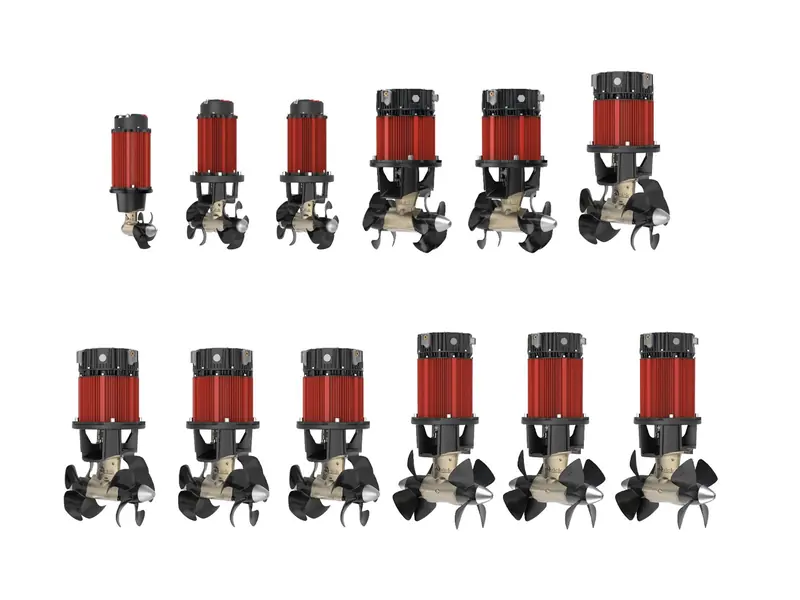
| Thruster range | 25 kgf compact tunnel units for 16 to 23 ft boats up to 1,400 kgf AC units for 131 to 180 ft superyachts |
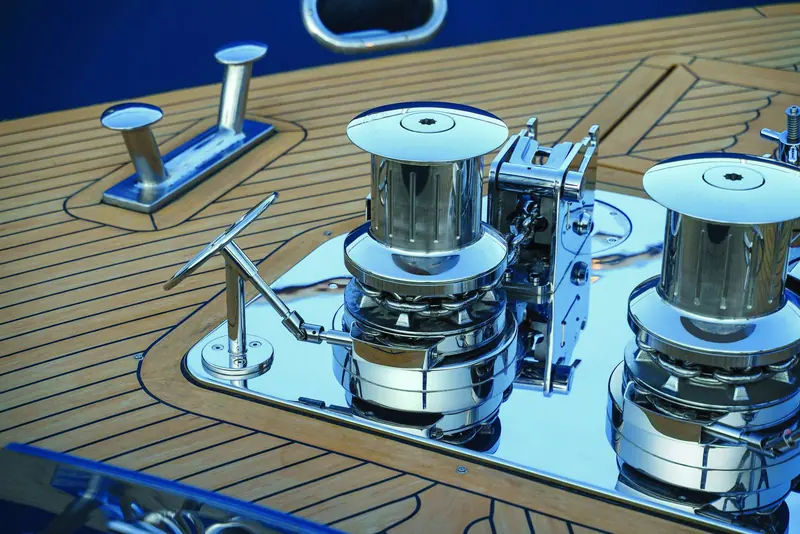
| Windlass range | vertical, horizontal and rope-only models; the Antares AT1012, a common 33 to 43 ft size, pulls 2,200 lbs and lists around USD 1,070 to 1,260 depending on retailer and gypsy size |
| Warranty | 3 years full warranty on windlasses through Quick USA; the MC2 gyro carries its own extended cover sold through dealers |
| 2023 acquisitions | Sanguineti, Xenta and Nemo, widening the product portfolio beyond the original deck equipment |
From a Two-Man Electronics Fitter to a Private Equity-Backed Group
PM Marina spent its first decade fitting other people's electronics before buying the Quick name in 1992 and building outward from there: Nautic Boiler, the Italian arm of Atwood, came in 1998 for water heaters; CATT srl followed in 2003; Quick USA opened in 2006 to serve North America directly; Sigmar Marine, a water heater specialist, joined in 2007. The gyro stabiliser business traces to a 2016 acquisition of Item Mare and the MC2 Marecalmo brand, the year the company also expanded its Ravenna headquarters.
Michele Marzucco bought out the remaining minority shareholders in 2018 and opened Quick UK the same year, before the biggest change in the company's structure: in August 2022, Fondo Italiano d'Investimento and Armonia SGR, two Italian private equity funds, took a 70 percent majority stake, with the Marzucco family retaining the balance. A further round of acquisitions in 2023, Sanguineti, Xenta and Nemo, pushed the group beyond its original anchoring and electrical catalogue. Revenue nearly doubled from EUR 36 million in 2018 to EUR 62 million in 2022, with the gyro stabiliser line alone up 252 percent over the same period to EUR 11 million.
What Quick Actually Sells
The anchoring line covers vertical windlasses such as the Prince, Rider and Antares families, horizontal on-deck units like the Genius and Hector, and rope-only and capstan variants for boats that do not carry chain. Thrusters span eight configurations: QSY twin counter-rotating and standard DC units at 12, 24 or 48 volts, AC units at 400 or 690 volts for large yachts, DC-AC hybrid systems, hydraulic thrusters, and retractable versions of each. The smallest listed unit, the BT QSY 140, produces 50 kgf for boats of 23 to 33 ft; the largest, the BTAC 610, delivers 1,400 kgf from a 90 kW AC motor for superyachts of 131 to 180 ft.
Away from the hull, Quick makes SBC battery chargers and inverters, a full range of LED navigation, deck and interior lighting under Quick Marine Lighting, and Nautic Boiler water heaters, a business it has owned since 1998. None of these are the reason most owners learn the name; that is almost always either an anchor windlass they operate every time they leave a marina, or a gyro stabiliser they only notice by its absence.
Quick usually means the same job as the equipment everyone has heard of, for noticeably less money.
The MC2 Gyro: the Cheaper Way to Stop the Roll
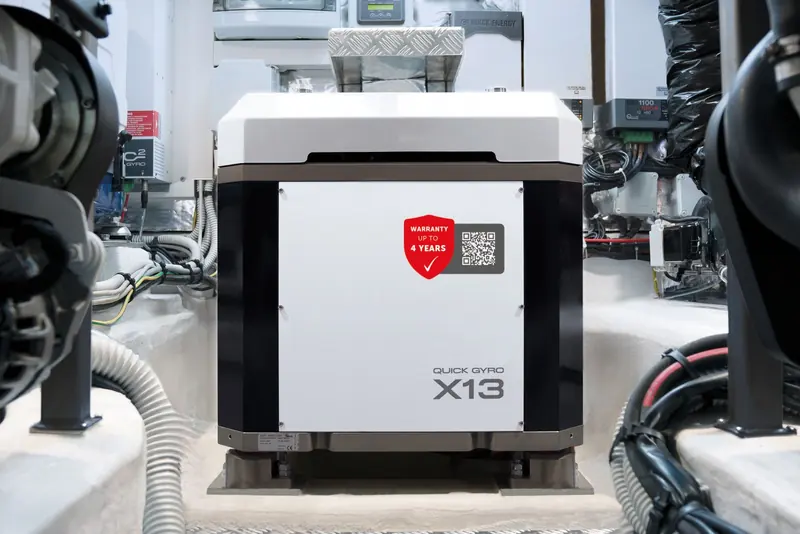
Seventeen models span the Quick Gyro X2 DC, rated to 2,000 N-m for small boats, up to the X75 AC at 75,000 N-m. A boat in this site's usual 21 m to 33 m range sits around the X13 to X30 bracket: the X13 DC is rated to 12,850 N-m at 900 to 2,000 W and measures 590 by 590 by 557 mm, small enough that Quick markets it as amidships-mountable under a sole rather than requiring a dedicated compartment. Quick's own literature claims no water pump, no seawater intake and no heat exchanger to service, in place of Seakeeper's glycol-and-seawater cooling loop, and points to a five-inch touch control panel with an iOS and Android app that logs sea-trial performance.
Pricing is quoted per boat rather than published outright, the same practice Seakeeper follows above its mid-range models, but the numbers that surface from dealers put the smallest MC2 units from around USD 22,000 and a mid-size AC unit like the X7 LV at roughly GBP 21,500 (about USD 27,000) through a UK trade supplier, tracking 10 to 20 percent under a comparably rated Seakeeper. That gap, combined with a genuinely smaller footprint, is why Quick's gyro revenue rose 252 percent between 2018 and 2022 while the rest of the catalogue grew far more slowly.
Thrusters and Windlasses: What They Cost to Buy
At the small end, a BTQ 110-25 thruster (25 kgf, 1.3 kW, 12 V) was listed at EUR 893.95 through a German chandlery, and a BTQ 125-40 (40 kgf, 2.2 kW, 12 V) at EUR 1,249.95; a US dealer priced the larger BTQ 185 line at USD 1,930 for 55 kgf and USD 2,200 for 75 kgf. The Antares AT1012, a 1,000 W 12-volt vertical windlass rated to 2,200 lbs maximum pull and aimed at 33 to 43 ft boats, was seen across several US retailers between USD 1,069 and USD 1,258 depending on whether it came with a drum and which gypsy size was fitted. Every one of those prices is hardware alone, before installation, wiring and any control panel upgrade.
Trade sources quoted in the boating press put Quick windlasses at roughly USD 300 less than a comparable Lofrans unit, and forum posters describe the brand generally as meaningfully cheaper than Side-Power or Vetus for a similar thrust rating. Quick USA backs its windlasses with a three-year full warranty, run through its Baltimore office, with parallel Quick UK and Quick Group offices in Southampton for European buyers.

A Shipyard Partner, Not Just a Parts Supplier
Quick's OEM sales team describes its relationship with the Italian builder Invictus Yacht as running back to before the brand's 2014 founding, when it began as a simple supplier of windlasses and battery chargers to Invictus's parent yard. By the Invictus TT550 and ST550, two 16.87 metre models shown at the September 2025 Cannes Yachting Festival, the relationship had grown to cover anchoring, water heaters, lighting including RGBW underwater systems, gyro stabilisers, tender recovery winches and, through Quick's Sanguineti brand, mooring hardware. Stefano Tinti, Quick's OEM sales director, put it plainly: "we are not just a supplier, we are partners."
One concrete number from that relationship shows what standardising on one supplier can save a yard in labour rather than just in parts cost: Quick's engineering team built an RGBW lighting management system for Invictus that cut installation time from eight hours with two electricians to one hour with one, according to the company's own account of the project. That kind of fitting-time saving does not show up on an equipment invoice, but it is exactly the sort of detail a yard weighs when choosing a supplier for a whole model range rather than a one-off retrofit, and it explains why Quick appears as standard equipment on production boats from several European builders rather than only as an aftermarket upgrade.
What Owners and the Trade Actually Say
On Sailboat Owners' forum, one poster fitting a Quick Antares windlass reported it "works great" and called Quick "a well respected Italian company," while a separate thread starter researching bow thrusters wrote that professionals they consulted recommended Side-Power or Vetus instead, adding "I never hear of Quick. I'd be suspect if I were you," and questioning whether it was "worth twice the price of a Lewmar unit with the same power" on a like-for-like comparison, a reminder that Quick is not always the cheapest name in the aisle once currency and spec are matched exactly. On boating forums covering Hanse and other European production sailboats, where Quick is frequently the standard-fit thruster, several owners describe it as a cheaper alternative to Side-Power rather than a like-for-like substitute.
The gyro side has a shorter track record simply because it is newer: Quick's own figures show the MC2 line only became a meaningful part of the business after 2018. Southern Boating and Power Boat Magazine, both of which ran manufacturer-supplied test days rather than independent long-term reviews, reported the claimed 95 percent roll reduction and the compact air-cooled housing without raising reliability concerns, but neither publication had owned a unit long enough to speak to the multi-year service history that exists for Seakeeper. An owner buying a Quick gyro today is buying into a design that is mechanically simpler on paper, at a real discount, with less independent long-term evidence behind it than the market leader.
Praktische Angaben
| Windlass prices, hardware only | A Quick Antares AT1012, a 1,000 W 12-volt vertical windlass rated to 2,200 lbs maximum pull for boats of roughly 33 to 43 ft, was priced between USD 1,069 and USD 1,258 across several US chandleries in 2026 depending on gypsy size and whether a drum was fitted. None of these prices include installation, wiring, a deck socket or a control panel. |
|---|---|
| Thruster prices, hardware only | A BTQ 110-25 (25 kgf, 1.3 kW, 12 V) listed at EUR 893.95 and a BTQ 125-40 (40 kgf, 2.2 kW, 12 V) at EUR 1,249.95 through a German chandlery; a US dealer priced the larger BTQ 185 line at USD 1,930 for 55 kgf and USD 2,200 for 75 kgf. The largest AC units for superyachts, up to 1,400 kgf, are quoted per project. |
| MC2 gyro pricing is per boat, not published | Like Seakeeper above its mid-range models, Quick does not publish a retail price list for the MC2 Gyro. Figures seen from dealers put entry models from around USD 22,000 and a mid-size AC unit, the X7 LV, at roughly GBP 21,500 (about USD 27,000) through a UK trade supplier. General estimates put the range at USD 16,000 to USD 52,000 across the line, all before installation. |
| The claimed price gap against Seakeeper | Trade and owner sources describe Quick's MC2 gyro as running 10 to 20 percent below a comparably rated Seakeeper, and Quick windlasses as roughly USD 300 cheaper than an equivalent Lofrans unit. Neither maker publishes a direct comparison, so treat these as directional rather than exact. |
| What the smaller housing changes about installation | Quick markets the MC2 gyro's air-cooled, horizontal-axis design as roughly 20 percent smaller than a water-cooled vacuum-sphere gyro of the same rating, with no seawater intake, pump or heat exchanger to route. That can matter more on a retrofit into an existing lazarette than on new construction, where either design can be planned for from the start. |
| Warranty | Quick USA states a three-year full warranty on its windlasses. The MC2 gyro is sold with its own warranty terms through dealers, and an extended programme is available while the unit is still inside the factory cover period, matching the pattern the rest of the gyro-stabiliser market follows. |
| Where to buy and get support | Quick sells through more than 80 distributors in 110 countries, with direct company offices in Ravenna, Baltimore (Quick USA) and Southampton (Quick UK). Quick USA support runs through (410) 636-5991 and [email protected]. |
| What is NOT published | Quick does not publish a retail price list for any gyro model, an installed cost the way one US Seakeeper dealer does from over 900 jobs, or an independent long-term reliability study. Every roll-reduction and efficiency figure quoted for the MC2 line is the company's own. |
Was Eigner und Crew berichten
A well-regarded name for anchoring gear, less known for thrusters
One Quick Antares windlass owner on Sailboat Owners' forum reported it "works great" and called Quick "a well respected Italian company," but the same forum's separate thread on bow thrusters found a buyer told by professionals to fit Side-Power or Vetus instead, writing they had never heard of Quick and would be suspicious of it, and questioning whether it justified twice a comparable Lewmar's price for equal power.
Sailboat Owners forumA standard-fit brand on European production sailboats, priced as the budget option
Quick thrusters are commonly fitted from the factory on Hanse and similar European production sailboats, and owners on cruising forums describe the brand as a cheaper alternative chosen by builders ahead of Side-Power rather than a direct substitute chosen by owners themselves.
The Hull Truth (owner forum)The claimed engineering advantage, from the manufacturer's own test days
Manufacturer-facilitated test coverage describes the MC2 gyro as roughly 20 percent smaller than competing designs of the same rating, with no water pump, seawater intake or heat exchanger to maintain, an automatic thermal cutback to 80 percent power rather than a full shutdown, and a five-inch touch panel with a companion app that logs sea-trial performance.
Southern Boating and Power Boat Magazine
Was gut ist und worauf zu achten ist
Stärken
- Real, meaningful savings against the market leadersTrade pricing puts the MC2 gyro 10 to 20 percent below a comparable Seakeeper and Quick windlasses roughly USD 300 under an equivalent Lofrans unit, at a similar claimed performance on paper. For an owner outfitting a boat on a fixed budget, that is real money back for the rest of the refit.
- A genuinely different, simpler gyro designRunning the flywheel on a horizontal axis in an air-cooled housing removes the seawater intake, pump and heat exchanger that a vacuum-sphere gyro needs, and Quick's own figures put the resulting unit about 20 percent smaller for a given torque rating, which matters most on a tight retrofit.
- A genuinely large, fast-growing company behind itEUR 62 million in 2022 revenue, over 450 employees, 750,000 products a year and 110-country distribution are not the numbers of a boutique supplier. Private equity ownership since 2022 has funded further acquisitions rather than a retreat.
- A three-year warranty as standard on windlassesQuick USA's three-year full warranty on windlasses is a genuine commitment, backed by dedicated US and UK offices rather than a distributor relationship alone.
- The full range covers a boat's entire deck-equipment budgetWindlass, thruster, gyro, LED lighting, battery charging and water heating from one maker, sold through the same distributor network, simplifies sourcing and warranty claims into a single relationship rather than five.
Worauf zu achten ist
- Thinner independent track record than the brands it undercutsSeakeeper and Side-Power both have a decade or more of English-language forum history to draw on; Quick's gyro business only became significant after 2018. An owner buying an MC2 gyro today is buying a shorter public record of how it ages.
- Real skepticism exists among experienced buyersA boater researching bow thrusters on Sailboat Owners' forum was told by professionals to use Side-Power or Vetus instead, writing "I never hear of Quick. I'd be suspect if I were you," and separately questioned whether Quick was worth twice a comparable Lewmar's price once specs were matched exactly rather than compared loosely.
- No published retail price list for the equipment most likely to matterThe MC2 gyro, the product driving Quick's fastest growth, is quoted per boat rather than published, exactly like Seakeeper above its mid-range models. An owner cannot budget from the manufacturer's own site and has to go through a dealer to get a real number.
- No independent installed-cost data of the kind Seakeeper's dealer network publishesOne US Seakeeper installer publishes average installed cost against list price from more than 900 jobs. No equivalent table exists for the MC2 gyro, so an owner cannot separate hardware cost from the labour and structural work a retrofit needs.
- The reviews that exist are largely manufacturer-facilitatedSouthern Boating and Power Boat Magazine both covered the MC2 gyro through company-run test days rather than a long-term independent trial, so the 95 percent roll-reduction figure and the maintenance-free claims have not yet been tested by an owner over several years the way Seakeeper's have.
Für wen: Owners and builders fitting windlasses, thrusters or a gyro stabiliser on a budget that Side-Power, Vetus or Seakeeper pricing does not fit, and who are comfortable buying a design with less multi-year track record in exchange for a real discount.