Rocna
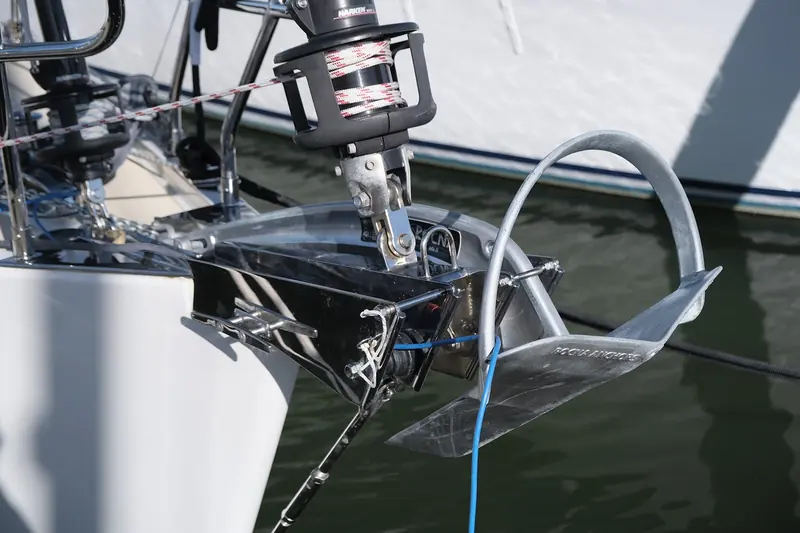
| Category | new-generation roll-bar, concave-fluke anchor; the design that touched off the whole modern anchor category from the early 2000s onward |
|---|---|
| Designer | Peter Smith, a New Zealand sailor and boatbuilder who built the first Rocna for his own yacht Kiwi Roa after a lifetime of high-latitude cruising |
| Commercial launch | 2004, after several years of prototype use and requests from other cruisers who saw Smith's anchor work |
| Name | Rocna combines Smith's boat name references and is pronounced ROK-na; the anchor's signature feature is a patented roll bar that rights the anchor into the correct setting angle on contact with the seabed |
| Ownership history | licensed to Hold Fast Anchors Ltd (New Zealand/China) January 2007 to September 2011; licence reassigned to Canada Metal Pacific Ltd (Vancouver/Delta, BC) on 20 September 2011; Canada Metal Pacific sold by Branford Castle to Ironbridge Equity Partners in October 2018, then Ironbridge took majority control in a 2023 deal in which former owners John Mitchell, the Szwez family and senior management retained a minority stake |
| Current maker | Rocna is one brand inside the CMP Group of Brands (Canada Metal Pacific), headquartered at 7733 Progress Way, Delta, BC, alongside Martyr anodes, Titan chain and Octopus autopilots |
| Manufacturing | galvanized Rocna and Vulcan anchors are made at CMP's own ISO 9001 certified factory in Ningbo, China; stainless steel production also moved to China after starting in New Zealand |
| 2010-2011 quality crisis | roughly 700 Hold Fast-era anchors (4 kg to 110 kg, made in the first half of 2010) used Q420 steel with yield strength up to 39 percent below the advertised 690 MPa spec, prompting a West Marine recall notice and a public correction from designer Peter Smith |
| Size range | 14 standard sizes from 4 kg (9 lb, for boats to 13 ft) to 275 kg (606 lb); larger sizes built to order |
| Rocna's own sizing chart is deliberately conservative, built around 50 knot wind and soft-to-moderate holding ground rather than fair-weather conditions; the company explicitly advises against sizing up further except for multihulls, which it says should go up to 50 percent heavier (commonly one size up) | |
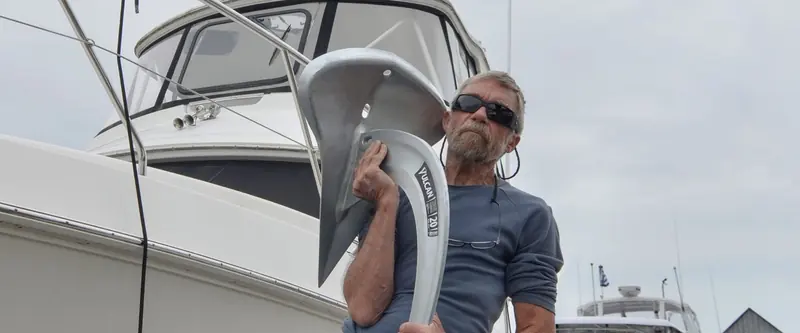
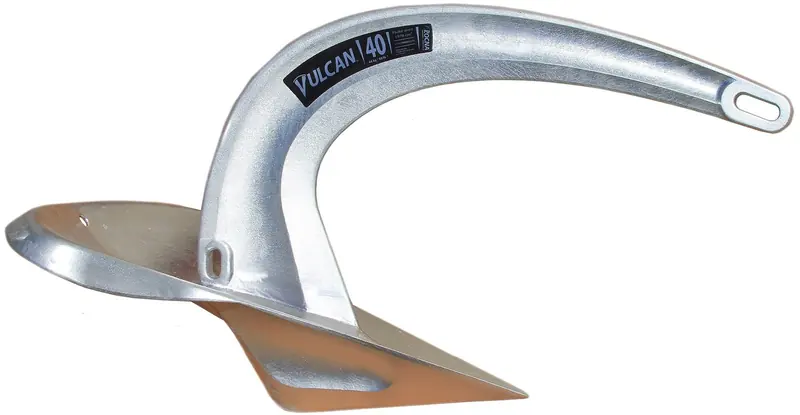
| Product line today | Rocna Original (roll bar, the anchor described here), Rocna Mk II (redesigned I+V profile shank and roll-foil, launched as the flagship for new sizing tables), and Vulcan (no roll bar, for boats where the bar fouls a bow fitting or pulpit) |
| Warranty | lifetime warranty against manufacturing defects, breakage and bending, added under Canada Metal Pacific to rebuild confidence after the Hold Fast era |
| Materials | hot-dip galvanized steel standard; stainless steel (316) versions cost roughly 3 to 5 times the galvanized price for the same size, reflecting the high-tensile stainless shank and hand-polishing labor |
| New pricing (Fisheries Supply, USD, galvanized Original): 9 lb/4 kg $241.58; 33 lb/15 kg $570.60; 44 lb/20 kg $727.06; 55 lb/25 kg $983.60; 73 lb/33 kg $1,418.47; 110 kg/243 lb $7,085.49 special order | |
| Counterfeit problem | genuine dealers and Rocna itself warn of copies sold as generic 'Rocna type' anchors on eBay and Alibaba at roughly one-third the genuine price, typically with a softer, unrated shank steel that bends under load where a genuine shank would hold |
| Not published | Rocna does not publish a combined online price list (all figures here are dealer prices), does not publish independent holding-power comparisons against Mantus, Ultra or Manson Supreme on its own site, and its largest sizes (150 kg and up) are quoted only on request |
| Independent test record is mixed by seabed: West Marine/SAIL testing (2006) found the Rocna held about 40 percent more than its nearest rival in sand; Practical Sailor's Chesapeake mud tests found the Rocna failed to set at all in soft mud; SV Panope's YouTube reversal-and-veer tests ranked smaller Rocnas near the bottom of the group tested | |
What Is a Rocna and Why Does the Roll Bar Matter
Before the Rocna, most cruising boats anchored on a plow-shaped CQR or Delta, or a claw-shaped Bruce, designs that had to skid, tumble or drag across the bottom before their weighted nose found the ground and began to dig in. Peter Smith's insight, developed over decades of high-latitude cruising on his own steel boat Kiwi Roa, was to combine a deeply concave, spade-like fluke (for maximum grip once buried) with a roll bar that acts as a mechanical righting arm: whichever way the anchor lands, the bar's curve rolls it over so the fluke's chisel tip points down and the shank sits at the ideal setting angle, typically on the very first drop. A tip-weighted fluke, about a third of the anchor's total mass concentrated at the point per Rocna's own figures, adds further bias toward digging in nose-first rather than skating.
The result, when it works, is an anchor that sets fast and holds hard in the sand and firm mud most cruisers anchor in most of the time, which is why the Rocna and its many roll-bar imitators (Manson Supreme, Mantus and others) are now the default recommendation on most cruising forums in place of a CQR or Delta. The tradeoff, covered in detail further down this page, is that the same roll bar and concave fluke that make the anchor set so reliably in sand have a documented weak spot in very soft mud and a smaller but real history of fouling on weed and debris when an anchor drags and has to reset without being lifted clear first.
Who Owns Rocna Today and How the Brand Nearly Wrecked Itself
Peter Smith launched Rocna commercially in 2004 and, needing production capacity beyond his own workshop, licensed manufacturing to Hold Fast Anchors Ltd from January 2007. That licence became the brand's low point: in the first half of 2010 Hold Fast shipped roughly 700 anchors, spanning the 4 kg to 110 kg sizes, made from Q420 steel that tested as much as 39 percent below the advertised 690 MPa yield strength. West Marine, a major US retailer of the brand, issued a recall notice, and Smith published a detailed public account on his own site acknowledging the problem while noting the affected anchors were still stronger than mild-steel competitors and posed no acute danger in normal use. The licence was pulled and reassigned to Canada Metal Pacific Ltd, a Vancouver-area manufacturer, effective 20 September 2011, and Canada Metal introduced the lifetime bend-and-break warranty specifically to rebuild trust in the name.
Canada Metal Pacific has changed hands twice since: Branford Castle sold the company to Ironbridge Equity Partners in a deal that closed 12 October 2018, and Ironbridge took majority control again in 2023, with former owners John Mitchell, the Szwez family and senior management retaining a minority stake. Rocna now sits inside the CMP Group of Brands alongside Martyr anodes, Titan anchor chain and Octopus autopilots, manufactured at CMP's own ISO 9001 certified plant in Ningbo, China for both galvanized and stainless lines. Buyers researching the brand should treat any anchor claiming New Zealand manufacture as out of date by well over a decade; genuine current-production Rocna and Vulcan anchors are Chinese-made under a Canadian owner, a fact the company states openly on its own product markings and knowledge base rather than hiding.
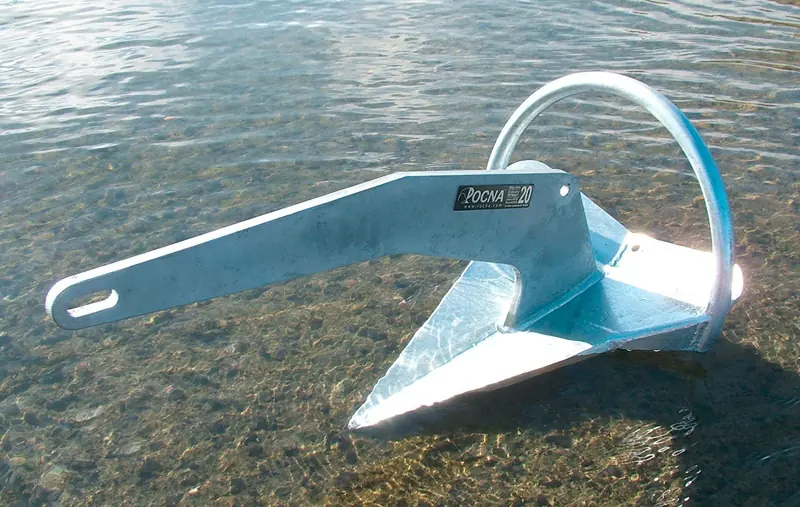
Rocna is the anchor that proved the roll-bar, concave-fluke shape works, still tests near the top of the field in sand two decades on, but carries a real and independently documented weakness in soft mud and a counterfeit problem serious enough that Rocna itself publishes a warning about it.
What Sizes Rocna Makes and Which One Actually Fits Your Boat
The full production range covers 4, 6, 9, 10, 12, 15, 20, 25, 33, 40, 55, 70 and 110 kg as catalog sizes, with 150, 200 and 275 kg built to order for commercial and superyacht use; a 33 foot monohull typically lands on the 15 kg (33 lb) size, a 46 footer on 33 kg (73 lb), and a 66 foot yacht on 55 kg (121 lb) per Rocna's published chart. What separates Rocna's chart from most rivals is the stated design basis: Smith built the sizing tables around a boat riding out 50 knots of wind and surge on a soft-to-moderate bottom, not the calmer conditions some competitors size against, and the company's own literature criticizes an unnamed major rival for recommending an anchor it calls a 'light-weight temporary hook' for a 49 foot cruising yacht. Because of that built-in margin, Rocna's own advice to buyers is blunt: 'don't over-size, we already did that for you,' warning that going a size beyond the chart mainly adds handling problems at the bow roller and windlass without a matching gain in holding power.
The one case where Rocna does recommend sizing up is multihulls, where the company's knowledge base states an anchor should be up to 50 percent heavier than the monohull recommendation for the same length, which in practice usually means picking the next size up the chart rather than doing new math. Cruisers on forums such as Cruisers Forum and Trawler Forum broadly echo this rather than pushing further oversizing, a contrast with some other new-generation brands where one-size-up is common owner advice; the caveat owners raise instead is chain and windlass compatibility, since a bigger Rocna needs matching chain and a windlass gypsy rated for both, which is easy to overlook when upgrading only the anchor itself.

How Rocna Compares to Ultra Marine Anchors and Mantus Marine
Ultra Marine Anchors, built in Turkey, took the roll-bar concept toward the luxury end of the market: its anchors are machined and hand-polished from solid 316 stainless steel rather than galvanized mild steel, which is why a 35 kg Ultra runs around 3,850 US dollars against roughly 1,420 dollars for a galvanized 33 kg Rocna Original of similar holding class, a premium of well over double even before comparing like-for-like stainless Rocna pricing. Mantus Marine, a US brand, sits closer to Rocna on material and price (a galvanized 65 lb Mantus M1 runs about 945 dollars) but differs in fluke geometry, forum posters on YBW Forum and Cruisers Forum describing the Mantus fluke as both longer and wider than the equivalent Rocna, with a larger roll bar that owners say clogs with weed and mud less readily than Rocna's tighter-radius bar. Mantus also ships as a bolt-together anchor that separates for stowage, which some owners like for a small locker and others find fiddly to keep tight over years of use.
On paper the three anchors test closely in firm sand, where Practical Sailor and West Marine testing both found modern roll-bar and spade designs bunching within a few hundred pounds of each other at a given weight. The gap opens in soft mud: Practical Sailor's Chesapeake Bay series recorded the Rocna failing to set at all, the Mantus performing better despite lacking a weighted toe, and the Ultra out-holding the Mantus, Manson Supreme and Rocna's roll-bar peers by roughly 20 percent, while cautioning that none of the roll-bar designs produced fully reassuring numbers in the softest bottoms tested. For a buyer choosing between the three, the honest summary from independent testers and long-running owner threads alike is that Rocna is the widest-stocked and most affordably priced of the three in galvanized steel, Mantus offers a comparable price with a roll bar owners rate as less prone to foul, and Ultra costs the most by a wide margin but tests best in the one bottom type, soft mud, where all roll-bar anchors are weakest.
What a Rocna Costs New, and the Genuine Versus Counterfeit Price Gap
Rocna does not publish a single combined price list on its own site; every figure here comes from authorized dealer listings. Fisheries Supply's current US pricing for galvanized Rocna Originals runs 241.58 dollars at 4 kg (9 lb), 570.60 dollars at 15 kg (33 lb), 727.06 dollars at 20 kg (44 lb), 983.60 dollars at 25 kg (55 lb), 1,418.47 dollars at 33 kg (73 lb), climbing to 7,085.49 dollars at 110 kg (243 lb) on special order, with 150, 200 and 275 kg sizes priced higher still and quoted per order. Stainless steel versions cost roughly three to five times the equivalent galvanized size, a premium sources attribute to the cost and scarcity of high-tensile stainless bar stock plus the man-hours needed to hand-polish a mirror finish, putting a stainless equivalent of the 20 kg Original well north of 2,000 dollars before matching it against Ultra's fully polished 316 construction at a similar or higher price point.
The counterfeit problem is specific to Rocna's shape rather than its branding: because the roll-bar, concave-fluke profile is now widely copied, unbranded or vaguely labeled 'Rocna type' anchors circulate on eBay and Alibaba, reported by forum members on YBW Forum at roughly a third of genuine dealer pricing. Rocna's own knowledge base and long-running owner threads describe the giveaway as the shank steel: a genuine Rocna uses a rated high-tensile shank that Rocna's own destructive testing has shown bending only at more than 6.5 times the anchor's proof-load requirement, while copies commonly use an unrated mild-steel shank that bends at a fraction of that force, a failure mode owners call an order of magnitude worse for holding than a straight shank. The safest practical test for a buyer is provenance rather than appearance: buy from an authorized Rocna dealer with a traceable invoice, since a counterfeit built to visually match a genuine anchor can still carry the wrong steel inside a shank that looks identical from the outside.
What Independent Holding-Power Tests Actually Show
The test Rocna itself cites most is the 2006 West Marine and SAIL Magazine series, which pulled 14 anchor types across three real-world sand seabeds; the Rocna 15 (32 lb) came out on top of that field, holding a minimum of 4,500 lbf and engaging immediately on every drop, roughly 40 percent ahead of the second-place Spade and dramatically ahead of older designs like the Delta, whose 35 lb unit maxed out around 3,250 lbf. That result, now two decades old and run before Mantus or the current Ultra existed as competitors, is still the most frequently quoted number in Rocna's own marketing and on retailer pages, and it remains a fair characterization of Rocna's strength in the sand bottoms most recreational cruisers anchor in most of the time.
Two more recent and more skeptical sources complicate that picture. Practical Sailor's Chesapeake Bay soft-mud testing found the Rocna did not set at all in the softest bottom tested, attributing the failure to the anchor landing upside down in a substrate too weak for the roll bar's self-righting action to complete, while the Ultra, Mantus and Manson Supreme (also roll-bar designs) fared better without producing what the magazine called reassuring numbers. SV Panope, the YouTube channel widely cited on Cruisers Forum and Trawler Forum for its 180 degree reversal and veer protocol across varied Pacific Northwest seabeds, tested a 45 lb and a 22 lb Rocna and found both ranked near the bottom of the anchors it has tested for resetting after a load reversal, though critics on the same forums note Panope's tests do not measure peak holding force directly and its PNW test grounds are not representative of every bottom a cruiser will anchor in. Taken together, the honest reading is that Rocna's headline sand performance is real and well documented, its soft-mud and reset performance is a genuine and repeatedly documented weak point, and a buyer who anchors mostly in mud or expects frequent load reversals should weigh the Ultra or a broad-fluke design like a Fortress or Danforth alongside it rather than assume one anchor covers every bottom.
What Actually Goes Wrong: Resetting, Fouling and Galvanizing Complaints
Attainable Adventure Cruising, a subscription cruising-advice site run by experienced high-latitude sailors, published a widely discussed account of two Rocna-equipped boats that failed to reset after their anchors dragged, both accumulating enough weed and mud around the roll bar and fluke junction to prevent the anchor from digging in again without being hauled up, cleaned and redropped, a process that cost both boats hours of standing by under engine. Forum threads on Cruisers Forum's long-running 'Rocna roll bar' discussion and Trawler Forum echo the same failure mode in patchy weed or soft, debris-laden bottoms, though an equal number of long-term owners on the same threads report never experiencing it across years of cruising, suggesting local bottom conditions and how an anchor is retrieved and redropped after a drag matter as much as the design itself. At least one cruiser documented on that Attainable Adventure Cruising thread switched their 33 kg Rocna for a Sarca Excel, a roll-bar-free Australian design, specifically to avoid repeat fouling in the weedy, rocky anchorages they frequented.
Galvanizing complaints cluster around two points: anchors from the Hold Fast era occasionally showing tip wear that exposed bare steel faster than expected, and the general fact that Rocna's shank uses high-tensile steel that requires careful handling during re-galvanizing, since an aggressive acid pickling stage before dipping can attack the steel itself rather than just the old zinc coating. Rocna's own FAQ acknowledges this and recommends re-galvanizing only through a shop experienced with high-tensile anchor shanks rather than a generic hot-dip galvanizer. Separately, owners on YBW Forum's long 'bad press by video' thread about the Panope test results note that Rocna's response to criticism has generally been to point to its 2006 sand results and its updated Mk II shank and fluke geometry rather than to dispute the mud and reset findings directly, which several posters read as a tacit acknowledgment that the weakness is real rather than a testing artifact.
Is a Rocna the Right Anchor for Your Boat
For the majority use case, an owner-driven monohull or trawler anchoring seasonally in typical coastal sand and firm mud, Rocna remains a sound and honestly well-tested choice: it is the anchor the 2006 West Marine test still holds up as a benchmark, it carries a real lifetime warranty against bending and breakage from a manufacturer that has visibly cleaned up its supply chain since the 2010-2011 Hold Fast crisis, and its galvanized pricing undercuts Ultra by a wide margin while roughly matching Mantus. Buyers should follow Rocna's own sizing chart rather than second-guessing it upward, since the company has already built in the safety margin that owners of other brands add for themselves, and should size up only for a multihull as Rocna itself recommends.
The buyer who should look elsewhere, or at least budget for a second anchor type, is one who cruises soft-mud estuaries and rivers, weedy tropical anchorages, or areas prone to sudden reversing currents and squalls, since that is exactly where Practical Sailor's testing, Attainable Adventure Cruising's fouling reports and SV Panope's reset testing all found roll-bar anchors including the Rocna underperforming. That buyer is better served either by an Ultra, which tested meaningfully better in soft mud at a real cost premium, or by carrying a genuinely different secondary anchor, a broad-fluke Fortress or Danforth for mud, rather than a second roll-bar design that will likely share the same weakness. Whichever anchor a buyer chooses, the counterfeit risk argues for buying only through an authorized dealer with a traceable invoice, since a fake built to the same silhouette can carry a shank that bends under real load.
Praktische Angaben
| New price by size (galvanized, USD) | Fisheries Supply lists the galvanized Rocna Original at $241.58 for 4 kg (9 lb), $570.60 for 15 kg (33 lb), $727.06 for 20 kg (44 lb), $983.60 for 25 kg (55 lb), $1,418.47 for 33 kg (73 lb), rising to $7,085.49 for a special-order 110 kg (243 lb) unit; 150 to 275 kg sizes are quoted per order. |
|---|---|
| Stainless steel premium | A 316 stainless Rocna typically costs 3 to 5 times the galvanized price for the same size, reflecting the high-tensile stainless shank stock and hand-polishing labor; Rocna's own knowledge base states this plainly rather than publishing a stainless price list. |
| What is not published | Rocna publishes no single combined online price list (all prices here are dealer prices), no independent side-by-side holding-power comparison against Ultra, Mantus or Manson Supreme on its own site, and quotes its 150 kg-plus sizes only on direct request rather than listing them. |
| Genuine versus counterfeit | Unbranded or vaguely labeled 'Rocna type' copies circulate on eBay and Alibaba at roughly one-third of authorized dealer pricing; owner and dealer reports describe the copies as using an unrated, softer shank steel that bends under load where a genuine high-tensile Rocna shank holds. Buy only from an authorized dealer with a traceable invoice. |
| Cost versus Ultra and Mantus | A galvanized 33 kg Rocna Original runs about $1,418 against roughly $3,850 for a similarly classed 35 kg Ultra in polished 316 stainless, and about $945 for a comparable 65 lb galvanized Mantus M1, putting Rocna and Mantus close on price and Ultra well above both. |
| Warranty | Lifetime warranty against manufacturing defects, breakage and bending, added by Canada Metal Pacific after the 2010-2011 Hold Fast Anchors substandard-steel episode specifically to rebuild buyer confidence in the shank. |
Was Eigner und Crew berichten
Two boats' Rocnas fouled and would not reset after dragging
Attainable Adventure Cruising's write-up of two separate anchoring incidents found both Rocnas had accumulated enough weed and mud around the roll bar to prevent a clean reset, requiring the anchors to be hauled up, cleared and redropped while both boats motored to hold position.
Attainable Adventure CruisingA 33 kg Rocna was swapped for a Sarca Excel over repeat fouling
A long-term cruiser reported switching away from a 33 kg Rocna specifically because of repeated roll-bar interference and failure to reset when the anchor picked up mud, weed or rocks in anchorages they frequented, moving to a roll-bar-free Sarca Excel instead.
Attainable Adventure CruisingSmaller Rocnas ranked poorly in reversal and veer testing
In a widely watched series of 180 degree load-reversal tests across varied Pacific Northwest seabeds, a 45 lb Rocna ranked near the bottom of the anchors tested and a 22 lb unit performed little better, though the channel's own commentary notes peak holding force is not directly measured in these tests.
SV PanopeRocna failed to set in the softest mud tested, while the Ultra held up better
Bench testing in Chesapeake Bay mud found the Rocna did not set at all, attributed to the roll bar's righting action not completing in very soft ground, while the Ultra outheld the Mantus, Manson Supreme and Rocna's roll-bar peers by roughly 20 percent in the same soft-mud conditions.
Practical SailorOwners debate the Mantus fluke and roll bar as an improvement, not a clone
Long-running comparison threads describe the Mantus fluke as longer and wider than the equivalent Rocna and its roll bar as noticeably less prone to clog with weed or mud, while other posters rate the two anchors as close enough in practice that bow-roller fit should decide the choice.
Cruisers ForumCounterfeit Rocnas are visually convincing but structurally different
Members reported eBay listings for Rocna-shaped anchors at roughly one-third of authorized dealer prices, warning that the giveaway is not appearance but the shank steel, which on a genuine anchor is rated high-tensile stock and on a copy is commonly unrated mild steel that bends under load.
YBW Forum
Was gut ist und worauf zu achten ist
Stärken
- Proven, class-defining design with a genuine mechanical advantage in sandThe roll bar's self-righting action gave the Rocna a documented ~40 percent holding advantage over its nearest rival in the widely cited 2006 West Marine/SAIL sand-bottom test, a result that still holds up as one of the best-supported numbers in the anchor category.
- Wide, conservative size range with an honest sizing philosophyRocna's 14 standard sizes span 4 kg to 275 kg, and the company explicitly designs its chart around 50 knot conditions and soft-to-moderate holding ground, then tells buyers not to size up further except on multihulls, rather than undersizing to look competitive on a spec sheet.
- Real lifetime warranty introduced specifically to rebuild trustCanada Metal Pacific's lifetime warranty against breakage and bending was added directly in response to the 2010-2011 substandard-steel episode, and the company has kept it in place through two subsequent ownership changes.
- Wide dealer network and price competitiveness in galvanized steelRocna is stocked by most major chandleries (Fisheries Supply, Defender, West Marine, Jimmy Green) at prices close to or below Mantus and well below Ultra for a comparable size, making it an easy anchor to buy, replace or match to existing ground tackle almost anywhere.
- Manufacturing quality control improved and independently verified since 2011Peter Smith's own public account of the 2011 relicensing states Canada Metal Pacific brought 'clear and high quality standards' and ISO 9001 certified production, and no comparable steel-quality scandal has recurred under Canada Metal Pacific in the years since.
Worauf zu achten ist
- Genuinely weak in soft mudPractical Sailor's Chesapeake Bay testing found the Rocna failed to set at all in the softest mud tested, attributing it to the roll bar's self-righting action not completing in a substrate too weak to flip the anchor over, a finding Rocna has not directly disputed.
- Documented resetting and fouling failures after a dragAttainable Adventure Cruising documented two Rocna-equipped boats whose anchors would not reset after dragging because weed and mud fouled the roll bar and fluke junction, each costing hours of standing by under engine before the anchor could be cleared and redropped.
- SV Panope's reversal testing ranked smaller Rocnas near the bottom of its fieldA 45 lb and a 22 lb Rocna both ranked poorly in SV Panope's 180 degree reversal and veer protocol, a widely cited independent test format, though the tests do not measure peak holding force directly and cover only Pacific Northwest bottom types.
- A real and specifically targeted counterfeit problemCopies sold as generic 'Rocna type' anchors at roughly one-third of dealer pricing are common enough on eBay and Alibaba that Rocna maintains a dedicated knowledge-base warning about them, and the failure mode, a shank that bends under real load, is a safety issue rather than a cosmetic one.
- No independent price list or side-by-side test data from the company itselfEvery price in this report comes from third-party dealers rather than a manufacturer list, and Rocna's own site does not publish a current head-to-head holding-power comparison against Ultra, Mantus or Manson Supreme, leaving buyers to piece together test data from third parties of varying rigor.
Für wen: An owner-driven cruising monohull or trawler that anchors mainly in sand and firm mud and wants a well-warrantied, widely stocked, competitively priced new-generation anchor, bought only through an authorized dealer to avoid the shank-steel risk of counterfeits.