Seakeeper
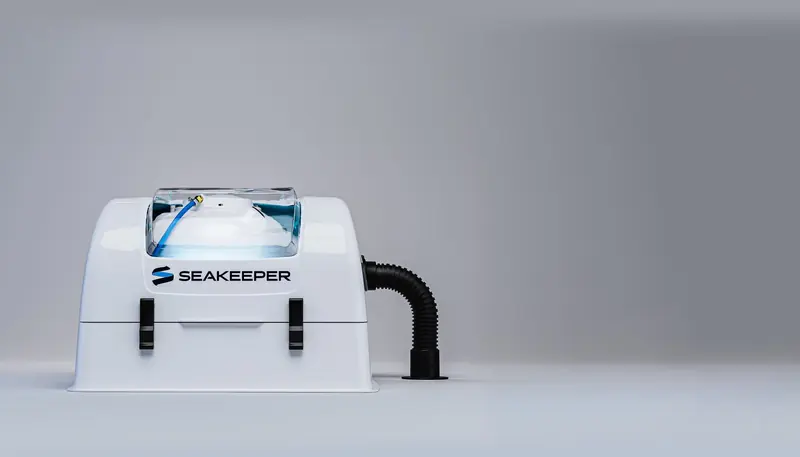
| Kategorie | gyroskopische Rollstabilisatoren und Lageregelung für Fahrzeuge |
|---|---|
| Gegründet | 2001 von Shep McKenney und John Adams, mit der ersten Werkstatt 2002 auf Solomons Island, Maryland |
| Eigentümer | Madison Industries, das das Unternehmen 2018 übernahm |
| Fertigung | Leesport, Pennsylvania, in einer 2022 eröffneten Anlage |
| Meilensteine | erster Prototyp 2006 auf einer 43 Fuß langen Viking, erster Serienvertrag 2008 mit Azimut, zehntausendste Einheit 2020 |
| Reihe | vierzehn Modelle vom Seakeeper 1 bis zum Seakeeper 40 |
| Seakeeper 1 | Boote von rund 7 m bis 9 m und bis 5,5 ton, USD 17.400 |
| Seakeeper 26 | Boote von rund 21 m bis 26 m und bis 75 ton, 1.431 kg, USD 268.600 |
| Seakeeper 40 | Boote ab 26 m und bis rund 115 ton, 1.848 kg, USD 365.400 |
| Rollminderung | bis zu 95 Prozent nach eigenen Angaben des Unternehmens |
| Hochlauf | 43 Minuten bis zur vollen Stabilisierung bei einem Seakeeper 26, 40 Minuten bei einem Seakeeper 40 |
| Leistung | 3.000 W zum Hochlauf eines Seakeeper 26 und 1.375 bis 3.000 W im Betrieb, bei 208 bis 230 Volt |
| Average installed cost, from a United States Seakeeper installer's published guide compiled from more than 900 installations and read in July 2026: Seakeeper 1 USD 14,600 install for USD 32,000 all in, Seakeeper 2 USD 16,900 for USD 43,000, Seakeeper 3 USD 21,700 for USD 62,000, Seakeeper 4 USD 23,600 for USD 71,000, Seakeeper 4.5 USD 19,400 for USD 75,000, Seakeeper 6 USD 20,400 for USD 90,000, Seakeeper 9 USD 25,300 for USD 140,000, Seakeeper 10 USD 23,200 for USD 150,000, Seakeeper 18 USD 26,300 for USD 210,000 | |
| Installation averages exclude taxes, shipping, travel, yard fees and any vessel-specific work | |
| Seakeeper 26 and Seakeeper 40 are quoted individually. No published installation figure exists for either, which is the whole 21 m to 33 m band | |
Fünfundzwanzig Jahre eine Idee
Shep McKenney und John Adams verabredeten 2001, einen praxistauglichen modernen Kreiselstabilisator zu entwickeln, und begannen im Jahr darauf in einer Garage auf Solomons Island in Maryland. Der erste Prototyp ging 2006 auf eine 43 Fuß lange Viking. Der M7000 kam 2008 kommerziell heraus, und der erste Serienvertrag kam im selben Jahr von Azimut Yachts, und das ist es, was die Technik vom Versuch zur verbauten Ausrüstung machte.
Das Unternehmen verkaufte 2011 seine tausendste und 2020 seine zehntausendste Einheit. Es kaufte 2008 seinen Fertigungspartner Joma Machine Company, zog nach Mohnton in Pennsylvania und eröffnete 2022 ein eigens gebautes Werk in Leesport. Madison Industries übernahm das Geschäft 2018. 2021 eröffnete eine Schulungseinrichtung in Tampa, und das zählt, weil die Qualität des Einbaus darüber entscheidet, ob die Ausrüstung leistet.
Wie der Kreisel tatsächlich arbeitet
Ein Schwungrad dreht sich in einem Vakuumgehäuse. Rollt das Boot, kippt der Kreisel nach vorn und achtern, und diese Präzession erzeugt ein Drehmoment nach Backbord und Steuerbord, das dem Rollen entgegenwirkt. Das Vakuum ist der technische Kunstgriff. Es lässt das Schwungrad rund dreimal schneller drehen als eine konventionelle Auslegung, was sein Gewicht um zwei Drittel senkt und die nötige Leistung halbiert.
Das Unternehmen nennt für die kleineren Einheiten Schwungraddrehzahlen bis 9.750 U/min und Umfangsgeschwindigkeiten um 557 Meilen pro Stunde. Die großen Einheiten laufen langsamer, mit 5.000 U/min bei einem Seakeeper 26 und 5.150 U/min bei einem Seakeeper 40, und tragen weit mehr Drehimpuls. Eine patentierte Kühlung mit Glykol und Seewasser führt die Wärme ab. Die Regelung läuft automatisch und liest den Seegang fortlaufend.
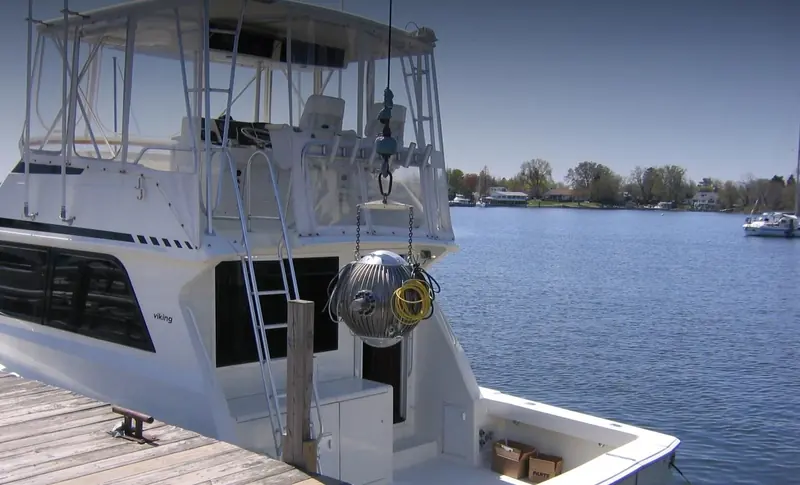
Vierzig Minuten Hochlauf sind der Preis für einen Ankerplatz, den niemand verlassen will.
Die Reihe und was sie kostet
Vierzehn Modelle decken Boote von rund 7 m bis über 33 m ab. Ein Seakeeper 1 passt zu Fahrzeugen von etwa 7 m bis 9 m bis 5,5 ton und steht mit USD 17.400 in der Liste. Ein Seakeeper 6 deckt rund 13 m bis 16 m bis 24 ton für USD 69.600 ab. Ein Seakeeper 18 deckt rund 18 m bis 23 m bis 56 ton für USD 183.700 ab.
An der Spitze nimmt der Seakeeper 26 Boote von rund 21 m bis 26 m und bis 75 ton für USD 268.600, und der Seakeeper 40 nimmt 26 m und darüber bis rund 115 ton für USD 365.400. Jede dieser Zahlen versteht sich ohne Einbau, der bei einer Nachrüstung noch einmal einen erheblichen Anteil des Gerätepreises ausmachen kann.

Was es mit dem Leben an Bord macht
Die Angabe lautet bis zu 95 Prozent Rollminderung, und die Zahl, die einen Eigner interessiert, ist nicht der Prozentsatz. Es ist, ob die Gäste am Tisch bleiben. Eine Yacht, die in einem sonst perfekten Ankerplatz querab zur Dünung liegt, leert sich bis neun Uhr abends, und die übliche Abhilfe ist, zu verlegen, was den Ankerplatz kostet. Ein Kreisel nimmt den Grund zum Verlegen weg.
Die zweite Wirkung liegt bei langsamer Fahrt und im Stillstand, wo Flossenstabilisatoren historisch nichts ausrichteten. Seakeeper arbeitet konstruktionsbedingt bei Nullgeschwindigkeit, und deshalb tauchte es zuerst auf Sportfishern auf, die stundenlang stillstehen. Auf einer Yacht verändert es den Tenderbetrieb, das Schwimmen von der Plattform und die Frage, ob jemandem im Salon seekrank wird.
Hochlauf, Leistung und der Generator
Zwei betriebliche Tatsachen bestimmen, wie die Ausrüstung genutzt wird. Die erste ist die Hochlaufzeit. Ein Seakeeper 26 erreicht die volle Stabilisierung in rund 43 Minuten und ein Seakeeper 40 in rund 40, wobei die Höchstdrehzahl bei der größeren Einheit 70 Minuten braucht. Ein Kreisel lässt sich nicht einschalten, während der Anker fällt. Crews starten ihn lange vor der Ankunft.
Die zweite ist die Leistung. Ein Seakeeper 26 zieht bis 3.000 W zum Hochlauf und je nach Seegang 1.375 bis 3.000 W im Betrieb, bei 208 bis 230 Volt einphasig und 20 Ampere. Ein Seakeeper 40 braucht 5.000 W zum Hochlauf und 1.900 bis 4.400 W im Betrieb bei 30 Ampere. Ein Generator muss laufen, solange die Einheit arbeitet, und es braucht außerdem 4 bis 8 Gallonen pro Minute Seewasserkühlung.

Gewicht, Platz und Nachrüstung
Ein Seakeeper 26 wiegt 1.431 kg und ein Seakeeper 40 wiegt 1.848 kg, in Paketen von etwas über 1,4 m im Quadrat und rund einem Meter Höhe. Diese Masse muss auf ein ordentlich konstruiertes Fundament, tief und nahe der Mitte des Fahrzeugs, und die Struktur muss dafür oft ertüchtigt werden. Es gibt keine Flossen, keine Wellen und außer dem Kühlwasser keine Rumpfdurchbrüche.
Das Fehlen von Anhängen ist das stärkste Argument für die Nachrüstung. Flossenstabilisatoren verlangen Löcher im Rumpf, sie erzeugen in Fahrt Widerstand, und sie lassen sich längsseits oder in flachem Wasser beschädigen. Ein Kreisel sitzt im Boot und lässt sich fast überall einbauen, wo die Struktur es zulässt. Die Kosten des Einbaus sind die Variable, und sie sind nicht veröffentlicht.
Wo es aufhört
Die Obergrenze ist real. Die größte Einheit ist für rund 115 ton ausgelegt, also für ein Boot von rund 26 m bis 33 m. Darüber baut ein Eigner entweder mehrere Einheiten ein oder schaut sich Flossenstabilisatoren mit Nullgeschwindigkeitsfunktion an, und die tragen die meisten Yachten über 40 m. Wer eine große Verdrängeryacht hat, sollte Seakeeper als eine Option unter mehreren behandeln und nicht als Standard.
Die andere Grenze ist der Seegang. Ein Kreisel mindert das Rollen und tut nichts gegen das Stampfen, eine See von vorn bleibt also unbeeinflusst. Seakeepers Antwort darauf ist Seakeeper Ride, 2023 eingeführt, ein System zur Lageregelung für Gleitboote in Fahrt. Es ist ein eigenes Produkt für ein eigenes Problem.
Service, Garantie und Lager
Die Einheiten tragen eine mehrjährige Werksgarantie, und die Lager sind im Feld tauschbar, und das ist für einen Eigner die wichtigste einzelne Konstruktionsentscheidung. Eine gekapselte Einheit, die bei einem verschlissenen Lager zurück nach Pennsylvania müsste, wäre ein Ausfall, der die Saison beendet. Tausch im Feld heißt, dass ein Techniker zum Boot kommt.
Seakeeper schult Einbauer und Servicetechniker direkt, und das Netz folgt der amerikanischen und europäischen Serienbootindustrie, es gibt also Abdeckung in Florida, auf den Bahamas, den Balearen, an der italienischen und französischen Riviera und in der östlichen Karibik. Die Geräuschabgabe liegt bei einem Seakeeper 26 bei rund 74 dB in einem Meter Abstand, der Einbauort und die Schalldämmung darum herum gehören also zur Spezifikation und sind kein Nachgedanke.
Gegen Flossenstabilisatoren, und wer einen einbauen sollte
Flossenstabilisatoren etablierter europäischer Hersteller bleiben auf großen Verdrängeryachten der Standard, und moderne Flossen arbeiten bei Nullgeschwindigkeit. Sie kosten mehr, sie erzeugen Widerstand, und sie setzen bewegte Flächen außerhalb des Rumpfes. Ein Kreisel kostet weniger, bringt Gewicht statt Widerstand und ist von außen unsichtbar. Bei Booten bis rund 115 ton gewinnt der Kreisel meist bei den Einbaukosten und bei der Einfachheit.
Einbauen sollten ihn die Eigner, die die meisten Nächte vor Anker liegen, an Bord essen und Gäste ohne Seebeine haben. Anderswo schauen sollten die Eigner, deren Yachten über die Größenspanne hinausgehen, die keine freie Generatorleistung haben und deren Boote nur in Fahrt und auf glattem Wasser genutzt werden.
Praktische Angaben
| Equipment prices, published in full | Seakeeper is one of the very few marine makers that publishes every list price. Its own cost page, read August 2026, gives Seakeeper 1 at USD 17,400, 2 at USD 26,100, 3 at USD 40,300, 4 at USD 47,400, 4.5 at USD 55,600, 5 at USD 60,500, 6 at USD 69,600, 7.5 at USD 78,700, 10 at USD 126,800, 10.5 at USD 133,900, 14 at USD 155,900, 18 at USD 183,700, 26 at USD 268,600 and 40 at USD 365,400. Those are equipment only, exclude taxes, storage, docking and haul-out, and the company states they are subject to passthrough on any levied tariff. |
|---|---|
| Installation is the bigger half of the bill | An Elite Seakeeper dealer publishes averages compiled from more than 900 installations as of 2025: Seakeeper 1 at USD 14,600 to fit for USD 32,000 all in, 3 at USD 21,700 for USD 62,000, 4.5 at USD 19,400 for USD 75,000, 6 at USD 20,400 for USD 90,000, 9 at USD 25,300 for USD 140,000, 10 at USD 23,200 for USD 150,000, 14 at USD 24,100 for USD 180,000 and 18 at USD 26,300 for USD 210,000. Averages exclude taxes, shipping, yard fees and any vessel-specific structural work. Access is what moves the number: a unit that has to go in through a cut hatch is a different job from one dropped into an open lazarette. |
| Annual service, with real numbers behind it | Two Elite Seakeeper dealers in Orange Beach, Alabama publish identical annual service tables: USD 750 for a Seakeeper 1, USD 850 for a 4 or 4.5, USD 1,150 for a 2, USD 1,200 for a 3, USD 1,350 for a 10, USD 1,500 for a 5, 6 or 14, USD 1,650 for a 9, USD 1,800 for a 16 or 18, USD 1,900 for a 26 and USD 2,250 for a 35 or 40. An independent Californian yard, Ventura Boat Services, puts a typical annual service at USD 1,500 to USD 3,000 in November 2025, so treat the dealer table as a floor rather than a ceiling. |
| The service schedule the warranty depends on | Remove the covers and inspect visually after every use, with a freshwater rinse and a strainer check. Every three months or 150 hours, inspect, rinse, check the strainer and replace the zinc on Seakeeper 5 and above. Annually or at 1,000 running hours, whichever comes first, a professional inspection checks seawater flow and cooling hoses, flushes the cooling system with glycol and inspects the electronics. Units must also be registered with Seakeeper to access after-sales programmes, and a technician has to verify sea hours for a warranty claim. |
| The long-run item nobody quotes up front | The spherical bearings that carry the spinning flywheel are rated at roughly 10,000 to 20,000 hours on many models. Ventura Boat Services puts bearing service or replacement past 10,000 hours at USD 20,000 to USD 60,000 or more, and hydraulic bushing replacement past 2,000 hours at USD 1,000 or more. Those are one yard's figures, published November 2025, and Seakeeper publishes nothing against which to check them. On a heavily used charter boat this is the number that decides whether the unit is worth keeping at ten years. |
| Power, weight and the generator question | The small units are DC and the rest are not, which changes life at anchor. A Seakeeper 1 weighs 166 kg and runs on 12 VDC at up to 50 amps, about 225 to 600 watts depending on sea state. A Seakeeper 6 weighs 395 kg and needs 220 VAC at 20 amps or 110 VAC at 30 amps, drawing up to 2,300 watts to spool and 1,100 to 2,300 watts running, plus 125 watts of 12 VDC control power. Above the small DC models the gyro is an AC load, so at anchor the generator runs while the gyro does, and that fuel is part of the cost of a quiet dinner. |
| Spool-up: switch it on leaving the berth | A gyro is not a switch you flick on arrival. A Seakeeper 1 reaches stabilising speed at 7,310 rpm in 18 minutes and full 9,750 rpm in 35 minutes. A Seakeeper 6 reaches stabilising speed at 7,275 rpm in 21 minutes and 9,700 rpm in 42 minutes. The large units carry far more angular momentum and take longer still, which the maker puts at about 40 to 43 minutes to full stabilisation on a Seakeeper 26 or 40. |
| Seakeeper Ride is a different product, not a cheap gyro | Ride is a vessel attitude control system that works underway rather than at rest, for boats up to about 55 ft with a cruising speed above 20 mph and a compatible multifunction display. The same dealer guide gives Ride 450 at USD 4,900 with installation from USD 4,500, about USD 9,400 fitted, up to the Ride 750 QUAD at USD 21,500 with USD 8,500 to USD 13,000 to fit, and the Ride 900 to 1500 from USD 24,500 with custom installation. It does not stop a boat rolling at anchor and it is not a substitute for a gyro. |
| What is NOT published | There is no published installation figure for the Seakeeper 26 or the Seakeeper 40. Both are quoted individually, and that is the entire 21 m to 33 m band, exactly where the equipment alone runs USD 268,600 to USD 365,400. Seakeeper publishes no bearing overhaul price, no out-of-warranty parts list and no independent roll-reduction test; the up to 95 percent figure is the company's own. One United States installer's table also lists the Seakeeper 40 at USD 348,000 against the maker's USD 365,400, so take the factory number and get the delivered price in writing. |
Was Eigner und Crew berichten
Owner opinion splits, and both sides are worth reading
Forum threads run from an owner with two Seakeeper 5 units reporting problems on every trip and summarising two years of problems and headaches, to an owner running a Seakeeper 2 on a Pursuit 28 for two years who calls it absolutely the best experience, with no roll sitting still or trolling and much less slamming underway because the boat is kept level. Several long-standing posters note that early units were not as reliable, nor as well supported, as they are now.
The Hull Truth (owner forum)What actually breaks, and what the back half of ownership costs
A service yard's published breakdown ranks cooling system problems first, from clogged heat exchangers and raw-water pump failures to overheat alarms triggering automatic shutdowns, then hydraulic and brake faults with accumulators needing replacement every few years, then electrical faults more common on the Seakeeper 1 to 5, then bearing and flywheel wear at roughly 10,000 to 20,000 hours, then corrosion and zinc depletion. It also states most owners see trouble-free operation for the first five to ten years if the unit is serviced annually.
Ventura Boat Services (November 2025)The competition is measurably faster to stabilise
Comparing the Yanmar-owned Smartgyro SG40 against the Seakeeper 9, the magazine reported both reaching maximum rpm in about 55 minutes but the SG40 reaching stabilisation in 25 minutes against 38 for the Seakeeper, with the SG40 heavier at 650 kg against 550 kg and drawing more power, and Smartgyro's modular sphere serviceable in the field without a factory return. The reviewer was explicit that he had not yet tested a Smartgyro at sea.
Motor Boat and Yachting (Hugo Andreae, July 2021)Ride is a real effect underway, and a separate purchase
In the first published test of Seakeeper Ride the reviewer reported bow rise on climbing onto plane significantly reduced, describing a boat that had previously laboured out of the hole lifting smoothly instead. Motor Boat and Yachting's own trial on a Nimbus T9 in typical lumpy Solent conditions found pitching reduced in size and severity and side to side roll almost entirely gone at 35 knots.
Power and Motoryacht (Dan Harding)The rest of the market is chasing on price and installation
A trade survey of the gyro market recorded Quick's air-cooled MC2 needing no water intake, with managing director Paolo Berni of Quick USA making the point that not needing a water-cooling system means not putting another hole in the boat, and some models retrofitting on eight bolts. Quick had sold about 600 units worldwide by 2021 against Seakeeper's ten thousand. Smartgyro's marketing director Sander Gesink summarised the demand simply: people want comfort and are willing to pay for it.
Soundings Trade Only
Was gut ist und worauf zu achten ist
Stärken
- It does the one thing that changes an evening aboardA gyro stops the roll at anchor, which is where a yacht spends most of its life and where fin stabilisers do least. Seakeeper claims up to 95 percent roll reduction, and owners describe no roll at rest or at trolling speed. It is the single piece of equipment most likely to decide whether guests stay aboard after dinner.
- The prices are published, all fourteen of themEquipment list prices for every model, dealer installation averages drawn from more than 900 jobs, published annual service tables and a stated exclusions list. Almost nothing else in yachting is priced this openly, and it lets an owner build a real budget before a salesman is involved.
- Scale, and the support that comes with itMore than ten thousand units sold since the first prototype went onto a 43 foot Viking in 2006, a purpose-built plant at Leesport opened in 2022, and a training facility at Tampa since 2021. Installation quality decides whether the equipment performs, so a trained network matters more here than the specification sheet does.
- The vacuum enclosure is genuine engineering, not marketingSpinning the flywheel in a vacuum lets it turn roughly three times faster than a conventional design, which cuts its weight by about two thirds and halves the power it needs. That is why a 24 ton boat can carry a 395 kg Seakeeper 6 rather than something twice the size.
- Two years and 2,000 hours of full-system warrantyThe whole line carries the same 2 year, 2,000 hour factory warranty, with an extended programme available while the unit is still inside the factory period. Cover has to be activated by registering the unit, and a technician verifies sea hours on a claim.
Worauf zu achten ist
- The equipment price is not the priceA Seakeeper 6 lands at about USD 90,000 fitted against USD 69,600 of hardware, and a Seakeeper 1 at about USD 32,000 against USD 17,400. Above the Seakeeper 18 there is no published installation figure at all, so the 21 m to 33 m owner has the least information and the largest bill.
- It takes 18 to 42 minutes to come up to speedStabilisation arrives in 18 minutes on a Seakeeper 1 and 21 on a Seakeeper 6, with full rpm at 35 and 42 minutes, and the maker puts full stabilisation on a Seakeeper 26 or 40 at about 40 to 43 minutes. Forget to switch it on leaving the berth and the first half hour of the anchorage is exactly as rolly as it would have been.
- Above the small DC units it is an AC loadA Seakeeper 6 wants 220 VAC at 20 amps and draws up to 2,300 watts. At anchor that means the generator runs while the gyro runs, so a quiet night is a running genset, and the fuel and the generator hours belong in the running cost.
- The ten-year cost is opaqueBearings are rated at roughly 10,000 to 20,000 hours and an independent yard puts the overhaul at USD 20,000 to USD 60,000 or more, with hydraulic bushings adding USD 1,000 or more past 2,000 hours. Seakeeper publishes no figure for either, so a buyer cannot price the back half of the ownership.
- The failure modes are recurrent and unglamorousClogged heat exchangers, raw-water pump failures and overheat shutdowns lead the list, with hydraulic and brake faults and voltage drops more common on the smaller units and zinc depletion throughout. Owner opinion splits accordingly, between owners who call it the best money they ever spent and owners reporting years of intermittent faults.
Für wen: Eigner von Booten bis rund 115 ton, die vor Anker liegen, an Bord essen und es satthaben, um neun Uhr abends wegen einer Dünung zu verlegen.