Spinlock
| Founded | 1968, as Offshore Instruments, London; moved to Cowes 1976; renamed Spinlock in the 1980s |
|---|---|
| Ownership | independent, no outside investment stated |
| Rope clutch range | 2mm to 32mm rope diameter, loads up to 12,000kg across the range |
| XAS clutch | 4-8mm rated 400kg, 6-12mm rated 575kg |
| XTS clutch | 6-10mm and 8-14mm, both rated 1000kg |
| Deckvest 6D | 170N buoyancy, UML Pro Sensor Elite auto-inflation, Harness Release System, GBP 219.95 (GBP 239.95 with HRS) |
| Deckvest Lite | one size, 60-145cm chest, 50kg+ wearer weight, 150N or 170N, UML Mk5 auto-inflation |
| 275N version offered for larger wearers, heavy clothing or extreme conditions | |
| Queen's Award for Enterprise, Innovation category, 2017, for the Deckvest | |
| Yachting Monthly review score | Deckvest 6D, 84 percent, reviewer Jayne Toyne |
| Named weaknesses | darker bladder colour, side adjusters prone to loosening, stiffer and heavier than simpler jackets, bulky in a kit bag |
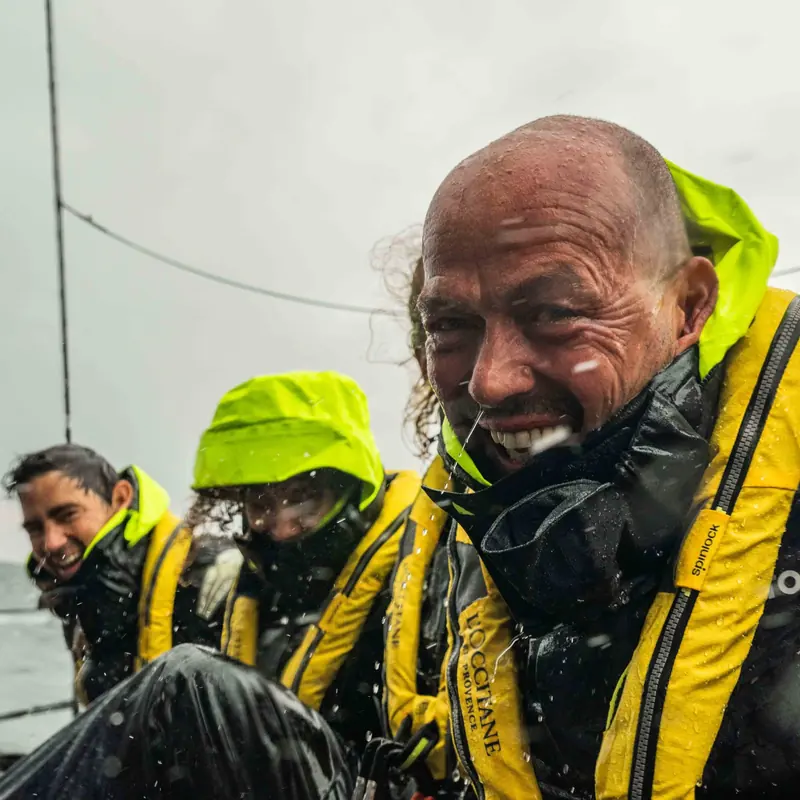
| Pip Hare, professional solo ocean racer, on the Deckvest VITO: "without a doubt the most comfortable lifejacket I have ever worn over a long period of time" | |
What Spinlock actually is, and where it started
The company traces its own history to 1968, trading first as Offshore Instruments out of London, before relocating in 1976 to Cowes, the same Birmingham Road site that remains its head office today. The name changed to Spinlock in the 1980s once the business had settled around a specific technical problem: controlling high-load ropes made from the new generation of high-tensile synthetic fibres that were starting to replace natural fibre and wire rope on racing and cruising boats alike.
Spinlock describes itself as still independent, with no outside investment taken on since founding, which is a genuine point of difference from Survitec or Lofrans elsewhere in this pillar, both of which now trade inside larger private equity or conglomerate ownership. The company grew its own product range in stages rather than by acquisition: a PROTECT category covering personal safety was added in 2004, a US subsidiary office opened in 2008, and a SENSE category of load-monitoring hardware and companion apps followed in 2016.
The rope clutches: what they actually hold, in kilograms
The clutch range is the original product line the company was built on, and it still spans from small single-line clutches to deck hardware rated for loads no human hand will ever apply directly. The XAS, the lighter of the two most common clutch families, comes in a 4 to 8mm version rated to 400kg and a 6 to 12mm version rated to 575kg. The XTS steps up substantially: both its 6 to 10mm and 8 to 14mm versions carry a 1000kg rating, roughly double the equivalent XAS size, which is the practical reason a boat with genuinely high sheet or halyard loads specifies XTS rather than XAS rather than simply buying a bigger XAS.
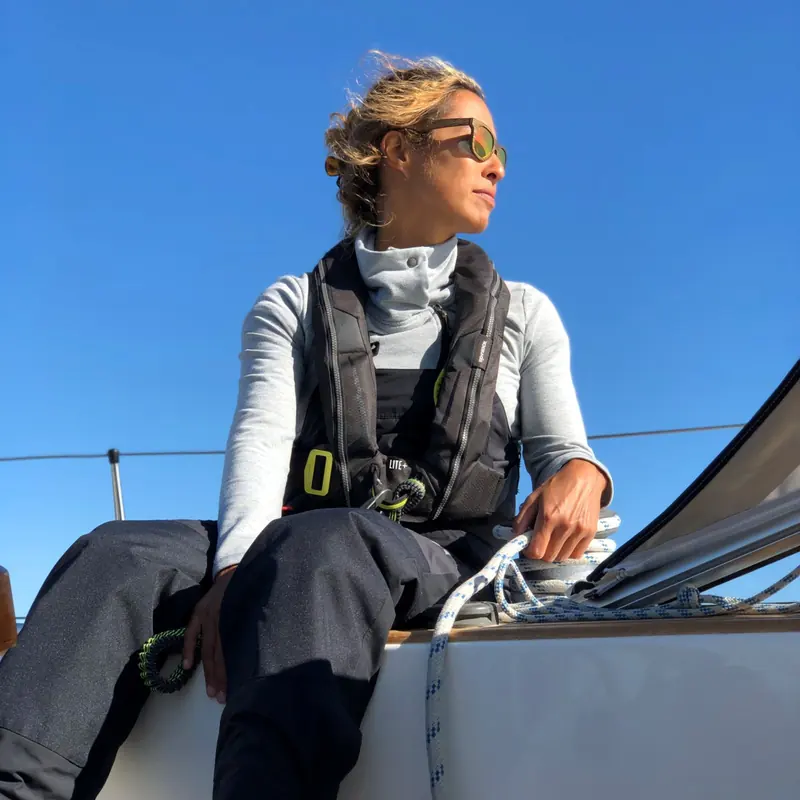
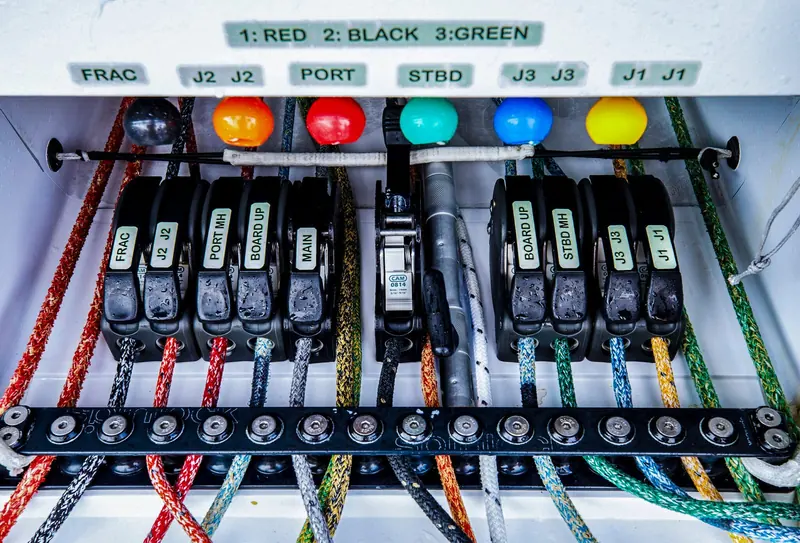
A rope clutch bank of the kind photographed for this entry, six or more colour-coded clutches feeding sail control lines aft to one cockpit, is a direct visual answer to what the spec sheet numbers are for: each labelled line runs to its own clutch sized for that specific control's expected load, so a crew can identify, grip and release the correct line under load without tracing it back to the sail or spar it actually controls. That labelling discipline matters more as a boat's control lines multiply, which is exactly the trend on modern shorthanded and performance cruising boats that lead sheets, halyards and reefing lines all back to a small cockpit. That colour coding is not a Spinlock-specific standard; it is agreed on a boat by boat basis between the rigger and the crew, so a sailor moving between boats should never assume red always means the same line from one deck to the next.
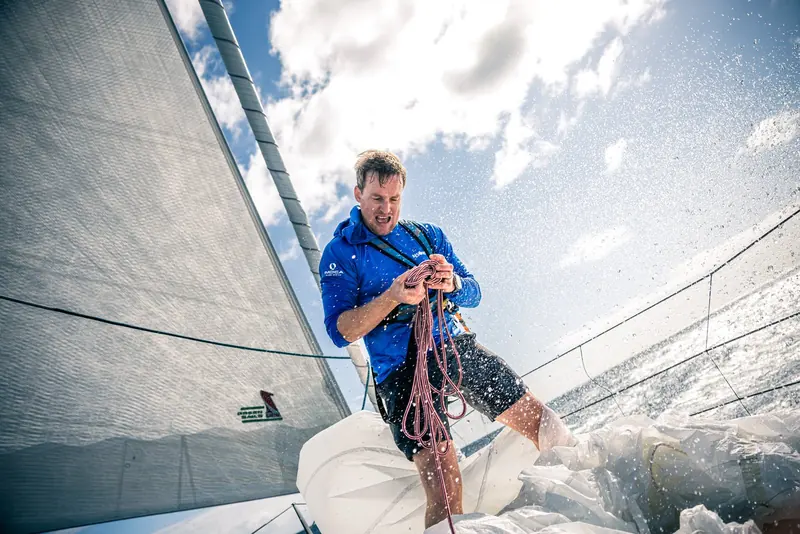
A magazine test scored the flagship Deckvest at 84 percent and named its loosening side adjusters as a real fault, while a solo ocean racer called a lighter sibling model the most comfortable lifejacket she has ever worn for days at a stretch.
The Deckvest lifejacket range and the Queen's Award
The Deckvest 6D, the range's flagship, carries 170N of buoyancy as standard, using what Spinlock calls a UML Pro Sensor Elite automatic activation system to inflate on immersion, and a Harness Release System that lets the wearer disconnect from a clipped-on safety line by releasing a lever built into the harness itself rather than having to unclip a shackle under load. The lighter Deckvest Lite is built for a broader, less technical audience: one size fits chest measurements from 60 to 145cm and wearer weights from 50kg upward, using a simpler UML Mk5 automatic inflation system, and is offered at both 150N and 170N buoyancy depending on the version.
A 275N version exists above the standard 170N rating specifically for larger wearers, people in heavy foul weather gear, or conditions where extra reserve buoyancy matters, which is a distinction worth checking before buying on buoyancy number alone, since a bigger sailor in bulky offshore kit needs more flotation to achieve the same freeboard as a smaller sailor in light clothing. The Queen's Award for Enterprise in the Innovation category, given in 2017, was specifically for the Deckvest's development, and Spinlock's own description of it as changing the landscape of the personal safety product market is a strong claim worth weighing against the independent test evidence below rather than taken at face value.
The SENSE range: measuring rig loads instead of guessing them
Before Rig-Sense, tuning a dinghy or small keelboat rig to a repeatable setting mostly meant memory, chalk marks on a shroud, or a tape measure against a fixed reference point, none of which capture the actual load in the wire or rope. Rig-Sense measures that tension directly in kilograms, and the free companion app, available on iOS and Android, lets a sailor save the reading against a specific boat, a specific set of conditions, or a specific class rule, then recall it later rather than re-deriving the right tension from scratch at every regatta.
The app side of the product, launched as the SENSE category in 2016, also supports building templates, attaching photos of a specific setting and exporting data to share with training partners, a coach or a whole class association, which turns a single gauge reading into a shared reference point for a fleet rather than one sailor's private notebook. This is a genuinely different kind of product from the clutches and lifejackets covered above, aimed at racing dinghy and small keelboat sailors optimising rig tune rather than at offshore cruising safety, and it broadens what Spinlock actually sells well beyond rope control hardware and personal flotation.
What an independent, named test of the Deckvest 6D actually found
Toyne's review, published by Yachting Monthly, credited the 6D with a form-fitting sculpted design, bright casing colour, elevated lighting and reflective visibility, a snug fit that holds the wearer high in the water and what she called an outstanding sprayhood. The price recorded was GBP 219.95 for the standard model, rising to GBP 239.95 for the version fitted with the Harness Release System, and the overall score awarded was 84 percent, a genuinely strong result rather than a marketing figure supplied by Spinlock itself.
The same review named three specific weaknesses rather than offering only praise: the bladder, the inflatable chamber itself, is a darker orange than some rival lifejackets, which Toyne noted may reduce visibility to a rescuer at sea; the extra sculpting that gives the jacket its fitted shape also makes it feel stiffer and heavier to wear than a simpler design; and the side adjusters were flagged as prone to loosening over time, a genuine mechanical criticism rather than a matter of taste. The jacket was also noted as bulky for storage in a kit bag, a real trade-off against its fitted, low-profile feel when actually worn.
A solo ocean racer's account of the Deckvest VITO
Hare is a genuine, named, professional offshore sailor, a Vendee Globe finisher who has raced solo across oceans for a living, which makes her account a materially different kind of evidence than a magazine bench test: it covers days of continuous wear rather than a controlled trial. Her verdict on the VITO, quoted directly, was that it was "without a doubt the most comfortable lifejacket I have ever worn over a long period of time," a specific claim about long-duration comfort rather than a general endorsement, and one that speaks directly to the complaint Yachting Monthly raised about the 6D's stiffer, heavier feel from its extra sculpting.
Spinlock's broader connection to solo ocean racing is real but should be read carefully: the company is visible around the Vendee Globe and the Clipper Round the World Race, including through a named Clipper Race ambassador, Timothy Morgan, but this research did not find direct, sourced quotes from several other well known offshore sailors whose names surface in search results alongside Spinlock's, and no claim is made here about their personal equipment choices without a direct quote to support it. Spinlock's connection to that world of racing is real, visible in its own sponsorship material and in named individual endorsements like Hare's, but it is worth keeping the marketing association and the specific, sourced quote separate when deciding how much weight to give either one.
Praktische Angaben
| Deckvest 6D price | GBP 219.95 standard, GBP 239.95 with the Harness Release System (Yachting Monthly, tested price) |
|---|---|
| Buoyancy options | 150N and 170N on the Lite range, 170N standard on the 6D and VITO, 275N version available for larger wearers or heavy clothing |
| Rope clutch range | XAS from 400kg (4-8mm) to 575kg (6-12mm); XTS at 1000kg on both 6-10mm and 8-14mm versions |
| Fit before buying | the Deckvest Lite is one size for 60-145cm chest and 50kg-plus wearer weight; confirm buoyancy needed against wearer size and expected clothing bulk rather than defaulting to the standard 170N rating |
| What is not published | no independent third-party test of the rope clutch range under sustained real sailing load was found, and Spinlock's own claim that the Deckvest changed the personal safety product market is the company's own framing of its Queen's Award, not an independently verified market analysis |
Was Eigner und Crew berichten
A named magazine reviewer's scored, detailed bench test
Jayne Toyne tested the Deckvest 6D for Yachting Monthly, scoring it 84 percent and naming specific strengths (lighting, sprayhood, fit) and specific weaknesses (bladder visibility, side adjusters, bulk and stiffness) rather than giving an unqualified endorsement
Jayne Toyne, Yachting MonthlyA professional solo ocean racer's account of long-duration wear
Pip Hare wore the Deckvest VITO during a solo Atlantic crossing and described it as the most comfortable lifejacket she has worn over a long period at sea, a specific claim from a named professional sailor rather than a sponsored quote with no detail behind it
Pip Hare, professional offshore sailorNo independent test of the rope clutch range under real sailing load was found
This research found Spinlock's own published load ratings for the XAS and XTS clutch families but no independent, named third-party test of clutch performance or failure mode under sustained real-world load, unlike the lifejacket range, which has been independently tested and scored
Yotters research desk
Was gut ist und worauf zu achten ist
Stärken
- Independently tested and scored, not just self-describedThe Deckvest 6D's 84 percent score and detailed strengths and weaknesses come from a named magazine reviewer's bench test, not from Spinlock's own marketing copy, which gives a buyer real comparative evidence rather than a manufacturer's claim alone
- A genuine long-duration endorsement from a professional userPip Hare's account of the Deckvest VITO covers days of continuous offshore wear during an actual solo crossing, which tests a lifejacket's comfort in a way a short bench trial cannot
- A wide load range on the deck hardware side, from small boat to genuinely high-load linesThe clutch range runs from a 400kg-rated small XAS clutch to a 1000kg-rated XTS clutch on rope from 2mm to 32mm, which covers everything from a small cruiser's control lines to loads that matter on a genuinely powerful boat
Worauf zu achten ist
- Named, specific mechanical faults on the flagship lifejacketYachting Monthly's own named reviewer flagged the Deckvest 6D's side adjusters as prone to loosening, which is a real mechanical criticism on safety equipment, not a cosmetic complaint, and worth checking for on a used or well-worn example before relying on it
- A less visible bladder colour than some rivals, on the exact product meant to be seen in the waterThe 6D's darker orange bladder was specifically flagged as potentially less visible to a rescuer than brighter alternatives on the market, which cuts against the core purpose of a lifejacket's visible colour
- Premium pricing and a stiffer, heavier feel than simpler lifejacketsAt GBP 219.95 to GBP 239.95, the Deckvest 6D costs more than many rival offshore lifejackets, and the same sculpted design that gives it a snug fit was also named as making it feel stiffer and heavier to wear and bulkier to store than a simpler jacket
Für wen: A sailor who wants deck hardware and a lifejacket engineered specifically for high loads and long offshore wear, backed by named, independent test data rather than only the maker's own claims, and who is prepared to pay a premium price for the fitted, feature-rich Deckvest 6D or choose the lighter VITO or Lite models for comfort over features.