Grande 36M
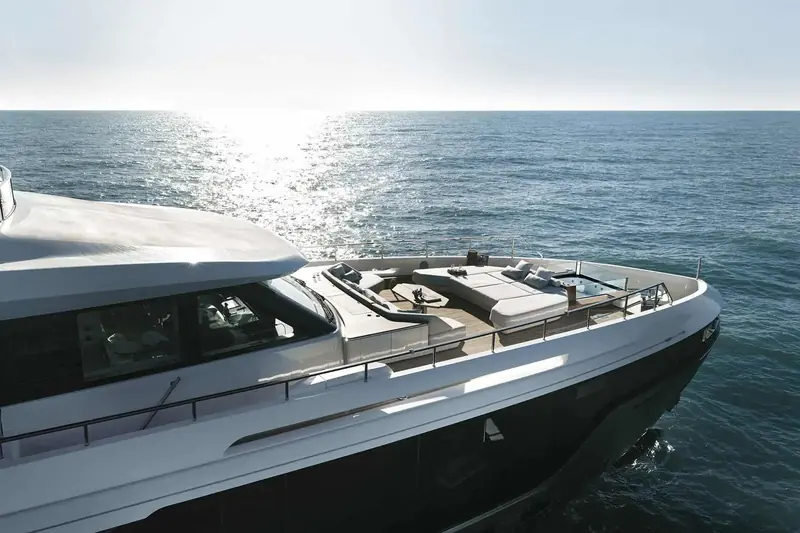
| LOA | 35,29 m (115 ft 9 in) |
|---|---|
| Manga | 7,50 m |
| Calado | 1,97 m |
| Motores | 2 x MTU, 2.200 hp o 2.400 hp |
| Velocidad máxima | 24 nudos, crucero 18 a 19 nudos |
| Invitados | hasta 10 en 5 camarotes, 6 tripulantes |
| Casco | D2P Displacement to Planing, superestructura de carbono |
| Diseño | Alberto Mancini (exterior), Achille Salvagni Architetti (interior) |
El Grande que se lee como un superyate
El Grande 36M mete a Azimut de lleno en la conversación de los superyates con algo más de 35 metros, una eslora que el astillero vuelve a expresar en metros para señalar la intención. Llegó dentro de la serie Grande en 2022 y enseguida se convirtió en uno de los modelos grandes más visibles de la marca a ambos lados del Atlántico. El yate acoge hasta diez invitados en cinco camarotes y lleva una tripulación de seis para hacerlo funcionar. Con un desplazamiento del orden de 180 toneladas tiene la masa y la presencia que se esperan de un barco de esta clase.
Dentro de la familia Grande, el 36M queda por debajo del buque insignia 44M y muy por encima de los cruceros flybridge de la marca. Es el modelo en el que muchos armadores conocen por primera vez el volumen real de un megayate bajo el nombre Azimut. La condición de serie importa aquí, porque significa que el comprador gana una distribución contrastada y una calidad de construcción conocida. Esa tranquilidad ha ayudado a que el 36M se venda de forma sostenida desde su lanzamiento. En arqueo bruto mide unos 275 GT, cifra que lo sitúa de lleno en el segmento de superyate.
Cristal, teca y un techo bajo
Alberto Mancini dibujó el exterior, y sus ventanas horizontales características recorren toda la cubierta principal para afinar el perfil. La superestructura es de fibra de carbono sobre un casco de vidrio, una combinación que permite al astillero llevar mucho acristalamiento a las partes altas sin comprometer la estabilidad. Una cubierta de teca y las superficies pulidas dan al 36M el acabado que se espera en esta parte del mercado. Las líneas son estiradas y limpias, de modo que un yate sustancial de tres cubiertas sigue pareciendo rápido parado.
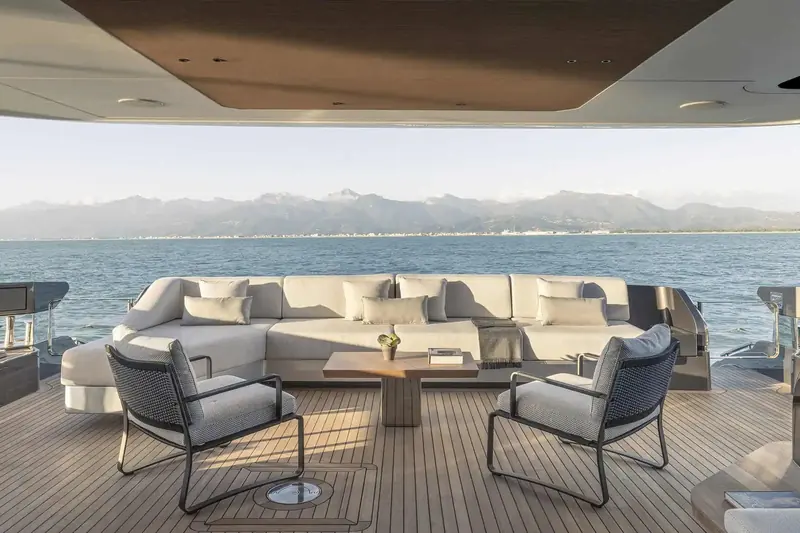
La planificación del exterior se centra en cómo usa realmente el armador un yate de este tamaño en el Mediterráneo y en el Caribe. Un beach club grande abre la popa al agua, y el flybridge añade una cubierta social elevada sobre el nivel principal. Los pasillos laterales se mantienen anchos para moverse con seguridad cuando suben los invitados. Mancini equilibra el volumen en altura que exigen seis camarotes con una línea de techo que mantiene el yate esbelto desde el muelle. La manga ancha da además al astillero sitio para meter un beach club de verdad y un garaje para el tender a popa.
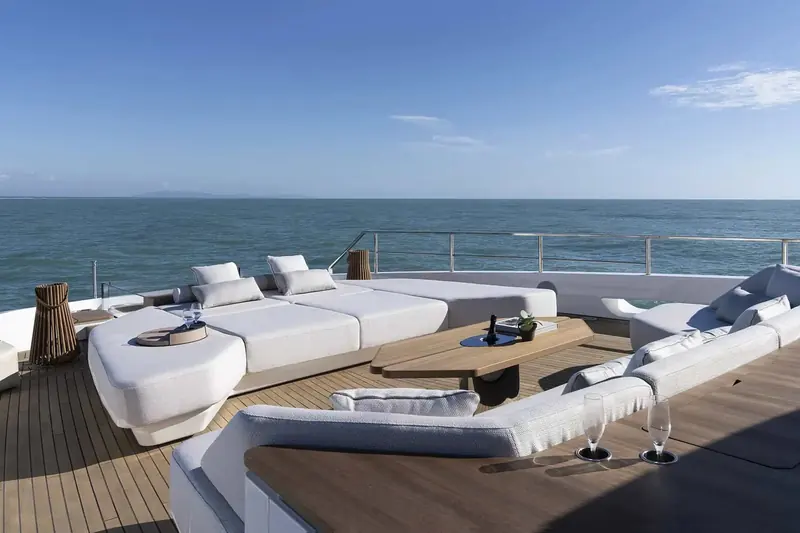
El Azimut en el que muchos armadores prueban por primera vez el volumen real de un megayate, envuelto en un interior de Salvagni.
La mano de Achille Salvagni bajo cubierta
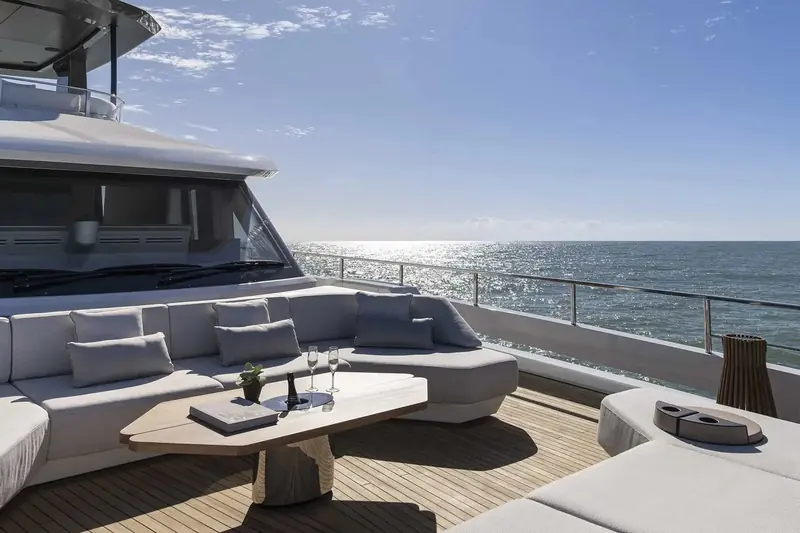
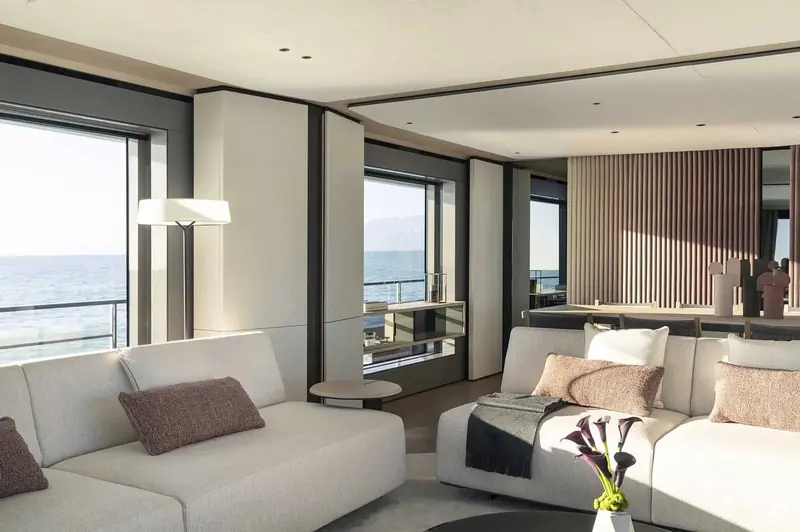
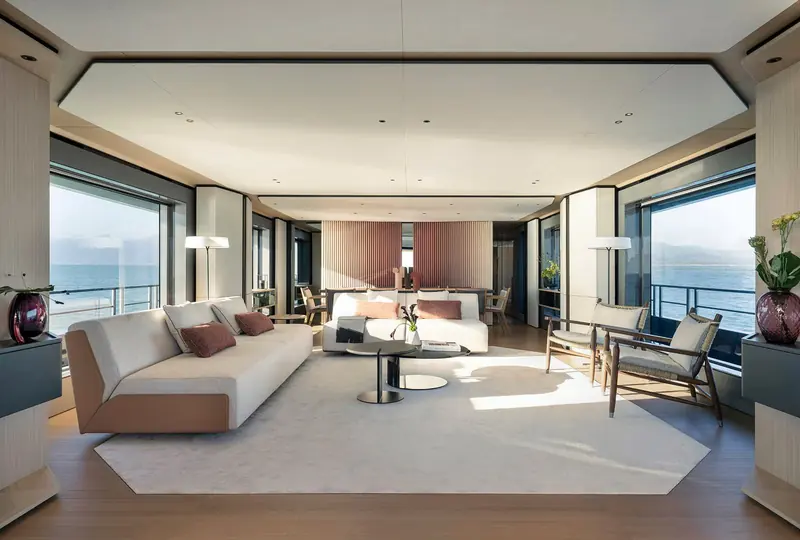
El interior es de Achille Salvagni Architetti, el estudio romano conocido por su lectura cálida y escultórica del lujo moderno. En cinco camarotes, la distribución da al armador una suite a toda manga y sitio para hasta diez invitados con comodidad. El uso de formas curvas y materiales ricos que hace Salvagni da al 36M el carácter de una residencia diseñada, cálida y muy lejos de lo clínico. Las zonas de tripulación están dispuestas para que el servicio resulte discreto con diez invitados a bordo.
La manga ancha de 7,5 metros es lo que hace funcionar esas estancias, y convierte el salón principal en un espacio de vida de verdad, con sitio para moverse. Las ventanas grandes mantienen el interior luminoso y lo atan al agua de fuera. El armador puede trabajar con el astillero los materiales para dar a cada casco su propio carácter. El efecto de conjunto es un interior de superyate que se siente personal.
Dos modos en un solo casco
El 36M navega sobre el casco D2P Displacement to Planing de Azimut, una forma pensada para funcionar con eficiencia tanto a velocidades lentas de desplazamiento como en planeo. La potencia viene de dos diésel MTU ofrecidos con 2.200 o 2.400 hp, lo que da una velocidad máxima de unos 24 nudos y un crucero cercano a los 18 o 19 nudos. Esa pareja permite al armador ir despacio y barato en travesía o apretar cuando lo pide la agenda. Es un abanico de prestaciones más amplio del que puede ofrecer un superyate de desplazamiento puro.
El control del peso es central en la ingeniería. La superestructura de carbono y el trabajo en composite más amplio permiten al astillero reclamar ahorros de combustible y de carbono del 20 al 30 por ciento frente a yates comparables. Menos peso en las alturas mejora también la navegación y el comportamiento del yate en fondeo. Para el armador esto se traduce en un barco grande que, para su tamaño, sigue siendo relativamente ligero de combustible. Azimut vincula esos ahorros al extenso trabajo en carbono heredado de sus cascos Grande mayores.
El comprador de un Azimut de 35 metros
El Grande 36M atrae al armador con experiencia que quiere un superyate con tripulación completa sin subir al 44M ni a una construcción a medida. Su distribución de cinco camarotes y su tripulación de seis lo hacen apto para navegar en familia largas temporadas y para algo de charter. El casco de doble modo encaja con el armador que valora la flexibilidad a la hora de usar el barco a lo largo de una temporada. Los compradores han llegado sobre todo de Estados Unidos y de Europa, donde el modelo está bien atendido.
Frente a rivales de otros astilleros italianos y del norte de Europa, el 36M se apoya en su interior de Salvagni y en el dominio del carbono del grupo. Ofrece un nombre reconocido y una gran red de concesionarios y de servicio, algo que importa a quien opera un yate de esta complejidad. Su carácter de serie mantiene el precio y la entrega más previsibles que en una unidad única de tamaño parecido. Para muchos es el primer superyate de verdad dentro del mundo Azimut.
Price, resale and the newer Evo
A standard-specification new build has been quoted at around 14.4 million euros before options, finishes and configuration, which move the final figure considerably on a yacht this customisable. Buyers researching the used market should also know that this particular hull is the first generation of the model. Azimut revised the Grande 36M into an Evo version from 2025, with a second generation debuting at the Cannes Yachting Festival that year, so any listing needs checking carefully for which generation it actually is.
Market data reported by YachtBuyer shows the difference matters to a seller as much as a buyer. First-generation listings have averaged 308 days on the market and sold for roughly 6 percent below the asking price, while the redesigned second generation has been moving in around two days and at a slight premium. A first-generation 36M is still a serious, well-supported superyacht, but a buyer should go in expecting a longer sale process and more room to negotiate than the current model commands.
Motores y sistemas
| Main engines | Twin MTU diesels, offered at 2,200 hp or 2,400 hp depending on configuration. |
|---|---|
| Hull | Azimut's D2P (Displacement to Planing) hull, with a carbon-fibre superstructure the yard credits with roughly 30 percent lower structural weight than a comparable build, and a claimed 20 to 30 percent reduction in fuel burn and emissions against similar-sized yachts. |
| Speed | Top speed around 24 knots, cruising speed 18 to 19 knots, per this model's own launch specification. |
| Range | Reported at roughly 1,200 to 1,500 nautical miles by third-party listings; this research could not confirm the cruising speed that figure assumes, or whether it describes this generation or the later Evo. |
| Tankage | Fuel and water capacity for this first-generation hull were not confirmed from a source clearly specific to it, since several listings found quote figures for the redesigned Evo instead. Treat any tankage number for this generation as unverified until traced to a first-generation source. |
| Beam and draft | 7.50 m beam, 1.97 m draft, consistent across the yard's own material and brokerage listings. |
Lo que cuentan armadores y tripulaciones
No named owner or charter-guest testimonial found
As a series production yacht rather than a one-off commission, coverage is dominated by launch press and brokerage listings. No first-person account from a named owner, charter guest or captain was found in this research.
Yotters research desk
Lo bueno y lo que conviene vigilar
Puntos fuertes
- A genuinely novel deck layout, not just a marketing labelThe semi-walkaround upper deck with fully retractable side glazing, which Azimut calls the Infinity Deck, runs nearly stem to stern and was the first of its kind on an Azimut when launched in 2022, independently described the same way by Boat International and Yacht Style.
- The efficiency claim is engineering, not just brandingThe carbon-fibre superstructure and D2P hull are consistently credited across independent coverage with a 20 to 30 percent reduction in fuel burn and emissions against comparable yachts, not only in Azimut's own material.
- A production model with a real dealer and service network behind itUnlike a custom one-off, a buyer gets Azimut's established global service network and more predictable pricing and delivery, a genuine practical advantage at this size.
A tener en cuenta
- This generation resells slowly and below askingFirst-generation listings have averaged 308 days on the market and roughly 6 percent off the asking price, materially slower and softer than the redesigned second generation. A first-gen buyer should budget time and negotiating room for eventual resale.
- It has already been supersededAzimut brought out an Evo version from 2025 with a revised specification. Buying the original hull means buying a design the yard itself has already moved on from, which is a factor for anyone weighing resale value or the latest systems.
- No independent sea-trial or ownership account was foundEvery source found for this page is launch press, a brokerage listing or the yard's own material. There is no first-hand review of how she handles at sea or how an owner has found her in service.
Información práctica
| This is the first-generation hull, not the newer Evo | Azimut launched a revised Grande 36M Evo from 2025, with a second generation debuting at the 2025 Cannes Yachting Festival. This page describes the original 2022 hull. Buyers researching current listings should check carefully which generation a given boat is, since specification and resale behaviour differ between them. |
|---|---|
| New price | A standard-specification new build has been quoted around EUR 14.4 million, before configuration, options and finishes, which move the figure materially. |
| Resale pattern for this generation | Market data reported by YachtBuyer shows first-generation Grande 36M listings averaging 308 days on the market and selling for roughly 6.07 percent below asking price, against the newer second generation, which has been selling in about 2 days and at a slight premium to asking. A first-generation hull should be expected to take longer to sell and to negotiate down from list. |
| Range | Reported at roughly 1,200 to 1,500 nautical miles, though this research could not confirm the cruising speed that figure is quoted at, or whether it applies to this generation or the Evo. |
| What is not published | A confirmed sea-trial fuel-burn table, annual running costs, and a single authoritative used-market price for a first-generation hull in current condition. |
Design
| Diseño exterior | Alberto Mancini |
|---|---|
| Interiorismo | Achille Salvagni (original). M2atelier on later Grande 36M Evo versions |
| Arquitectura naval | Pierluigi Ausonio Naval Architecture & Azimut Yachts R&D Dept. |
Para quién es: Un armador con experiencia que quiere un superyate con tripulación completa para navegar en familia y hacer algo de charter, sin subir al 44M ni a una construcción a medida.