Koru (Y721)
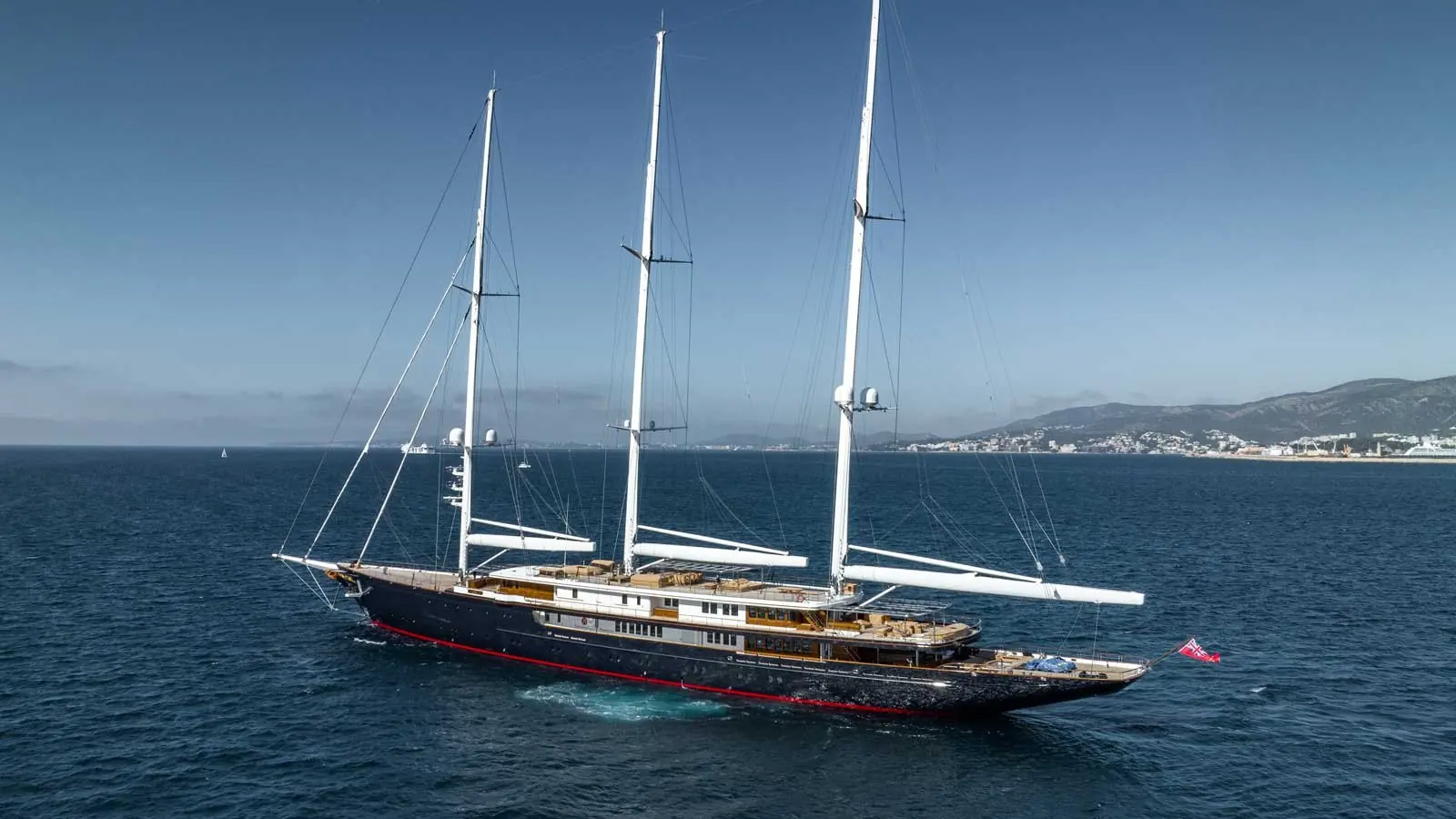
| Constructor | Oceanco, Alblasserdam, Países Bajos |
|---|---|
| Eslora | aproximadamente 127 metros (según fuentes) |
| Tipo | velero de tres palos, aparejo de goleta |
| Entregado | 2023 |
| Arqueo bruto | entre unas 3.000 y 3.500 GT, según fuentes |
| Arquitectura naval y aparejo | Dykstra Naval Architects con Lateral Naval Architects |
| Diseño interior | Mlinaric, Henry and Zervudachi |
| Distinción | mayor velero del mundo y mayor yate construido en los Países Bajos |
El récord que reajustó la clase de vela
Koru ocupa una posición que pocos yates alcanzan, en la cima misma de la flota de vela por eslora. Con los 127 metros que se le atribuyen superó todos los récords de vela existentes y se convirtió en el mayor yate de cualquier tipo terminado en suelo neerlandés. La escala importa porque la vela añade problemas que los yates de motor esquivan, de las cargas del aparejo a la altura de los palos frente a cada puente entre la nave y el mar. Oceanco asumió eso en lugar de llevar el diseño hacia un perfil de motor más fácil.
El proyecto corrió durante años con el nombre de astillero Y721 antes de que apareciera el nombre Koru, una palabra maorí para el brote que se despliega, asociada a los comienzos. Esa reserva era deliberada, porque el constructor nunca ha nombrado públicamente al armador. El cuidado en torno a su identidad acabó formando parte de la historia.
Un casco dibujado para el océano abierto
El exterior lleva la mano de Dykstra Naval Architects, un estudio con un largo historial en grandes veleros. El casco azul marino corre largo y bajo, con tres palos repartidos a lo largo de una línea de cubierta limpia y muy poco desorden sobre cubierta. El volumen para invitados se sitúa dentro del casco en lugar de apilarse en una superestructura alta, lo que mantiene la silueta más cerca de una goleta clásica que de un yate de motor moderno. Esa contención es lo que permite al aparejo dominar el perfil.
El interior fue para el estudio londinense Mlinaric, Henry and Zervudachi, una firma más conocida por casas y salones señoriales que por yates. La elección encaja con un buque que se lee como una residencia privada a vela y no como una plataforma de charter. Los detalles fiables sobre el interior escasean, en línea con el secreto que rodea a todo el proyecto. Lo que sí queda claro desde fuera es una preferencia por la línea y la proporción antes que por el espectáculo.
Los palos que estuvieron a punto de obligar a abrir un puente histórico de Róterdam.
Palos, puentes y los límites de la escala
Construir un velero de esta altura creó un problema que ningún interior podía resolver. Los palos terminados eran demasiado altos para pasar bajo el puente de Koningshaven, conocido localmente como De Hef, en la ruta de salida de Alblasserdam hacia aguas abiertas. Una propuesta para desmontar parcialmente el puente histórico despertó la ira pública en Róterdam y se convirtió en una noticia internacional por sí misma. Al final el astillero arboló los palos solo después de mover el casco río abajo, y el puente quedó intacto.
La ingeniería que hay debajo de ese episodio es considerable. Un aparejo de este tamaño exige unos caminos de carga muy estudiados a través de un casco de acero y una superestructura de aluminio, junto con un sistema de manejo de velas que una tripulación contenida pueda gobernar con seguridad. Oceanco trabajó con Lateral Naval Architects en el lado naval, junto a Dykstra. El resultado es un yate que se puede navegar y no solo exhibir, algo que a estas dimensiones no se da por hecho.
La vida a bordo de un récord privado
Koru está configurado para uso privado y no para charter, y el astillero ha soltado poco sobre su alojamiento. La prensa apunta a sitio para unos dieciocho invitados y a una tripulación profesional numerosa, con las cifras que exige un aparejo vélico completo. El casco largo da unos recorridos de cubierta generosos y el tipo de silencio que la vela hace posible cuando los motores están parados. Es un yate pensado para travesías largas más que para lucirse en puerto.
No viaja solo. Un buque de apoyo aparte llamado Abeona, construido por Damen, carga un helicóptero, los tenders y los juguetes acuáticos que el velero mantiene fuera de sus cubiertas limpias. Ese reparto de tareas deja a Koru despejada mientras el armador sigue teniendo cerca el equipamiento de un gran yate de motor. La pareja se ha vuelto un patrón habitual en lo más alto del mercado, y Koru está entre sus ejemplos más visibles.
El precio de ser el mayor
Un yate de esta escala es una declaración, quiera o no el armador hacerla. Las estimaciones de su coste han circulado mucho por la prensa, a menudo cerca de los quinientos millones de dólares, aunque no se ha confirmado ninguna cifra y esos números conviene tomarlos con cautela. Lo que sí es seguro es que reajustó el récord de vela y atrajo una atención que un yate de motor de valor parecido quizá habría esquivado. La disputa del puente garantizó que hasta la gente ajena al yachting supiera su nombre.
Para Oceanco el proyecto es una demostración de alcance. Terminar el mayor velero del mundo, y el mayor yate jamás construido en el país, coloca al astillero en una lista muy corta de constructores capaces de intentar algo así. Para el armador que se le atribuye es un buque privado que se ha vuelto insólitamente público. Los dos hechos viajan ya con el nombre Koru.
A record with an asterisk, and a sale price nobody confirmed
Koru's own naval architects at Dykstra can point to real ocean-going pedigree behind her rig, and her kinetic energy recovery system is a genuine engineering first for a sailing yacht of any size, not a marketing claim. But even her headline record is contested: Sailing Yacht A is four metres longer overall, and Koru only leads the 'largest sailing yacht' table because trackers classify Sailing Yacht A as sail-assisted rather than a pure sailing yacht.
Her build cost is treated the same way across the industry - the widely repeated $500 million figure, plus a further $75 million said to have gone into the support vessel Abeona, has never been confirmed by Oceanco itself. That pattern, a specific number everyone repeats and nobody can source to the yard, runs through almost every large yacht built for a owner who values privacy over publicity, and Koru is one of the clearest examples of it afloat today. Abeona herself carries up to 45 people between crew, guests and specialist staff, which is more than double Koru's own guest capacity and underlines how much of the support operation for a yacht this size now happens on a second hull entirely.
Motores y sistemas
| Rig and hull | Three-masted schooner rig on a steel hull with aluminium superstructure and teak decks; her masts are reported as the tallest fitted to any sailing yacht afloat |
|---|---|
| Auxiliary power | A prototype kinetic energy recovery system converts wave-induced motion - heave, pitch and roll - into electric power for onboard systems |
| Naval architecture | Dykstra Naval Architects drew the exterior and rig, with Lateral Naval Architects on structure; interiors by Mlinaric, Henry and Zervudachi |
| Support vessel | A dedicated 75-metre, 1,900 GT support ship, Abeona, built by Damen Yachting, carries tenders, water toys and a helicopter so Koru's own decks stay clear |
Lo que cuentan armadores y tripulaciones
No account from the owner, his family or his crew has ever been published
Even at the height of the Rotterdam bridge controversy, when the story ran worldwide and a Facebook event calling for eggs to be thrown at the yacht drew over 5,000 members, neither Jeff Bezos nor anyone aboard Koru issued a public comment; Oceanco simply withdrew its bridge application and towed the bare hull through at night with her masts stepped downstream instead.
Heart research
Lo bueno y lo que conviene vigilar
Puntos fuertes
- Genuinely novel auxiliary powerA kinetic energy recovery system turns the hull's own motion at sea into usable electricity, unusual engineering for a sailing yacht of any size
- A support vessel built to matchThe dedicated Abeona keeps Koru's own decks free of tenders and toys, a solution few sailing yachts her size can justify
- Real sailing pedigreeDykstra Naval Architects' rig and hull work makes her a genuine ocean-going sailing yacht, not a motor yacht with masts added for looks
A tener en cuenta
- The 'largest' title is contestedBy raw length she is second to the 143-metre Sailing Yacht A; the 'largest sailing yacht' claim rests on how that vessel is classified
- No confirmed costsThe widely quoted $500 million figure, like the rest of her costs, has never been confirmed by the yard and should be treated as an estimate
- A reputational cost before she sailedThe Rotterdam bridge controversy became her most widely told story before delivery, an outcome the owner did not choose
Información práctica
| Guests / crew | 18 guests in 9 cabins, crew of 40 |
|---|---|
| Gross tonnage | 3,493 GT |
| Timeline | Launched August 2022, delivered April 2023 |
| Reported cost | Widely reported at around $500 million for Koru, plus a further $75 million reported for Abeona; neither figure has been confirmed by the yard |
| Running costs | Industry estimates put annual running costs at $30 million or more |
| The bridge episode | Rotterdam's historic De Hef bridge was not dismantled in the end - Koru's masts were stepped downstream of the bridge after the bare hull passed underneath, avoiding the demolition that had caused public outcry |
| The 'largest' claim | By length she is second among sailing yachts, after the 143m Sailing Yacht A - but Sailing Yacht A is classed as a sail-assisted motor yacht (sails supplement diesel propulsion), which is why several trackers still list Koru as the largest pure sailing yacht in the world |
Design
| Diseño exterior | Dykstra Naval Architects (exterior styling / rig) |
|---|---|
| Interiorismo | Mlinaric, Henry & Zervudachi |
| Arquitectura naval | Lateral Naval Architects (with Dykstra Naval Architects) |
Para quién es: Un armador que quiere el récord absoluto de vela y la intimidad de una residencia en el mar, y que puede absorber el escrutinio que atraen las dos cosas.
Precio orientativo: No está oficialmente en venta; la prensa sitúa el coste de construcción en unos US$500 millones (estimación, Bloomberg / BOAT International). No hay precio de salida público verificado.