Octopus
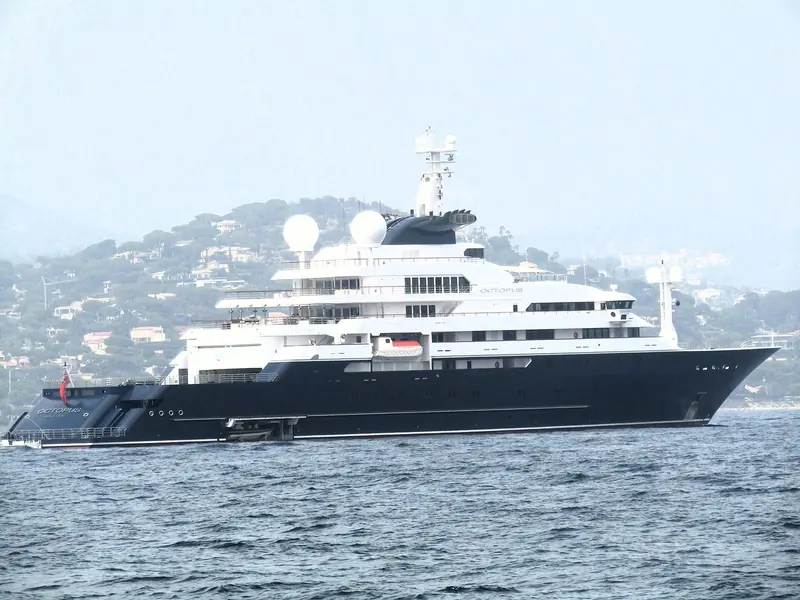
| Longueur hors tout | 126,2 m |
|---|---|
| Constructeur | Lurssen |
| Livraison | 2003 |
| Jauge brute | environ 9 932 GT |
| Design | Espen Oeino |
| Coque | acier de classe glace |
| Autonomie | 12 500 nm |
| Signature | deux sous-marins à bord |
L'explorateur qui a redéfini le type
Quand Octopus a été livré en 2003, il a de fait créé l'idée moderne du grand yacht d'expédition. À 126 mètres et construit à la classe glace complète, il associait une vraie capacité d'exploration au confort d'un grand yacht privé. Il a détenu le titre de plus grand explorateur du monde pendant bien plus de dix ans. Lurssen a livré une unité qui a véritablement changé la façon dont les propriétaires envisageaient de prendre la mer. Il a fait de l'idée même du yacht d'expédition une poursuite sérieuse et durable.
Le cahier des charges exigeant réclamait une vraie capacité scientifique et d'exploration aux côtés d'un luxe réel, et le chantier a livré les deux pleinement. Très peu de yachts, avant ou depuis, ont jamais porté un tel éventail de capacités. Octopus a prouvé de façon concluante qu'un yacht privé pouvait atteindre le bout du monde avec style. Il demeure la référence permanente de toute la catégorie explorateur qu'il a contribué à créer. Son long héritage a fini par façonner toute une génération de yachts d'expédition.
Le profil résolu d'Espen Oeino
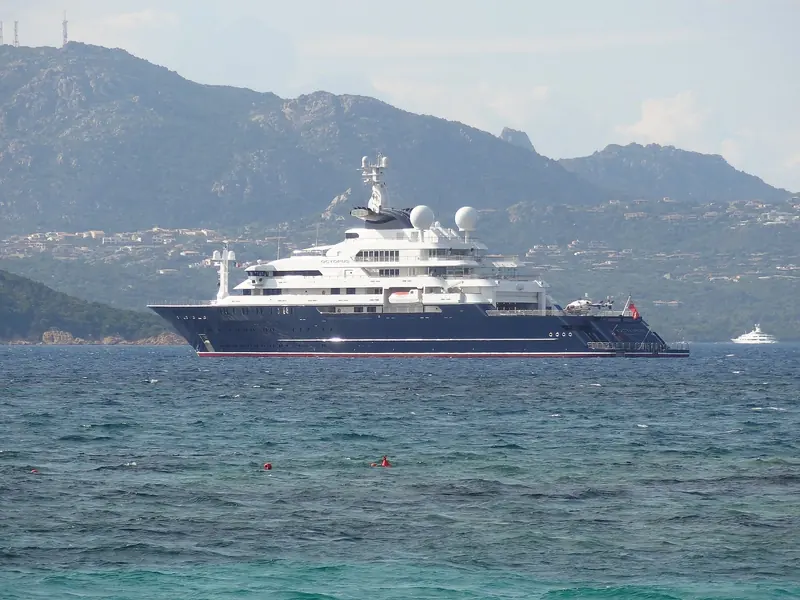
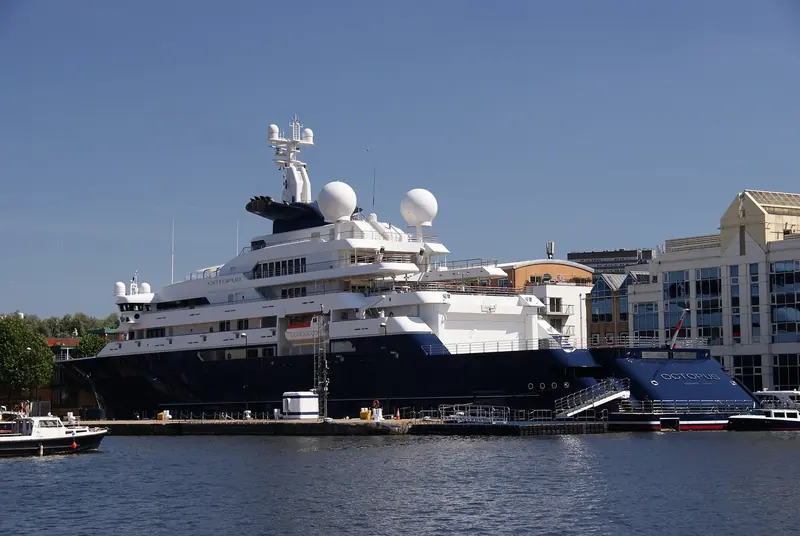
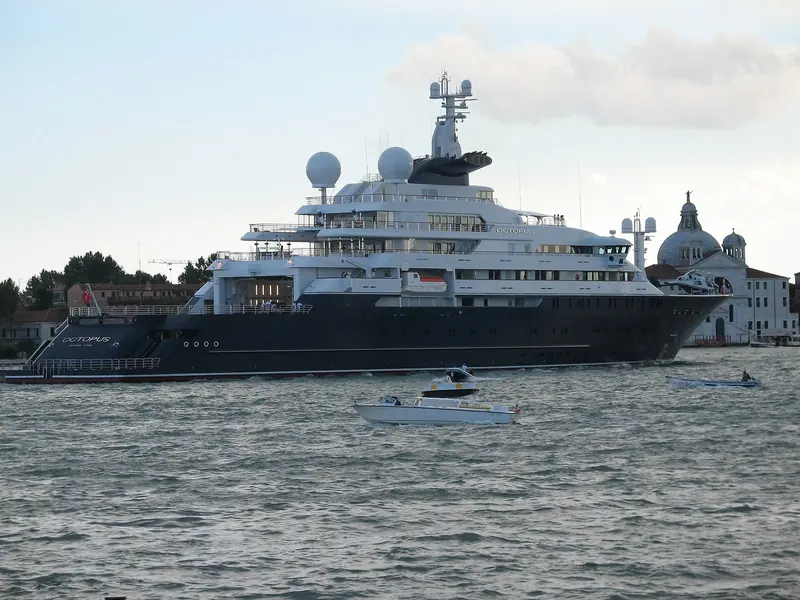
Espen Oeino a donné à Octopus un extérieur robuste et profondément résolu, bâti franchement pour les eaux les plus rudes. Sa coque acier de classe glace et ses huit ponts pleins lui donnent la substance nécessaire pour opérer en sécurité dans les régions polaires. Le profil est utilitaire et tranquillement assuré, façonné au plus près de son équipement d'exploration. Il ressemble exactement au navire d'expédition réellement capable qu'il est. Sa forme suit très clairement sa fonction dans chacune de ses lignes.
Le dessin intègre soigneusement un hélipont à l'avant et un pont d'appontage plus grand à l'arrière, avec un hangar pour deux hélicoptères. Un dock intérieur loge un tender invités de 20 mètres aux côtés des deux sous-marins du yacht. Oeino a équilibré toute cette capacité sérieuse avec la vraie présence d'un grand yacht privé. L'extérieur porte sa mission d'exploration ouvertement et avec une fierté évidente. Le dock intérieur compte parmi les systèmes les plus performants jamais intégrés à un yacht.
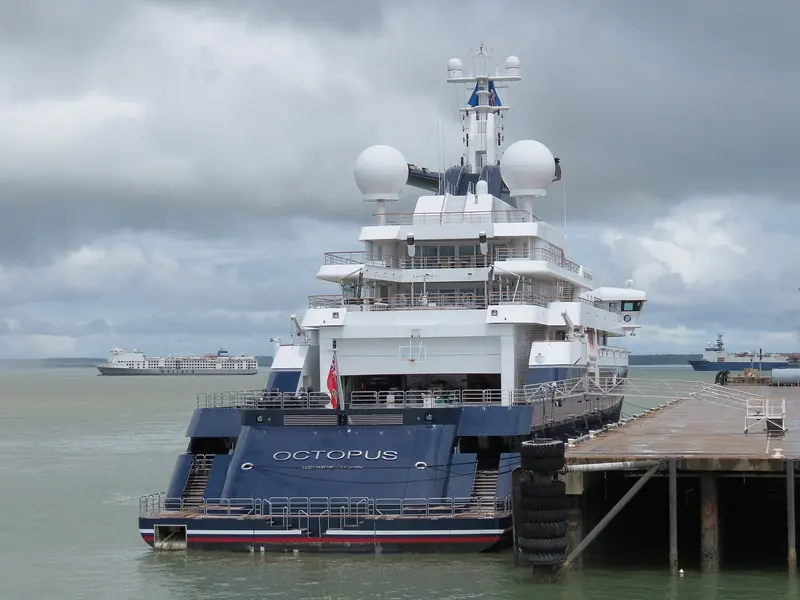
L'explorateur qui a localisé le Musashi, avec deux sous-marins et un studio à bord.
Deux sous-marins et un studio d'enregistrement
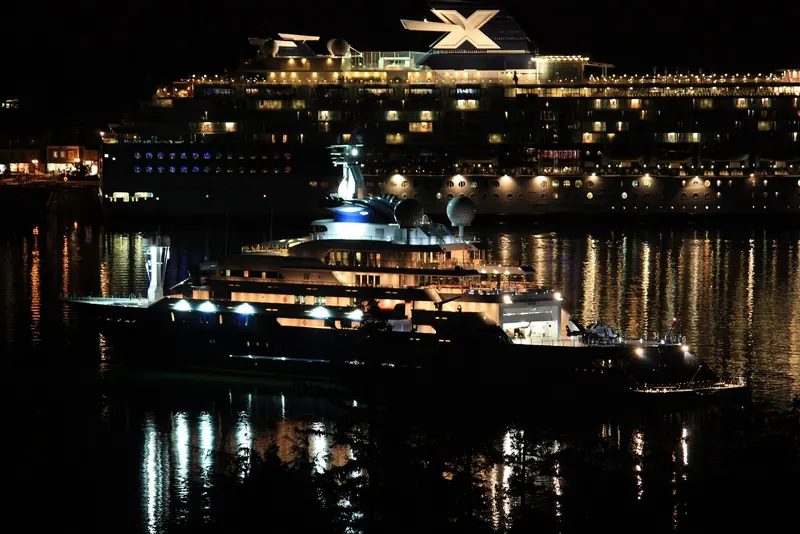
Octopus est tout aussi remarquable à l'intérieur et sous les ponts que sur l'eau. Il embarque deux sous-marins, dont l'un téléopéré pour atteindre de plus grandes profondeurs, ainsi qu'un studio d'enregistrement professionnel. Un centre de plongée, un beach club et de vastes espaces invités complètent le tableau en dessous. L'unité a été équipée dès l'origine pour l'exploration sérieuse comme pour le plaisir véritable. Très peu de navires privés au monde ont jamais embarqué un équipement de travail aussi sérieux.
Il accueille 26 invités répartis dans treize cabines, avec un équipage nombreux et expérimenté en soutien. L'intérieur comprend une salle de cinéma, un spa et de généreux espaces de réception répartis sur tous ses ponts. Tout ce qui est à bord a été conçu pour de longs voyages loin du port le plus proche. Octopus a été fait pour être habité des semaines durant dans des eaux véritablement reculées. Les espaces de vie rendent même des mois en mer réellement confortables.
Classe glace et 12 500 milles d'autonomie
Octopus a été conçu pour une véritable autonomie jusque dans les conditions les plus dures. Sa coque de classe glace et son autonomie de 12 500 milles nautiques lui permettent d'atteindre les régions polaires et de traverser des océans entiers sans soutien. Il a été bâti pour opérer bien au-delà de la portée ordinaire des autres yachts. L'endurance pure a été le principe directeur de chaque partie de son dessin. Son rayon d'action et son endurance le distinguent nettement de presque tous les yachts à flot.
La propulsion et les systèmes ont été choisis pour une fiabilité profonde dans des eaux reculées où tout secours est lointain. Une redondance complète court sur toute la longueur de l'unité. Son équipement de bord permet un vrai travail scientifique aux côtés de la navigation privée. Octopus peut aller presque partout sur la planète et y rester confortablement. Il a été bâti avant tout pour se suffire à lui-même dans les endroits les plus reculés de la terre.
Pour le propriétaire qui veut explorer
Octopus convient à un propriétaire dont l'ambition la plus profonde est la découverte véritable. Il a navigué dans les régions polaires et soutenu des expéditions qui ont localisé des épaves historiques, dont un cuirassé célèbre retrouvé en 2015. Il est idéal pour ceux qui veulent associer l'aventure réelle au confort d'un grand yacht. Sa capacité pure ouvre discrètement le monde entier à son propriétaire. Il récompense richement un propriétaire animé d'un appétit d'aventure véritable et durable.
Pour un propriétaire attiré par le reculé et l'extraordinaire, très peu d'unités peuvent égaler sa portée. Il récompense la curiosité profonde et un vrai esprit d'exploration avant tout. Octopus reste l'un des yachts les plus capables et les plus riches en récits jamais construits. Sa légende continue de grandir régulièrement à chaque voyage qu'il effectue. Ses nombreux voyages lui ont déjà valu une place permanente dans l'histoire maritime.
Built to Disappear, Not to Impress
None of it is visible at anchor. A 36-metre internal wet dock opens through a transom door onto gantry cranes that launch and recover Octopus's tenders and the ten-person submarine Pagoo, built specifically for her because no commercial submersible existed that could do the job. Two helicopters fold away into hangars fed by a dual pad aft and a second pad forward, and a hyperbaric chamber and dedicated dive centre sit below decks alongside roughly 54 tonnes of AV and IT equipment. Espen Oeino's brief was to make all of it vanish, and it does: from the water she reads as a long, low motor yacht, not the floating expedition base she has always been.
Paul Allen died in 2018 and Octopus stayed on the market for the better part of two years before Swedish businessman Roger Samuelsson bought her in 2021. She then went through two refits in quick succession, the second a nine-month rebuild at Lloyd Werft in Bremerhaven finishing in 2024 that covered her 20-year survey, a full repaint and an AV and IT overhaul. Rather than retire her, Samuelsson put Octopus back to work: she now charters through Big Blue Expeditions, running seasons in Antarctica and the Pacific for guests willing to pay roughly $2.2 million a week plus expenses for the yacht that found the Musashi.
Motorisation et systèmes
| Main engines | Eight MTU 16V 4000 M70 diesels, 19,200 hp (14,300 kW) combined, driving two ABB electric propulsion motors in a diesel-electric arrangement |
|---|---|
| Speed | 19 knots top speed, 12.5 knots economical cruise |
| Range | 12,500 nautical miles at 12.5 knots |
| Hull | Ice-classed 1A steel hull with an aluminium superstructure |
| Tenders and toys | Seven tenders including a landing craft, two helicopters with an aft dual pad and hangars plus a separate bow pad, the ten-person submarine Pagoo, an ROV, and a 36-metre internal wet dock reached through a transom door and gantry cranes |
| Dive and research gear | A hyperbaric chamber and dedicated dive centre, plus roughly 54 tonnes of AV, IT and expedition equipment carried aboard |
Ce que rapportent propriétaires et équipages
The whole brief was to hide the equipment, not show it off
Exterior designer Espen Oeino called the brief very ambitious, because none of the tenders, tools, ROVs, subs or helicopters could be left outside; all of it had to be concealed, which is why Octopus reads as a clean-lined motor yacht rather than the support ship she actually is.
Espen OeinoAllen thought of her as a working tool, not a trophy
He described Octopus as more of a Land Rover than a Bentley, built to be used hard on expeditions rather than admired at anchor.
Paul AllenThe submarine did real deep-ocean work, not joyrides
Robert Kraft, director of subsea operations at Allen's company Vulcan Inc, oversaw dives that recovered HMS Hood's bell from around 2,700 metres and located the wreck of the Japanese battleship Musashi at about 1,000 metres, genuine historical finds rather than publicity stunts.
Robert Kraft, Vulcan Inc
Les points forts et les points de vigilance
Points forts
- Everything stays hiddenTwo helicopters, seven tenders, a landing craft, a ten-person submarine and an ROV all stow inside the hull or under deck hatches, so she never looks like the support ship she actually is.
- A genuine expedition recordRecovering HMS Hood's bell and finding the wreck of the Musashi is real historical work, not the marketing many self-styled explorer yachts settle for.
- Still earning her keep two decades onShe now charters through Big Blue Expeditions in Antarctica and the Pacific rather than sitting idle, unusual for a yacht this old.
Points de vigilance
- Not actually fastA 19-knot top speed and a 12.5-knot cruise is modest for 14,300 kW of installed power; the hull is built for range and displacement, not speed.
- A slow, discounted saleListed at $325 million in 2019, she took roughly two years to sell and finally went for 235 million euros in 2021, a reminder that even a famous explorer yacht is a thin, patient market.
- Even her own builder's owner thought the category had gone too farPaul Allen said of his own yacht fleet that they're too big, and there are too many of them.
Informations pratiques
| Build cost (2003) | about $200 million |
|---|---|
| 2021 sale price | 235 million euros, to Swedish businessman Roger Samuelsson, after roughly two years on the market |
| Charter rate | from about $2.2 to 2.3 million a week plus expenses, through Big Blue Expeditions |
| Guests and crew, owner configuration | 26 guests in 13 staterooms, with 63 crew in 30 cabins |
| Guests and crew, charter configuration | 12 guests with a crew of 45, per the current charter listing |
| Range | 12,500 nautical miles at 12.5 knots, enough for an ocean crossing without refuelling |
| Latest refit | nine months at Lloyd Werft in Bremerhaven, finishing in 2024: 20-year survey, full repaint, AV and IT overhaul |
| What is not published | Samuelsson has never confirmed a running-cost figure; the industry rule of thumb of roughly 10 percent of build value a year would put it near $20 million, but that is an estimate, not a disclosed number |
Pour qui: Pour le propriétaire qui veut un vrai yacht d'expédition capable d'atteindre les pôles tout en embarquant des sous-marins et un studio.