Amels 180
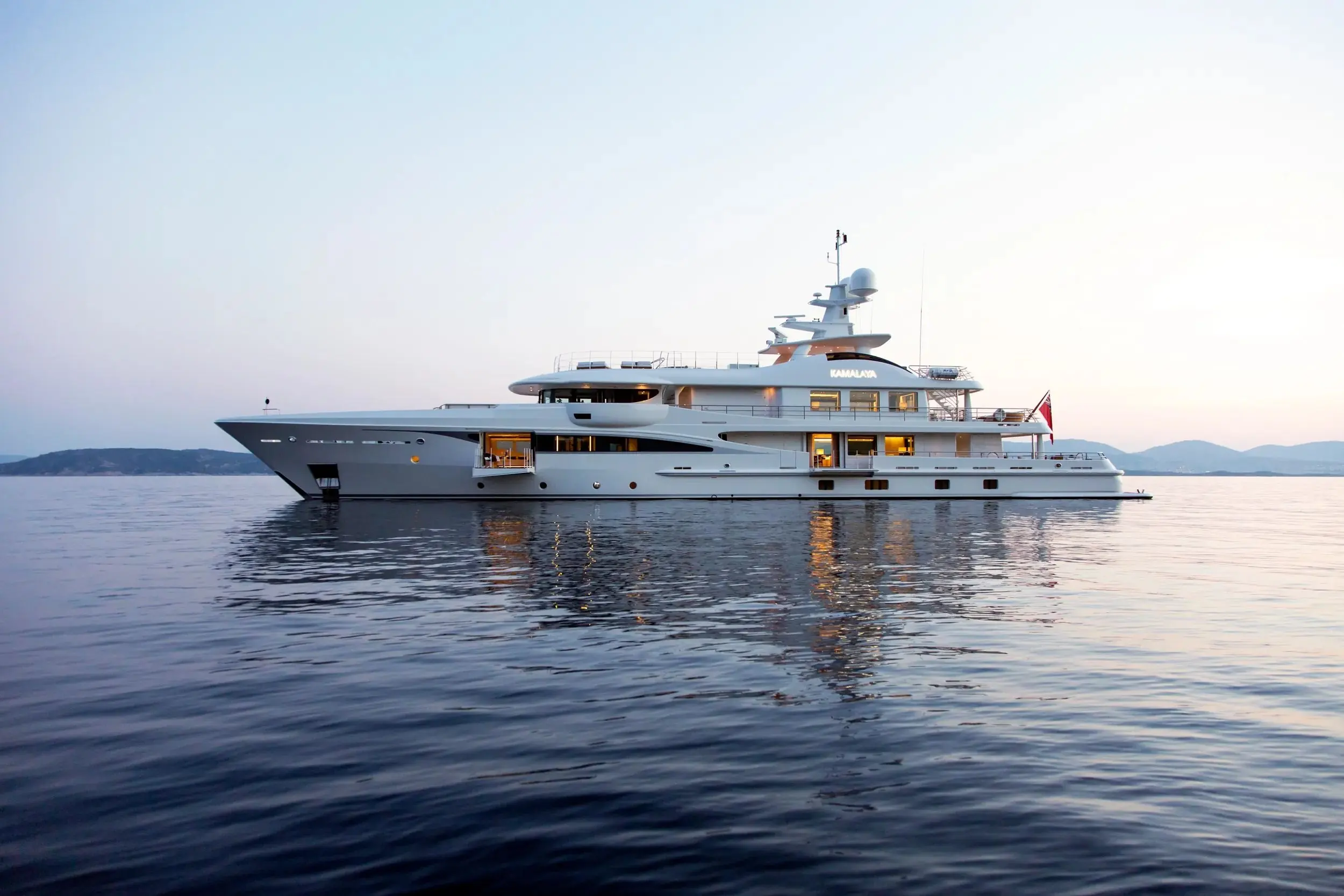
| LOA | 55 m (180 ft) |
|---|---|
| Baglio | 9,4 m |
| Pescaggio | 3,38 m |
| Stazza lorda | circa 670 GT |
| Design esterni | Tim Heywood |
| Interni | a scelta dell'armatore |
| Motori | 2 x MTU 16V 2000 M70 |
| Consegnati | circa 25 scafi, il primo nel 2012 |
La barca che ha portato il concetto
Quando Amels doveva dimostrare che un superyacht semi-custom poteva funzionare su scala, il 180 ha risposto alla domanda. È nato come una delle piattaforme più piccole della famiglia Limited Editions, dimensionato a 55 metri e prezzato per raggiungere un ampio bacino di armatori alla prima esperienza e di ritorno. L'ingegneria era fissata in anticipo, così un acquirente poteva impegnarsi con una visione chiara di costi e tempi. Quella certezza vendeva da sola gran parte della barca. In un mercato abituato alle commesse su misura, quella certezza era una proposta davvero nuova.
I numeri raccontano la storia del suo successo. Circa 25 esemplari hanno lasciato Vlissingen in una quindicina d'anni di produzione, il che rende il 180 il modello più costruito della gamma. Il primo scafo, battezzato 4YOU, è stato consegnato nel 2012. Pochi superyacht semi-custom di questa taglia hanno venduto in numeri paragonabili. Il flusso costante di acquirenti di ritorno diceva sulla piattaforma più di quanto potesse fare qualunque brochure.
Linee Heywood su uno scafo compatto
Tim Heywood ha disegnato gli esterni, e la sua firma si legge subito. La prua è lunga e la sovrastruttura sta bassa, il che dà al 180 un profilo equilibrato che ha retto bene rispetto a rivali più legati alla moda. Le proporzioni fanno sembrare uno yacht di 55 metri deciso invece che tozzo. Quel ritegno è in larga parte il motivo per cui il progetto appare ancora attuale dopo più di un decennio. Heywood ha dato all'Amels più piccolo la stessa grammatica visiva dei modelli più grandi.
La disposizione dei ponti mette lo spazio esterno utilizzabile davanti alla teatralità visiva. Un sun deck generoso e un pozzetto poppiero riparato danno agli ospiti luoghi distinti in cui ritrovarsi. Un'area di seduta sul ponte di prua aggiunge un'opzione più tranquilla lontano dal flusso principale. Poiché la piattaforma è standardizzata, i dettagli esterni tendono a variare tra gli scafi meno di quanto facciano gli interni. Gli armatori che vogliono un'impronta personale tendono a metterla sottocoperta.
Il 180 ha dimostrato che un superyacht semi-custom poteva vendere in numeri veri, e sono seguiti circa 25 scafi.
Una tela per l'armatore sottocoperta
Il volume interno si attesta intorno ai 670 GT, competitivo per la lunghezza. Amels lascia gli interni aperti all'armatore invece di imporre uno stile di casa, così due 180 non si leggono mai uguali sottocoperta. I layout accolgono tipicamente 12 ospiti in cinque o sei cabine, con una suite armatoriale a tutto baglio come fulcro abituale. Il risultato sembra custom anche se il guscio è condiviso. Quella libertà è in larga parte il richiamo del modello per gli acquirenti attenti al design.
Il ponte principale porta di norma i principali spazi conviviali, con una disposizione separata e più tranquilla per l'armatore. Altezze e linee delle finestrature sono state pianificate dentro la piattaforma, così i progettisti lavorano con luce e proporzione invece di combattere la struttura. Gli alloggi equipaggio per una dozzina di persone mantengono discreto il servizio. L'equilibrio tra aree ospiti e aree di lavoro riflette un decennio di affinamento lungo la serie. Il controllo di rumore e vibrazioni è stato trattato come priorità fin dal primo scafo.
Meccanica collaudata, gambe oceaniche
Il 180 poggia su uno scafo dislocante in acciaio con sovrastruttura in alluminio, la ricetta standard delle Limited Editions. La propulsione arriva da una coppia di diesel MTU 16V 2000 M70, un pacchetto diffuso e ben conosciuto. La velocità massima si attesta intorno ai 15,5 nodi, con una crociera economica più vicina agli 11,5 nodi. È uno yacht costruito per le traversate più che per il passo da titolo. L'accento cade dappertutto sul comfort in mare più che sullo scatto.
Alla velocità di crociera l'autonomia arriva a circa 4.000 miglia nautiche, sufficienti per una traversata atlantica con margine. Le scelte ingegneristiche privilegiano affidabilità e silenziosità rispetto alla novità, il che si adatta ad armatori che pensano di usare la barca duramente. La manutenzione è agevolata dalla comunanza dei ricambi su una flotta numerosa. Un comandante che passa da uno scafo all'altro trova poche sorprese. Quella familiarità mantiene i costi di gestione più stabili di quanto farebbe un progetto unico.
Chi compra un 180
Il 180 tende ad attrarre armatori che salgono per la prima volta su un superyacht dislocante completo, insieme ad armatori esperti che vogliono una seconda barca gestibile. La sua taglia mantiene sensati i costi di gestione e i numeri di equipaggio pur offrendo capacità oceanica. Il solido storico di rivendita dà agli acquirenti fiducia che il denaro non resti bloccato. Per molti quella combinazione è tutto il punto. La taglia è alla portata di armatori che troverebbero poco pratica la gestione di un'ammiraglia più grande.
Sul mercato del brokerage il 180 tiene il valore meglio di gran parte dei pari semi-custom, aiutato dalle dimensioni della flotta e dalla chiarezza della specifica. La domanda charter è costante, dato che il layout funziona per gruppi familiari e i costi di gestione restano sotto controllo. Gli armatori che apprezzano la prevedibilità più della dichiarazione unica tendono a orientarsi qui. Il modello ha fissato lo schema su cui il resto della gamma si è costruito. Tutti gli Amels successivi e più grandi fanno risalire a lui la propria logica.
Motori e impianti
| Main engines | Twin MTU 16V 2000 M70 diesels, 1,410 hp (1,050 kW) each at 2,100 rpm - the standard fit cited across every hull-specific source found (2012 first hull through the 2020 final hull, Galene). No source found documents a different engine generation or alternative engine option being fitted to any Amels 180 hull. |
|---|---|
| Gearboxes | Not published by any source found. |
| Generators | 2 x 160kW generators (single aggregator source, YachtBuyer-derived; not independently corroborated by a second named source, so treat as indicative rather than confirmed). |
| Stabilisers | Quantum stabiliser system, active underway and at anchor (per YachtBuyer-derived listings and brokerage copy). Model/fin size not published. |
| Bow/stern thrusters | Fitted as standard equipment on all hulls per brokerage listings, but no source found gives thruster brand, power (kW/hp), or confirms whether both bow and stern thrusters are fitted - not published by any source found. |
| Watermaker | Not published by any source found. Freshwater tank capacity itself is also unsettled: one brokerage source cites 15,000 litres, another 17,000 litres, for what appear to be different hulls - figures not reconciled. |
| Fuel tankage | 115,000 litres - consistent across the Amels-derived aggregator figures (YachtBuyer, Boat International-sourced summaries) and not contradicted by any source found. |
| Engine-room access | Not published in technical detail by any source found. General brokerage description places the machinery space aft with crew walkways, but no primary source gives headroom, layout, or access-route specifics. |
Cosa riferiscono armatori ed equipaggi
Positive first-hand account of the newbuild process from a hull's captain
Captain Paul Bessant, captain of the Amels 180 Papa, said of Amels: 'You feel very included, you feel that you really are part of the process from the beginning to the launch,' praising the yard's teamwork during the build.
Boat International (quoting Captain Paul Bessant)
Cosa convince e cosa va valutato
Punti di forza
- Best-selling design in its size classAmels/Damen commercial director Rose Damen is quoted by Boat International describing the 180 as 'the world's best-selling 55 metre yacht design since 2007' - repeated in Megayacht News' coverage of the same launch.
- Genuine semi-custom flexibility for a production platformMegayacht News notes that 180 buyers can still request structural changes, which it calls 'rare among shipyards offering similarly set technical platforms' - borne out by real hull-to-hull differences (accommodation layout, colour schemes, interior designers, sundeck size).
- Deep, active charter fleetMultiple individually named hulls (4You, Kamalaya, Papa, Amigos, Driftwood, Halo) are listed as available for charter by YachtCharterFleet and Charterworld, indicating sustained commercial demand for the model.
Da valutare
- Platform is out of productionPer YachtBuyer, the Amels 180 is no longer built and has been superseded in Amels' current line-up by the newer Amels 60 model - a buyer today is necessarily buying an older, discontinued design.
- No single reconciled specification sheet across official and brokerage sourcesGenuine, unresolved disagreement between Amels' own current site and brokerage/press material on cruise speed (11.5kn vs 13kn), range (4,000nm vs 4,500nm) and gross tonnage (650 vs 660 GT) - a prospective buyer cannot currently get one settled figure for these from public sources.
Informazioni pratiche
| LOA / GT / Beam | 55m (180ft) LOA and 9.40m beam are consistent across Amels' own site and Boat International-derived coverage. Gross tonnage is NOT settled between sources: Boat International-derived material states 650 GT, while Charterworld's coverage of the first hull (Step One) states 660 GRT. |
|---|---|
| Built / delivered facility and years | Built by Amels (part of Damen Yachting) at Vlissingen, Netherlands. First hull (4YOU / Step One) delivered 2012; named hulls found in press coverage run through Galene, delivered 2020 (16 named hulls total found: 4YOU, Step One, Apollo, Gene Machine, Kamalaya, Astra, Serenity J, La Familia, Vega, Elixir, Amigos, Driftwood, Halo, Nomad, Papa, Galene). Amels/Damen's own marketing claims '25 yachts delivered over 15 years' - this total could not be reconciled with the 16 named hulls found in press coverage; noted as an open discrepancy. YachtBuyer states the model is no longer in production, superseded by the newer Amels 60. |
| Design credits | Exterior design: Tim Heywood. Naval architecture: Damen Yachting. Interior design is owner's choice on a semi-custom basis - Laura Sessa credited on multiple hulls (4YOU, Papa, Galene); Bonesteel Trout Hall credited on Nomad. |
| Accommodation | Typically 12 guests across 6 staterooms (Boat International coverage of Step One and Amels' general marketing), though at least one hull (Papa) is documented at 10 guests across 5 staterooms - genuine semi-custom variation. Crew: 12 plus captain (13 total) per Amels' own current spec page. |
| Engines / range / speed | 2x MTU 16V 2000 M70. Top speed 15.5 knots consistent across sources. Cruise speed and range UNSETTLED between sources: Amels' own site and a Yachting Magazine brokerage listing for Galene both state cruise at 11.5 knots with a 4,000nm range; other aggregator coverage (Boat International-derived, Megayacht News) states cruising at 13 knots with a 4,500nm range. Both figure-pairs named here rather than averaged. |
| New-build price range | No confirmed official new-build price list found from any source. A general aggregator claim of a EUR 42,000,000 standard list price surfaced but could not be traced to a named, checkable source, so it is not reported as fact. |
| Resale price range (brokerage) | Galene (2020-built) asking $44,000,000 (Yachting Magazine); Elixir asking EUR 32,500,000 (Romeo United Yachts); Step One reported sold for $33,700,000 (unconfirmed original source). Other current listings in the EUR 29,900,000-33,000,000 band. Recent secondary-market activity clusters roughly EUR 29m-44m depending on build year and condition. |
| Charter rate | Kamalaya: from $310,000 per week plus expenses (YachtCharterFleet). 4You: EUR 310,000/week July-August, EUR 280,000/week the rest of the year. Multiple other 180 hulls (Papa, Amigos, Driftwood, Halo) also active in the charter fleet, but per-hull rates for those not individually confirmed. |
| What is not published | Gearbox make/model, watermaker production capacity, thruster brand/power, engine-room dimensions or access detail, a confirmed current official new-build price, or a single reconciled total hull count (16 named hulls in press coverage vs. Amels' own '25 delivered' marketing claim). |
Design
| Esterni | Tim Heywood |
|---|---|
| Interni | Owner-customized (studios used include Winch Design and Laura Sessa Romboli) |
| Architettura navale | Amels / Damen Yachting (in-house) |
A chi si rivolge: Armatori al primo yacht dislocante e armatori esperti che vogliono una seconda barca gestibile, capace in oceano e con una rivendita solida.