Amels 200
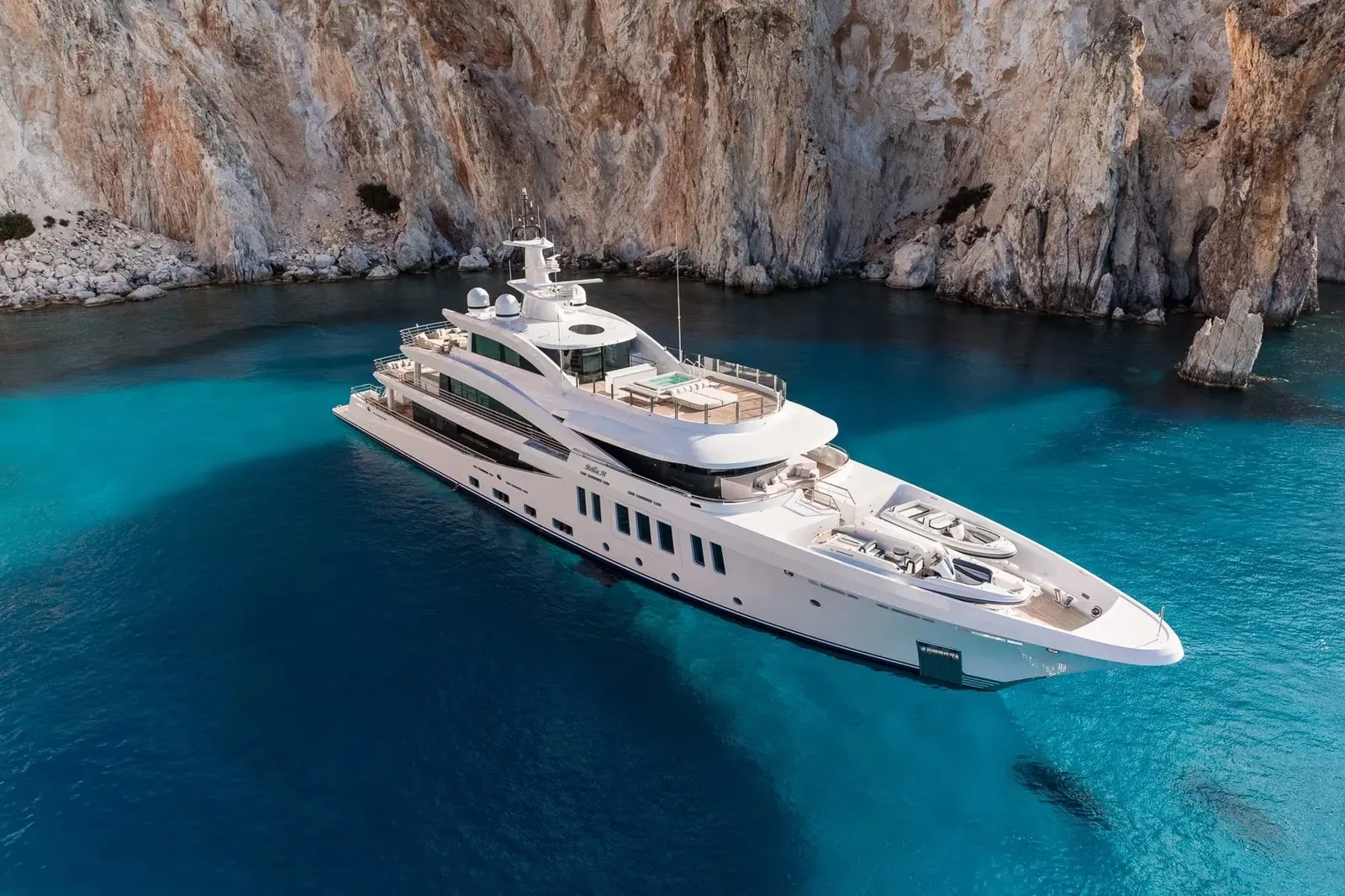
| LOA | 60 m (197 ft) |
|---|---|
| Baglio | 10,6 m |
| Pescaggio | circa 3,4 m |
| Propulsione | sistema elettrico ibrido per una navigazione quasi silenziosa |
| Velocità massima | circa 15,5 nodi |
| Autonomia | circa 4.500 miglia nautiche a 13 nodi |
| Sistemazioni | 12 ospiti in 6 cabine, ascensore passeggeri su quattro ponti, elisuperficie touch-and-go |
| Design | esterni Tim Heywood, primo scafo Stella M consegnato nei primi anni Venti del Duemila |
Il 60 metri reinventato
Sessanta metri è da tempo un punto di equilibrio per Amels, e il 200 è la risposta moderna del cantiere a quella lunghezza. Ha sostituito il precedente ragionamento sui 60 metri con una sovrastruttura più alta e verticale che impila quattro ponti pieni. L'altezza in più compra un volume interno più vicino a uno yacht di 65 metri, senza il costo e le esigenze di posto barca di uno scafo più grande. Per un armatore è un modo per guadagnare spazio e altezza restando dentro una fascia di taglia amichevole. Il progetto affianca l'Amels 60 dal nome metrico come 60 metri classico della famiglia.
La proposta è efficienza dello spazio. Ogni ponte si guadagna il proprio posto, dal beach club a filo d'acqua fino allo skylounge e all'elisuperficie in alto. Una scala centrale e un ascensore a tutta altezza collegano i ponti, così ospiti e armatori con minore mobilità si spostano facilmente tra i livelli. Il 200 è proposto come costruzione semi-custom, quindi gli interni possono essere calibrati mentre l'architettura navale resta fissa e collaudata. Gli acquirenti ottengono una piattaforma nota con margine per renderla personale.
Volume Heywood con impostazione verticale
Tim Heywood ha dato al 200 sezioni prodiere lunghe e sottili e una sovrastruttura alta e sicura. La prua è affilata e taglia pulito, mentre i ponti rialzati sopra creano il volume che il progetto è costruito per offrire. Ampie vetrate corrono lungo i ponti ospiti, aprendo gli interni alle vedute sul mare a ogni livello. Le proporzioni si leggono come uno yacht più grande visto dalla banchina. L'immagine segna un passo netto rispetto al precedente Amels di 60 metri.
L'impilamento su quattro ponti è la caratteristica che lo definisce. Costruire gli alloggi verso l'alto libera il ponte principale per un'ampia area armatoriale e apre i ponti superiori alla convivialità e all'ombra. Il sun deck porta l'attesa vasca idromassaggio e zone relax aperte, con un'elisuperficie touch-and-go a proravia per gli arrivi in elicottero. Sotto, il beach club si apre a poppa per il bagno e i toys. Il layout dà a uno yacht di 60 metri un numero di ponti di solito riservato a barche più grandi.
Un 60 metri a quattro ponti con ascensore passeggeri a tutta altezza e notti silenziose grazie all'ibrido.
Interni serviti dall'ascensore
Il comfort di punta è l'ascensore sui quattro ponti. Pochissimi yacht di questa taglia portano un ascensore passeggeri a tutta altezza, e questo cambia il modo in cui si usa l'intera barca in un viaggio lungo. Armatori di qualunque età raggiungono il sun deck o il beach club senza scale, e l'equipaggio movimenta provviste e bagagli molto più facilmente. Gli interni restano aperti all'armatore, così materiali, opere d'arte e numero di cabine possono essere specificati a piacere. Nella disposizione standard sono portati dodici ospiti in sei cabine.
Il volume è il senso di tutto il progetto. La suite armatoriale a tutto baglio sta a proravia sul ponte principale con luce diretta e vedute sul mare su tre lati. Le cabine ospiti sottostanti e un ampio skylounge sopra danno alla barca la sensazione interna di uno yacht molto più grande. La silenziosità del sistema ibrido mantiene quiete quegli spazi alla fonda. Una famiglia può sistemarsi per settimane senza sentirsi le pareti addosso.
Potenza ibrida, autonomia oceanica
La propulsione è dove il 200 mostra il proprio pensiero moderno. Un sistema elettrico ibrido permette allo yacht di navigare quasi in silenzio a batteria, di prendere la trasmissione diesel-elettrica per la crociera o di combinare le fonti per limare i consumi in traversata. La velocità massima si attesta intorno ai 15,5 nodi, con un'autonomia vicina alle 4.500 miglia nautiche a 13 nodi. Basta ad attraversare l'Atlantico e a raggiungere ancoraggi remoti ben lontani dal supporto. Gli stabilizzatori zero speed tengono ferma la barca all'ancora.
L'ingegneria mira ai bassi costi di gestione tanto quanto al raggio. Le ore silenziose a batteria riducono l'uso dei generatori durante la notte, e lo schema ibrido consente all'equipaggio di adattare la potenza al compito. Costruzione e sistemi stanno dentro la rete Damen, il che tiene assistenza e ricambi a portata su un programma globale. I numeri di equipaggio restano ragionevoli per uno yacht a quattro ponti di questo volume. Gli armatori ottengono la vita di una barca più grande senza la bolletta di gestione di una barca più grande.
L'armatore a cui si addice
Il 200 si addice a un armatore che mette volume e facilità di movimento davanti alla lunghezza pura. L'ascensore, i quattro ponti e le cabine generose ne fanno una scelta naturale per famiglie di più generazioni e per armatori che pensano di tenere la barca per anni. Chi apprezza le notti silenziose e le bollette del carburante più basse troverà che il sistema ibrido lavora davvero. La piattaforma fissa e collaudata abbassa il rischio della costruzione.
Ripaga gli armatori che navigano lontano. L'autonomia e gli stabilizzatori aprono lunghe tratte oceaniche, mentre il numero di ponti tiene comodo un gruppo numeroso alla fonda. Gli ospiti charter rispondono bene all'ascensore e allo spazio, cosa che sostiene la barca sul piano commerciale. Consegnato per la prima volta come Stella M nei primi anni Venti del Duemila, il progetto ha scafi veri in acqua da studiare. Gli acquirenti possono visitare esemplari consegnati come Stella M e Moonstone prima di impegnarsi.
Motori e impianti
| Main engines | 2 x MTU 12V4000M53 diesel, 1,380kW (1,850hp) each @ 1,800rpm (3,700hp total). Confirmed consistently by Amels' own spec page (amelsyachting.com), YachtBuyer's Amels 200 spec page, the Moonstone brokerage listing (yachtr.com) and Boat International's Moonstone feature. Note: a separate superyachts.com listing for hull 3 (Amels 200-03) gives a conflicting, apparently erroneous figure of 'turbo diesel 12cyl diesel man 1300hp' - this looks like a data entry error rather than a genuine second spec, since every other source agrees on the MTU 12V4000M53/1,850hp figure. |
|---|---|
| Gearboxes | REINTJES WAF 763 HL/HR, 5.136:1 reduction ratio. Source: Moonstone's detailed brokerage spec sheet (yachtr.com) - single source found; not independently corroborated elsewhere. |
| Generators | 2 x Scania DI09 074M, 250kW each, plus an emergency generator (SISU 49 CTAG, 107kWe). Source: Moonstone's brokerage spec sheet (yachtr.com) - single detailed source found; not independently corroborated elsewhere, so treat as representative of this hull rather than a confirmed universal spec across all Amels 200 hulls. |
| Stabilisers | Quantum QC-1800 HD XT zero-speed fin stabilisers, active both underway and at anchor. Source: Moonstone brokerage spec sheet (yachtr.com); CharterWorld's Moonstone listing separately confirms 'at-anchor stabilizers' as a feature, which is consistent with a zero-speed system. |
| Bow thruster | Jastram Hardware unit (model 130 225 1483 Kompr). Source: Moonstone brokerage spec sheet (yachtr.com). |
| Stern thruster | Not published by any source found. |
| Watermaker | Idromar IDMG Duplex Auto. Source: Moonstone brokerage spec sheet (yachtr.com) - single source found. |
| Fuel tankage | Approx. 151,300-152,000 litres. Three sources are consistent within a narrow band: Moonstone's brokerage listing states 151,300 litres (yachtr.com); a separate YachtBuyer Moonstone listing states 152,000 litres; YachtBuyer's general Amels 200 spec page states 40,154 US gallons (approx. 151,979 litres). Treated as settled given the close agreement. |
| Fresh water capacity | Approx. 24,500-24,650 litres, consistent between the Moonstone brokerage listing (24,650L, yachtr.com) and a separate YachtBuyer Moonstone listing (24,500L). |
| Engine-room access | Not published by any source found. |
| Hybrid propulsion system | Confirmed as a diesel-electric hybrid installation (branded 'Magnus Hybrid' on Moonstone's spec sheet, yachtr.com), not a diesel-hybrid-only or full-electric system. It uses a battery bank (emergency capacity of 450Ah cited on the Moonstone spec sheet) to avoid unnecessary generator starts and reduce low-load generator running, cutting fuel burn, engine hours and emissions; Amels' own literature and Boat International's Moonstone feature both describe this same function. The platform is built to Lloyd's classification and stated as IMO Tier III compliant. |
Cosa riferiscono armatori ed equipaggi
Chose the Amels 200 for its proven platform and interior volume for an active, adventurous cruising family
"We were looking for a larger boat with more luxury interior space...We decided that we would use a Northern European builder and selected the Amels 200 because we liked its Tim Heywood design and interior by Laura Pomponi... Choosing a yacht we knew had a proven technical platform and naval architecture that would ensure comfort at sea for global cruising was essential."
Moonstone's owners, unnamed, quoted directly by Boat InternationalPost-delivery, the yacht has supported extended remote/adventure cruising across multiple regions
"Moonstone met up with our support vessel in St Barths for our 2021/22 cruising season...so far, we have cruised in the Caribbean, the Virgin Islands, Dominican Republic, Costa Rica and are now in the Sea of Cortez. Moonstone delivers against all of our dreams."
Moonstone's owners, unnamed, quoted directly by Boat InternationalThe four-deck lift is a rare, deliberately engineered differentiator at 60m
"It's one of the few 60 metres on the market that has a lift from the lower deck's four guest cabins all the way up to the sundeck."
Jorrit Pilaar, Damen Yachting Sales Manager, quoted by Boat InternationalInterior design approach was driven by crew-workability, not just aesthetics
"Form follows function...Eighty per cent of my team had experience in the shipyard before becoming designers, so they understand all too well the crew's concerns."
Laura Pomponi, interior designer of Moonstone, quoted by Boat International
Cosa convince e cosa va valutato
Punti di forza
- Four-deck lift is a genuine rarity at this sizeDamen Yachting Sales Manager Jorrit Pilaar told Boat International it is 'one of the few 60 metres on the market that has a lift from the lower deck's four guest cabins all the way up to the sundeck' - a specific, named, on-record claim about a competitive differentiator, not generic marketing copy.
- Hybrid system delivers a real operational benefit, not just a marketing labelBoat International's reporting and Amels' own spec sheet both describe the same concrete mechanism: batteries avoid unnecessary generator starts and reduce low-load generator running, cutting fuel burn, engine hours and emissions, and the platform is IMO Tier III compliant.
- Range genuinely supports the long-range cruising the model is marketed forMoonstone's owners, quoted by Boat International, described using the yacht for extended, remote cruising across the Caribbean, Virgin Islands, Dominican Republic, Costa Rica and the Sea of Cortez, saying it 'delivers against all of our dreams' - a real-world account matching the yacht's stated 4,500nm/13kn range, not just a brochure claim.
- Semi-custom flexibility produces genuinely different results hull to hullEach of the four confirmed hulls has a different interior designer (Reymond Langton on Stella MI, Laura Pomponi/Luxury Projects on Moonstone, Winch Design on hull 4), which is real evidence that the 'Owner's choice' interior model results in materially different yachts rather than one repeated design dressed up as bespoke.
Da valutare
- Slowest cruising and top speed among its direct rivalsYachtBuyer's own editorial comparison of the Amels 200 against named rivals (Tankoa S581, Heesen 6500 Aluminium, Sanlorenzo 62Steel/64Steel, Astondoa 197 Steel, Mangusta Oceano 60) states the Amels 200 has 'the slowest cruising speed of the group at 13 knots and a top speed of 15 knots,' against the Tankoa S581's 23kn/27kn and the Heesen 6500 Aluminium's 21kn/24kn.
- Guest capacity trails at least one direct rivalThe same YachtBuyer comparison notes the Astondoa 197 Steel 'have a slight edge in guest accommodation, with the capacity to sleep up to 14 guests in 7 cabins' versus the Amels 200's 12 guests in 6 cabins.
- Resale market has required real price concessionsMoonstone needed what Boat International's own headline called a 'major price drop' - from an earlier EUR 74,900,000 ask down to USD 69,900,000 - before a buyer was found in December 2025, indicating the resale market for this specific model has not simply absorbed asking prices at face value.
Informazioni pratiche
| LOA / GT / Beam | LOA 60m/197ft (sources give 196'10"-197'1" depending on rounding); Beam 10.62m/~34'10"-35'; Draught approx. 3.40-3.45m. Gross tonnage is DISPUTED: most sources (superyachts.com, YachtBuyer's Moonstone listing, Moonstone's brokerage spec sheet) state 1,015 GT, but YachtBuyer's own general Amels 200 model page separately states 970 GT. Both are from the same publisher (YachtBuyer) contradicting itself across two of its own pages, so this figure should be treated as unsettled rather than averaged; 1,015 GT has the stronger weight of sources (3 vs 1). |
|---|---|
| Built / delivered | Built by Amels (part of Damen Yachting) at the Vlissingen, Netherlands shipyard. First hull, Stella M (later Stella MI), delivered in 2021 - confirmed by Amels' own delivery announcement, Boat International and Burgess. Second hull Moonstone also delivered 2021. A third hull (Amels 200-03, unnamed in the source found) is recorded as delivered in 2024 by superyachts.com. A fourth hull, described in a Boat International/Damen Yachting launch report with a Whisper Grey hull, added balcony and per-deck outdoor bars, and interior by Winch Design, was also reported delivered in 2024. |
| Design credits | Exterior design: Tim Heywood (Tim Heywood Design). Naval architecture: Damen Yachting. Interior design is 'Owner's choice' per Amels' own spec sheet and varies by hull: Reymond Langton Design for Stella M/Stella MI (per Burgess' sale listing); Laura Pomponi/Luxury Projects for Moonstone (per Boat International's feature, which quotes designer Laura Pomponi directly); Winch Design for the fourth hull (per Boat International's launch report). |
| Accommodation | 12 guests across 6 cabins is consistent across all sources. Crew numbers vary slightly by source/hull: Amels' own spec page states '12 + Captain'; Moonstone's brokerage listing and a separate YachtBuyer Moonstone listing both state 13-14 crew. This is likely genuine hull-to-hull variation in crew configuration rather than a factual conflict, but is noted as such. |
| Engines / range / speed | 2 x MTU 12V4000M53 (1,850hp/1,380kW each). Top speed 15.5 knots; cruising speed 13-13.5 knots (minor variance between sources, e.g. Amels' own page says 13kn, Moonstone's brokerage listing says 13.5kn - not treated as a material conflict). Range 4,500 nautical miles at 13 knots, confirmed consistently across every source checked (Amels official page, YachtBuyer, Boat International, CharterWorld, yachtr.com). |
| New-build price | Not published by any source found. Amels/Damen Yachting does not publish new-build pricing for the semi-custom Limited Editions range; all sale announcements found relate to brokerage resales, not first-owner contract prices. |
| Resale prices / listings | Stella MI (hull 1): sold via Burgess, reported by SuperYacht Times and Boat International (Oct 2025); last asking price EUR 71,500,000. Moonstone (hull 2): sold Dec 16 2025 per Boat International, with brokers Damon Smallwood (Superyacht Sales and Charter) and Cornelius Kistler (breeze.Yachting.swiss) both named in connection with the deal; last asking price USD 69,900,000, down from an earlier asking price of EUR 74,900,000 - Boat International's own headline called this a 'major price drop.' Final agreed sale prices were not disclosed by either source for either hull. |
| Charter rate | Not published by any source found. YachtCharterFleet's dedicated Amels 200 charter page returned zero listed hulls at time of research, and CharterWorld's Moonstone listing states pricing is available on inquiry only, with no rate shown. |
| What is not published | New-build/contract price for any hull; a confirmed weekly charter rate for any hull; engine-room access/layout details; generator, stabiliser, bow-thruster and watermaker specifications for any hull other than Moonstone (only one hull's full brokerage spec sheet was found, so these figures cannot be confirmed as identical across the series); confirmation of a stern thruster; the full, verified roster of every hull built (this research confirmed four: Stella M/Stella MI, Moonstone, an unnamed hull 3, and an unnamed hull 4) and final agreed sale prices for the two resold hulls (only last asking prices were disclosed). |
A chi si rivolge: L'armatore che mette al primo posto il volume interno e gli spostamenti senza scale, vuole notti ibride silenziose alla fonda e prevede di tenere a lungo un 60 metri a quattro ponti.