Fly 68
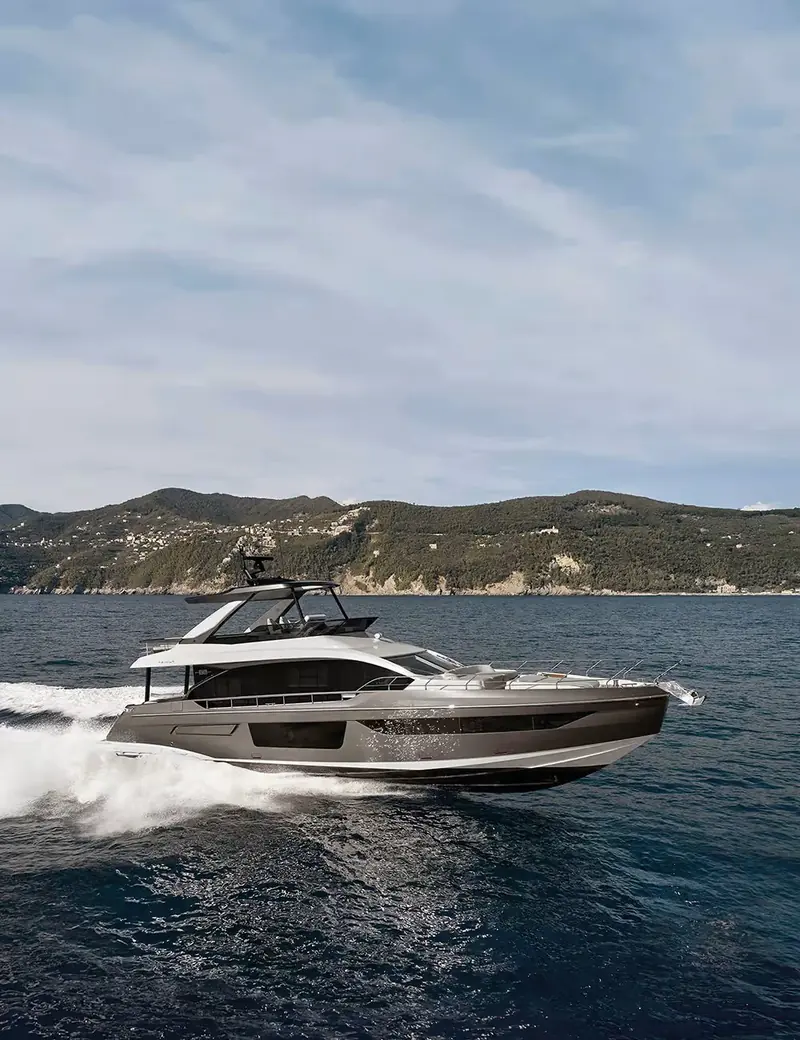
| LOA | 20,98 m (68 ft 10 in) |
|---|---|
| Baglio | 5,23 m |
| Pescaggio | 1,60 m |
| Motori | 2 x Volvo Penta IPS 1350, 1.000 hp ciascuno |
| Velocità massima | fino a 32 nodi, crociera 27 nodi |
| Autonomia | 424 nm a 15,2 nodi, 336 nm a 27 nodi |
| Cabine | 4 ospiti più 1 equipaggio, 8 posti letto ospiti |
| Design | Alberto Mancini (esterni), Achille Salvagni Architetti (interni) |
Una lettura moderna del flybridge
Il Fly 68 appartiene alla collezione Flybridge di Azimut, la famiglia che porta il classico cruiser su tre livelli al centro del business del marchio. Con 20,98 metri si colloca in una misura molto richiesta da armatori che vogliono un flybridge completo senza entrare nella scala dei superyacht. Il layout offre quattro cabine ospiti e una cabina equipaggio, sufficienti per la crociera in famiglia e per ospiti occasionali. Dal debutto nel 2021 è stato uno dei modelli centrali che tengono attuale la linea flybridge.
Il formato flybridge è quello in cui Azimut vende i numeri più alti, e il 68 ne è un'espressione di larga diffusione. Porta la costruzione in carbonio del gruppo e uno stile moderno in una misura a cui molti armatori in crescita aspirano. Il modello mostra come il tradizionale cruiser su tre ponti si sia evoluto in casa Azimut, con linee più basse e più vetro di quanto il tipo avesse un tempo. Per il marchio è un venditore affidabile, uno dei modelli di volume che tengono in moto la gamma. Porta l'attuale generazione del design flybridge del cantiere nella misura molto richiesta appena sotto i 70 piedi.
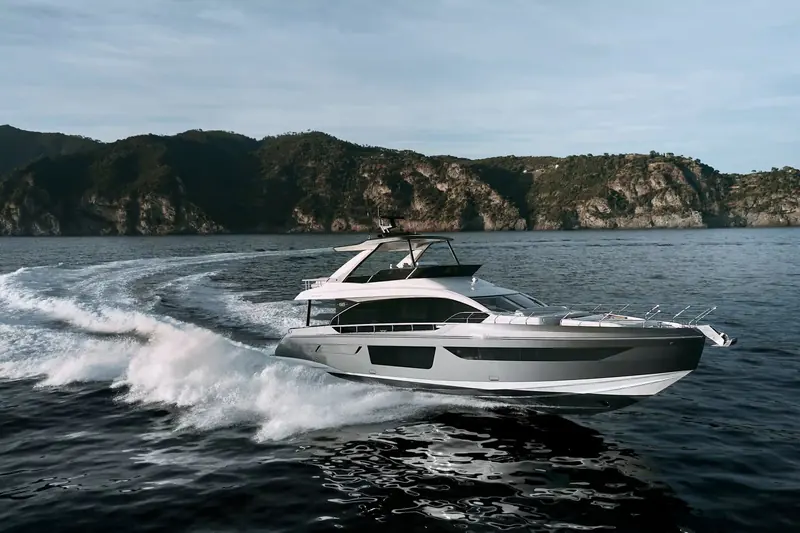
Linee più basse e più vetro
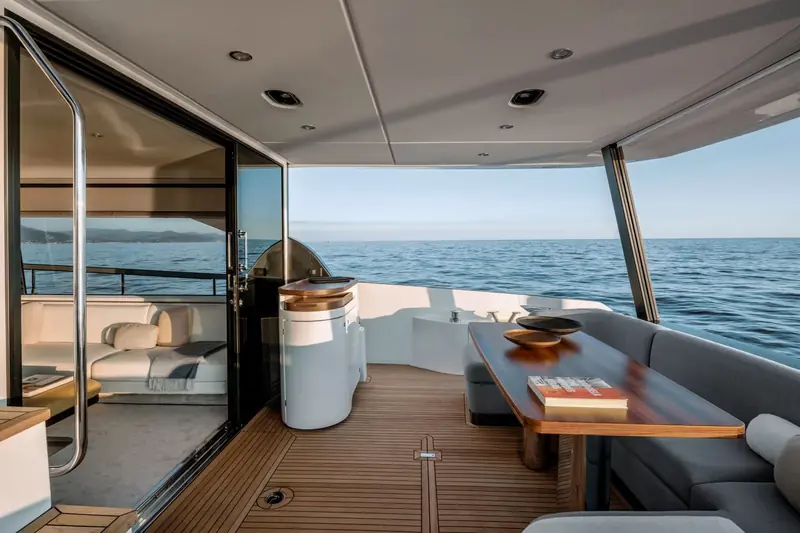
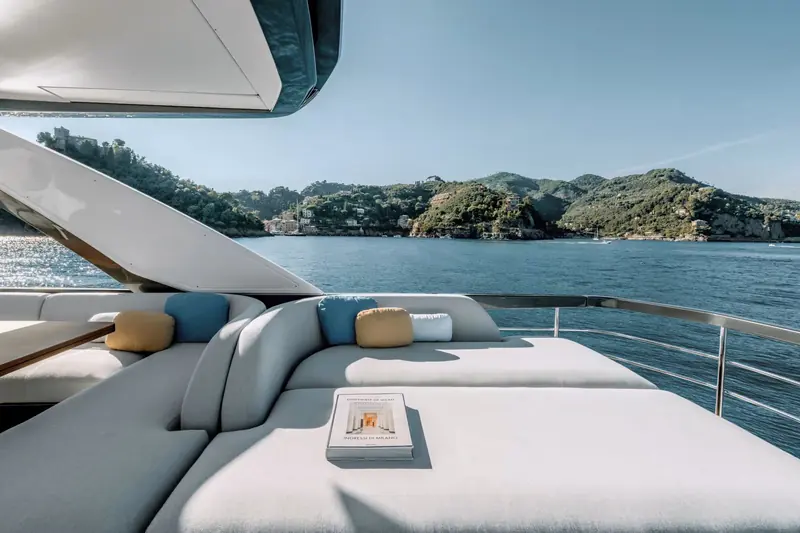
Alberto Mancini ha disegnato gli esterni, ammorbidendo la postura alta che i flybridge portano tradizionalmente in qualcosa di più affilato. Lunghe finestre laterali e un profilo allungato danno al 68 un aspetto più contemporaneo delle barche precedenti del tipo. Il flybridge stesso è un ampio ponte conviviale collocato sopra il livello principale, con plancia, sedute e spazio per prendere il sole. Passavanti larghi mantengono sicuri e facili gli spostamenti sulla barca.
La fibra di carbonio nella sovrastruttura è ciò che permette a Mancini di abbassare la linea di tetto mantenendo il volume che gli armatori si aspettano. Costruire leggero in alto migliora la stabilità e aiuta lo yacht a portare le sue vetrate generose. Il pozzetto di poppa si collega a una piattaforma bagno per il bagno e per il lavoro con il tender. Il risultato è un flybridge che sembra più basso e più veloce dei cruiser più squadrati che lo hanno preceduto.
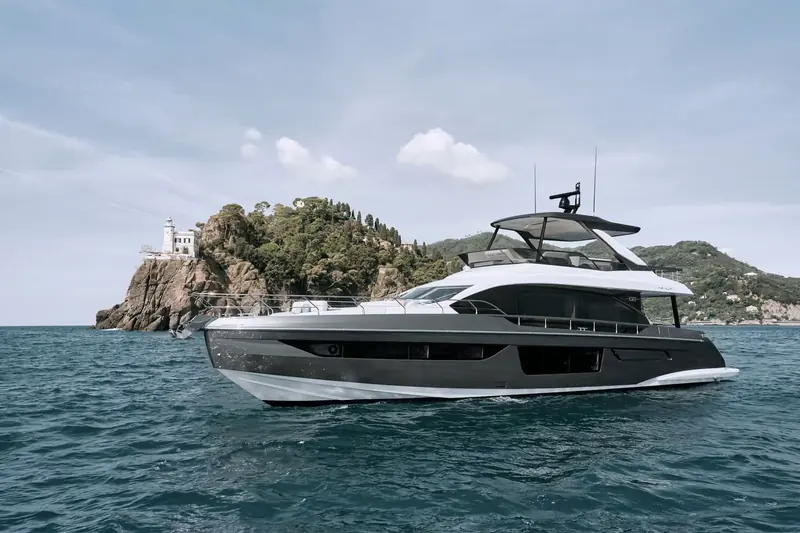
Un flybridge moderno su pod Volvo, basso e rapido, con un interno Salvagni su quattro cabine.
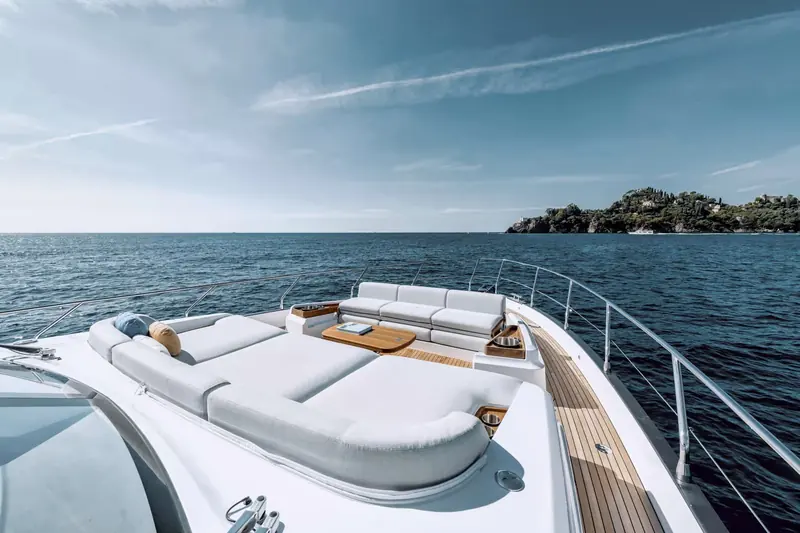
Achille Salvagni sotto coperta
Gli interni sono di Achille Salvagni Architetti, lo stesso studio romano dietro a diversi modelli Azimut più grandi, che porta un carattere raffinato e scultoreo su una barca di questa misura. Quattro cabine ospiti stanno sotto, tra cui una cabina armatoriale a tutto baglio a centro barca, con una cabina equipaggio a poppa. I posti letto arrivano a otto per gli ospiti e due per l'equipaggio, una distribuzione pratica per l'uso familiare con spazio per gli amici. I materiali e le forme di Salvagni alzano gli interni sopra la sensazione di una produzione di serie.
Il ponte principale mantiene una pianta aperta tra il salone e la plancia, con grandi finestre che portano dentro luce e vista. Un baglio di 5,23 metri dà larghezza sufficiente per un relax comodo senza la mole di un superyacht. L'allestimento bilancia l'usabilità quotidiana con un senso di lusso discreto. È un interno adatto sia ai fine settimana lunghi sia a vacanze prolungate a bordo. La cabina armatoriale a tutto baglio a centro barca sfrutta la parte più larga dello scafo per una suite più ampia.
Pod Volvo e trentadue nodi
Il Fly 68 è mosso da due unità pod Volvo Penta IPS 1350, ciascuna da 1.000 hp, un pacchetto noto per l'efficienza e la facilità nelle manovre ravvicinate. La velocità massima arriva fino a 32 nodi con una crociera intorno ai 27 nodi, che dà allo yacht un passo autentico per la sua classe. I pod IPS semplificano l'ormeggio grazie al comando a joystick, un aiuto reale per chi conduce da sé. Lo scafo è stato sviluppato da P. Ausonio con il centro ricerche del gruppo.
L'efficienza nasce dai pod che lavorano insieme alla costruzione leggera in composito dello yacht. A un tranquillo regime di 15,2 nodi il 68 copre circa 424 miglia nautiche, e a una crociera di 27 nodi tiene ancora circa 336 miglia nautiche. Il carbonio nella sovrastruttura tiene basso il peso e affina sia l'andatura sia la stabilità. Per un armatore questo significa un flybridge rapido e facile da condurre per la sua misura. L'installazione a pod libera anche volume a poppa che una linea d'asse convenzionale occuperebbe.
Il flybridge dell'armatore in crescita
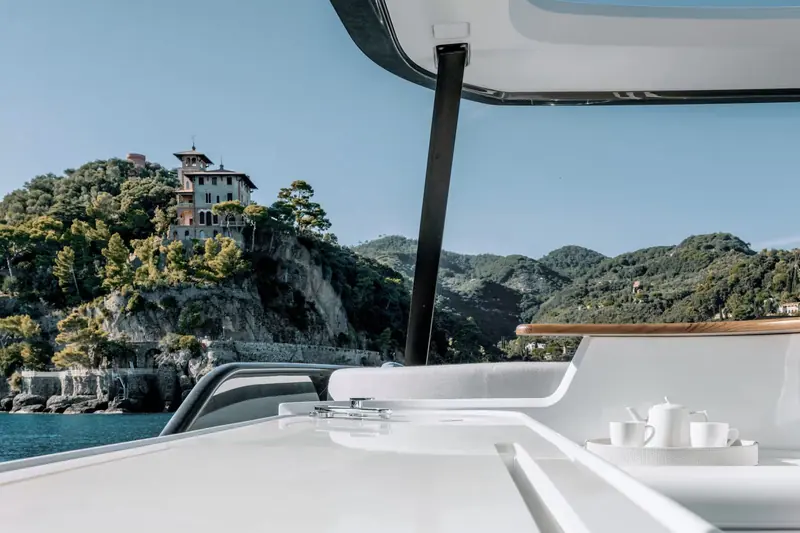
Il Fly 68 è rivolto all'armatore esperto che sale verso i 70 piedi e vuole un flybridge completo e quattro cabine. I suoi pod IPS e l'ormeggio a joystick lo rendono realistico da condurre con equipaggio ridotto o perfino in pochi nelle giornate calme. La misura si presta alla crociera in famiglia nel Mediterraneo e in acque simili, con spazio per ospitare amici. È una progressione naturale per chi sale da un Azimut più piccolo o da un cruiser concorrente.
Il 68 compete in una delle parti più affollate del mercato, contro flybridge di diversi costruttori affermati. La sua proposta poggia sull'interno Salvagni e sullo stile moderno di Mancini, sostenuta dall'estensione della rete di assistenza Azimut. La costruzione in carbonio e l'efficienza IPS gli danno un vantaggio tecnico sui progetti più vecchi della categoria. Per un acquirente del lusso di larga diffusione è una scelta sicura ed elegante a questa lunghezza. Per molti armatori il 68 rappresenta il vertice pratico del mercato flybridge di larga diffusione.
What an independent sea trial actually found
Motor Boat & Yachting's Alan Harper drove a UK-spec boat to 31.9 knots and logged 296nm of range at a 23-knot cruise burning 230 litres an hour, close to Azimut's own claim of 27 knots and 336nm on the same tank. He found the hull cornered like a thoroughbred and rode chop with minimal slamming, but rated the lower helm's sightlines only adequate for crowded waters and found the fourth cabin short on stowage. The same reviewer, testing a US-spec boat for Power & Motoryacht, reported a very similar result: just under 32 knots even loaded with fuel and water.
Azimut's own chart also lists a slower cruise of 15.2 knots for 424nm, a genuinely long leg for a 68-footer on 3,700 litres of fuel. What none of the three sources agree on is price: a UK test boat came in at GBP 1,754,349 ex-VAT and a US test boat at USD 2.99 million, prices that reflect two different specifications rather than one fixed cost. Buyers should treat any single headline price for this model as one boat's as-tested figure, not a base rate.
Motori e impianti
| Engines | Twin Volvo Penta IPS1350 pod drives, 1,000hp each (Azimut spec, confirmed by both sea trials) |
|---|---|
| Top speed | Up to 32 knots claimed (Azimut); 31.9kt and 'just below 32kt' measured on two independent sea trials |
| Cruise speed / range | 27kt fast cruise / 336nm (Azimut spec); sea trial at 23kt recorded 296nm at 230 l/hr; slow cruise 15.2kt / 424nm (Azimut spec) |
| Hull / superstructure | GRP hull, carbon-fibre superstructure -- Azimut states this cuts superstructure weight by up to 30% versus a conventional build |
| Stabilisation | Seakeeper gyro stabiliser fitted, positioned aft of the jack-shafted IPS drives (Power & Motoryacht sea trial) |
| Not published | Generator make/output and stabiliser model number are not confirmed by the builder or either sea trial |
Cosa riferiscono armatori ed equipaggi
Lower helm visibility is only adequate in crowded waters
After driving the boat, the reviewer wrote that sightlines from the lower helm were "OK on passage but is no better than adequate for crowded waters" -- a firsthand handling note, not a spec-sheet claim.
Alan Harper, Motor Boat & YachtingThe fourth cabin and port twin cabin are tight
The same test found the fourth cabin short on stowage and the port twin cabin "rather crammed in" for floor space, while praising the boat's acceleration and cornering on the same run.
Alan Harper, Motor Boat & YachtingThe hull rides chop with minimal slamming and corners precisely
On a separate US test boat, the reviewer reported the medium-V hull "accelerated with great verve, cornered precisely, rode the minimal chop we encountered with minimal slamming," and stayed close to its rated 32-knot top end even loaded with fuel and water.
Alan Harper, Power & Motoryacht
Cosa convince e cosa va valutato
Punti di forza
- Performance holds up under an independent test, not just on paperTwo separate sea trials, on two different boats, both measured within a knot of Azimut's claimed 32-knot top end (31.9kt and 'just below 32kt'), with the tester praising cornering and ride quality rather than just citing the spec sheet.
- Efficient IPS pod propulsion gives real range for a 68-footerAzimut's own chart shows 424nm at a 15.2-knot slow cruise on 3,700 litres of fuel, and the pod drives give the low-speed handling and docking control twin-shaft flybridge boats of this size usually lack.
- An unusually strong design bench for a production flybridgeAlberto Mancini (exterior), Achille Salvagni (interior) and P.L. Ausonio with Azimut's own R&D department (hull) is a stronger, more independently credited design team than most yards attach to a mid-size series boat.
Da valutare
- Helm visibility and two cabins drew real criticism from the person who drove itThe same reviewer who praised the boat's handling also found lower-helm sightlines merely adequate in crowded waters, and flagged the fourth cabin's stowage and the port twin cabin's floor space as cramped.
- Published range figures do not agree with each otherAzimut's own chart lists 336nm at a 27-knot fast cruise, while a sea trial at 23 knots recorded 296nm at 230 l/hr -- different speeds and conditions, so neither number should be read as a fixed guarantee of range at any given throttle setting.
- Price as tested varies enormously by market and specA UK-spec test boat priced at GBP 1,754,349 ex-VAT and a US-spec test boat at USD 2.99 million are not directly comparable base prices -- Azimut does not publish a single list price, so any headline figure should be read as one boat's as-tested price, not the model's cost.
Informazioni pratiche
| Price as tested (UK, ex-VAT) | GBP 1,754,349 (Motor Boat & Yachting test boat) |
|---|---|
| Price as tested (US) | USD 2.99 million (Power & Motoryacht test boat) |
| Cabins / berths | 4 guest cabins + 1 crew cabin; 8 guest berths + 2 crew berths (Azimut spec) |
| Fuel / water capacity | 3,700 litres fuel, 1,000 litres water (Azimut spec) |
| Noise at cruise | 66 dB(A) recorded on sea trial (Motor Boat & Yachting) |
| What is not published | Azimut does not list a single base price; both figures above are one broker's or one magazine's as-tested price for a specific boat, not a fixed MSRP |
Design
| Esterni | Alberto Mancini |
|---|---|
| Interni | Achille Salvagni (Salvagni Architetti) |
| Architettura navale | Pierluigi Ausonio Naval Architecture & Azimut Yachts R&D Dept. |
A chi si rivolge: Un armatore in crescita verso i 70 piedi che vuole un flybridge completo, quattro cabine e la condotta facile dell'IPS per la crociera in famiglia.