Obsidian
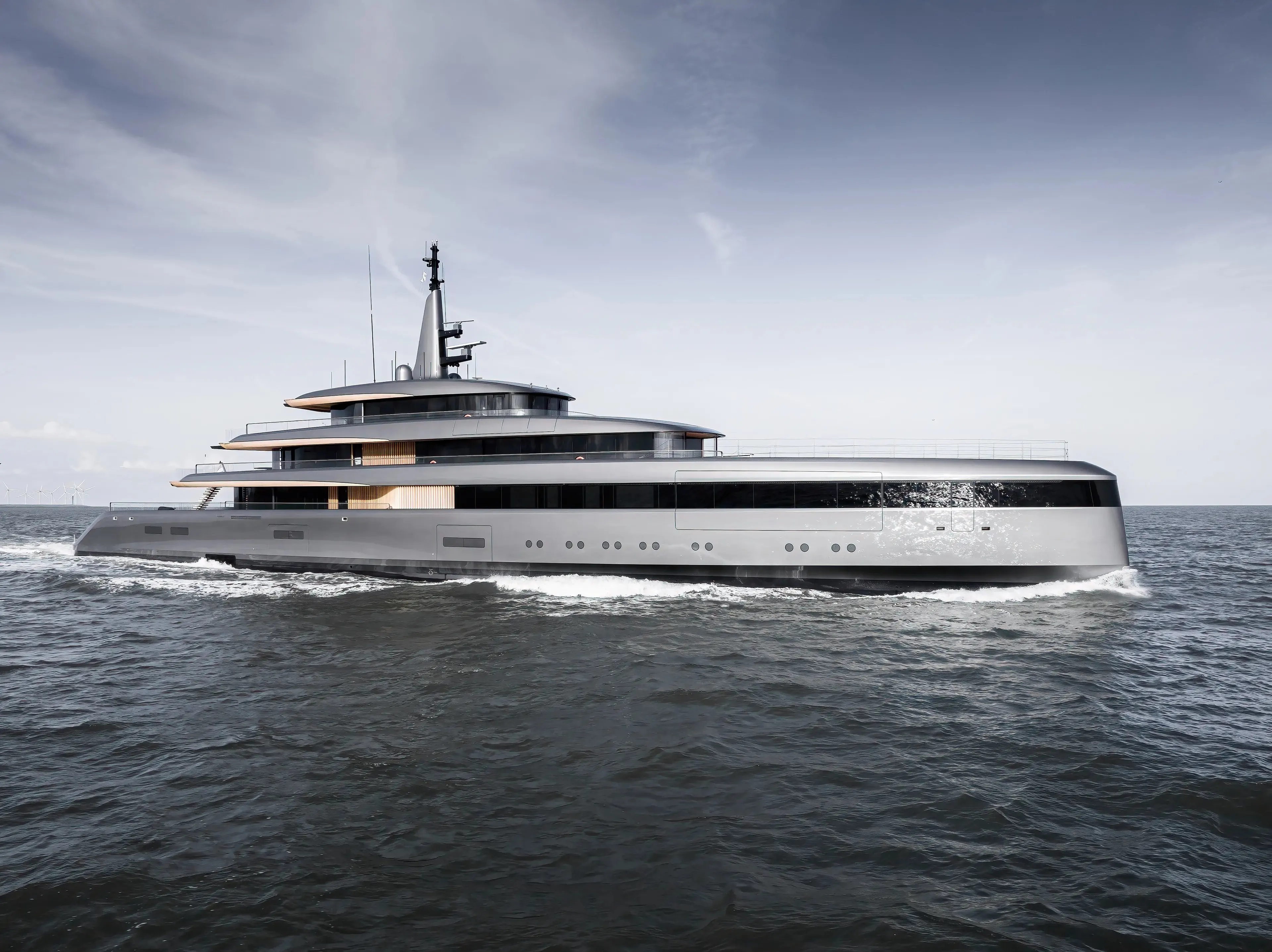
| LOA | 84,2 m |
|---|---|
| Consegna | 2023 |
| Cantiere | Feadship (De Voogt Naval Architects) |
| Design | RWD con MONK Design (esterni e interni) |
| Propulsione | ibrida diesel elettrica FAED, propulsori controrotanti Veth (senza assi né timoni) |
| Pacco batterie | circa 4,5 MWh (560 moduli) |
| Autonomia in sola elettrica | circa 35 nm a 10 nodi |
| Carburante | predisposta per biocarburante HVO, circa 90 per cento di riduzione di CO2 rispetto al fossile |
Un nuovo riferimento per navigare più puliti
Obsidian è stata la prima consegna Feadship del 2023 ed è arrivata con una missione chiara, alzare lo standard della riduzione di carbonio su un grande yacht custom. Con 84,2 metri è stata costruita su una direttiva esplicita dell'armatore di tagliare le emissioni lungo tutta la vita operativa. Il cantiere l'ha posizionata come dichiarazione d'apertura di una nuova generazione, parte del suo obiettivo dichiarato di costruire superyacht a impatto zero di carbonio entro il 2030. Dimostra che un brief ambientale serio e il lusso Feadship pieno possono convivere.
I numeri dietro quell'affermazione sono sostanziosi. Analizzata con lo strumento di settore YETI, Obsidian è stimata operare con circa il 27 per cento in meno di impatto ambientale totale rispetto a uno yacht simile varato cinque anni prima a combustibile fossile, e circa il 60 per cento in meno quando naviga a biocarburante. Feadship le attribuisce inoltre oltre il 30 per cento di impatto in meno rispetto al proprio primo ibrido, Savannah. Quelle cifre danno una spina dorsale misurabile alla narrazione sulla sostenibilità. Obsidian è stata progettata per essere giudicata sulle prove più che sulle intenzioni.
Stile RWD con la coscienza pulita
Gli esterni sono opera dello studio britannico RWD, sviluppati in collaborazione con MONK Design, e portano la loro efficienza con discrezione. Il profilo è liscio e moderno, conformato per ridurre la resistenza e per accompagnare gli impianti a basse emissioni sottostanti. Eliminare linee d'asse e timoni ha dato agli architetti navali una mano più libera sulla forma di carena, perché le appendici che di solito aggiungono resistenza non ci sono. Quella forma più pulita sott'acqua contribuisce direttamente all'efficienza dello yacht.
Sopra la linea d'acqua il progetto libera spazio insolito per gli ospiti. Senza la disposizione macchine di uno yacht convenzionale, il layout ha potuto essere riorganizzato per dare più superficie alle zone di vita. Ponti ampi e vetrate generose tengono gli interni collegati al mare e all'ambiente. Gli spazi esterni sono impostati per un uso rilassato in climi diversi. L'insieme mostra come un brief ambientale possa dare forma all'aspetto e al carattere di uno yacht in modi positivi.
Un Feadship di nuova generazione costruito attorno alla riduzione del carbonio, senza assi e senza timoni.
Spazio liberato da un'ingegneria intelligente
All'interno RWD ha portato il progetto fin dentro gli spazi ospiti, che beneficiano direttamente dell'ingegneria insolita dello yacht. L'assenza di assi e timoni e la trasmissione elettrica compatta hanno permesso di disporre gli alloggi con più libertà del solito. Obsidian offre sette cabine, con volumi che risultano generosi per uno yacht di 84 metri. Il tono degli interni è contemporaneo e caldo, in sintonia con lo stile esterno. Materiali pregiati e falegnameria Feadship danno agli ambienti la profondità attesa a questo livello.
La marcia silenziosa dello yacht plasma l'esperienza interna quanto qualsiasi finitura. Poiché il pacco batterie può reggere il carico alberghiero alla fonda per molte ore, gli ospiti possono godersi notti immobili e silenziose senza un generatore che ronza sullo sfondo. Quella calma è un lusso a sé stante e un prodotto diretto del progetto di propulsione. Gli spazi di vita sono organizzati per il comfort su soggiorni lunghi a bordo. Il risultato è un interno moderno che risulta leggero, aperto e insolitamente tranquillo.
Il Feadship Advanced Electrical Drive
Obsidian è costruita attorno al programma Advanced Electrical Drive di Feadship, un ibrido diesel elettrico con un grande pacco batterie al litio di circa 4,5 megawattora su 560 moduli. È circa quattro volte e mezzo l'accumulo elettrico di Savannah, il primo ibrido del cantiere, e lavora a 1.000 volt contro i 560 dello yacht precedente. Quattro generatori a giri variabili basati su motori Caterpillar C32 modificati alimentano il sistema. Propulsione e governo vengono da una coppia di propulsori controrotanti Veth, che eliminano sia le linee d'asse sia i timoni.
In pratica il sistema dà a Obsidian una capacità elettrica reale. Può coprire circa 35 miglia nautiche a 10 nodi con la sola potenza delle batterie, e reggere i carichi alberghieri alla fonda per 10 o 15 ore in silenzio. I suoi generatori possono funzionare a biocarburante HVO di seconda generazione, che secondo il cantiere taglia le emissioni di carbonio di circa il 90 per cento rispetto al carburante fossile. Insieme queste soluzioni attaccano le emissioni da più fronti contemporaneamente. L'ingegneria è la ragione per cui Obsidian può sostenere le proprie dichiarazioni ambientali.
Un brief armatoriale che ha mosso il mercato
Obsidian esiste perché il suo armatore l'ha chiesta, fissando una direttiva di riduzione delle emissioni di carbonio che ha dato forma all'intero progetto. Feadship non ha reso noto l'armatore, in linea con la sua consueta discrezione. Ciò che lo yacht dimostra è che la domanda di superyacht più puliti viene dai clienti stessi, non solo dai regolatori. Quel cambiamento conta per tutto il settore, perché è l'appetito degli armatori a guidare ciò che i cantieri sviluppano. Obsidian ha trasformato un valore personale in un'unità funzionante.
Come segnale di mercato, Obsidian pesa ben oltre i propri ponti. Mostra che un'ammiraglia full custom può inseguire guadagni di efficienza seri senza rinunciare a comfort o stile, il che ridisegna ciò che gli acquirenti possono ragionevolmente chiedere. Feadship ha usato le lezioni della sua costruzione per orientare i progetti successivi sulla strada verso l'obiettivo 2030. Per gli armatori che valutano una nuova commessa, è la prova che sostenibilità e desiderabilità si possono specificare insieme. La sua influenza durerà probabilmente più della novità della sua tecnologia.
Motori e impianti
| Propulsion and hybrid-electric plant | Diesel-electric hybrid, Feadship's FAED system. Four custom variable-speed generators, two larger and two smaller, based on modified Caterpillar C32 diesel engines with permanent-magnet alternators feed a 1,000-volt DC system and a 4.5 MWh battery bank of 560 modules, housed in a chilled room amidships on the tank deck, up from 560 volts and roughly a quarter the storage on Feadship's previous hybrid, Savannah. Actual thrust and steering come from twin Veth CRP contra-rotating propeller electric azimuth thrusters rated a combined 4,000 kW, with no conventional shafts or rudders at all, a genuinely unusual configuration for a yacht this size. |
|---|---|
| Top speed | 17 knots. Consistent across Boat International, YachtCharterFleet, YachtBuyer and Y.CO. |
| Cruising speed | 12 knots. The hull was specifically tank-tested and optimized around this cruise speed rather than top speed, per Feadship's own CEO. |
| Range | Sources disagree: YachtCharterFleet and YachtBuyer both state 5,500 nautical miles at 12 knots; CharterWorld states more than 8,000 nautical miles at 12 knots. Both figures are reported here as a stated conflict rather than resolved, since neither source cites underlying fuel-consumption data. |
| Battery-only endurance | Approximately 35 nautical miles at 10 knots on battery power alone and 10 to 15 hours of fully silent hotel and house-load operation at anchor with generators off. |
| Fuel tankage | 255,000 litres. |
| Fresh water | 52,400 litres. |
| Stabilisers | Described only generically as capable underway and at anchor; no brand or model is published in any source found. |
| Hull, naval architecture and construction | Feadship De Voogt Naval Architects; steel hull, aluminium superstructure, teak decks. Carbon fibre is used for the aft deck overhangs specifically so they need no support pillars, offsetting some of the added weight of the battery bank and electrical system. The engine room is built on a single level, an unconventional layout for a project this size, requiring the thrusters, generators and batteries to be distributed rather than grouped in one central machinery space. |
| Tenders | Twin custom electric-powered tenders built by Tenderworks, served by four fast-charging stations built into the yacht's profile, among the first primary tenders on a yacht this size to be fully electric rather than diesel. |
| Guest amenities: beach club, pool, wellness | Beach club and pool area on the sun deck, a gym and a jacuzzi. An Aqua Lounge with large underwater-level windows doubles as a cinema or classroom space. A bow observation lounge has floor-to-ceiling double-curved glass. These amenity details are drawn from brokerage and trade-press coverage rather than a single authoritative deck plan, so treat specific room functions as broadly but not precisely sourced. |
| Classification | Lloyd's Register 100A1 SSC Yacht Mono, G6, LMC UMS, Hybrid Power notation. |
Cosa riferiscono armatori ed equipaggi
Feadship's CEO frames Obsidian as a deliberate break from top-speed thinking toward efficiency-first design
"We'd better start building something that has no impact!" "This is the first boat that I have sold that has been tied to cruising speed." "Being on board is like nothing you have experienced. It is almost completely flat." These are first-hand yard statements from the builder's own CEO, promotional in nature but genuine and specific about the design philosophy.
Henk de Vries, CEO, Feadship, quoted in SuperyachtNews.comThe build team says the energy-saving measures are too numerous to easily list, a first-hand but promotional statement from the project's own manager
"There are so many points of energy savings integrated on this yacht that it is hard to count." Jansen led the build project and is describing peak-load shaving, waste heat recovery and HVAC redesign carried out after trials showed 60 percent of onboard energy going to hotel load.
Mark Jansen, Project Manager, Feadship, quoted in Feadship's own press release and reproduced by YachtWorld and Marine Industry NewsFeadship's own CEO acknowledges the carbon-reduction ambition has a real fuel-flexibility cost
De Vries states that running on methanol instead of diesel or HVO requires double-walled tanks and piping that eat into usable tank volume and estimates roughly a 50 percent range reduction versus diesel or HVO operation if methanol were used. This is a rare instance of the yard itself naming a hard tradeoff rather than only listing benefits.
Henk de Vries, CEO, Feadship, quoted in SuperyachtNews.com
Cosa convince e cosa va valutato
Punti di forza
- A genuine step-change in yacht hybrid-electric architecture, not an incremental updateA 4.5 MWh battery bank of 560 modules running at 1,000 volts DC, versus the 560-volt system on Feadship's previous hybrid Savannah, roughly 4.5 times the electrical storage of its own prior flagship hybrid, giving 35nm of pure-battery cruising at 10 knots and 10 to 15 hours of fully silent operation at anchor.
- Contra-rotating electric thrusters replace shafts and rudders entirely, a rare configuration at this sizeTwin Veth CRP electric azimuth thrusters, developed jointly with Feadship using CFD analysis of the drive legs and propellers to cut drag and vibration. Removing shafts and rudders is a structurally different propulsion layout from almost every other yacht in this size class.
- The carbon-reduction claims are backed by a documented, if modelled, methodology rather than marketing language aloneEnvironmental performance, 27 percent less impact than a comparable five-year-old fossil-fuel yacht and 60 percent less on HVO, is calculated using Feadship's own Yacht Environment Transparency Index, developed with the Water Revolution Foundation and since taken up industry-wide as a joint industry project.
- HVO biofuel compatibility is a working decarbonization path today, not a future promiseSea trials were run on hydrotreated vegetable oil, a drop-in renewable diesel substitute, giving a claimed 90 percent carbon emissions cut versus fossil diesel on the same generators, with no engine redesign required.
Da valutare
- The headline environmental figures are projections, not measured in-service resultsThe 27 percent and 60 percent environmental-impact reduction numbers come from the YETI model's operational-profile predictions, based on fleet AIS data, not from metered performance after two-plus years in service. A buyer should treat them as engineering estimates rather than audited outcomes.
- The efficiency-first hull is explicitly optimized for 12-knot cruising, not for speed or performance flexibilityFeadship's own CEO says this is the first yacht he has sold that was tied to cruising speed rather than top speed. Top speed of 17 knots is modest for an 84m yacht. The hull's efficiency gains come partly at the cost of high-speed performance headroom.
- Contra-rotating azimuth thrusters are a newer, more mechanically complex configuration with a thin service track record at this sizeCoaxial contra-rotating drive arrangements are inherently more complex and maintenance-intensive to install and service than a conventional single-propeller shaft line, a point acknowledged in general marine engineering literature, even though Veth markets the units as designed for easy field maintenance. As a first-generation application on a yacht this size, long-term serviceability and parts or support depth outside Veth's own network is unproven.
- Ownership, build price and running costs are not officially published and the figures circulating are thinly sourcedNo broker or the yard has published a sale price. A widely repeated $180 million figure and a roughly $20 million annual running-cost estimate trace back to aggregator sites, not to Feadship, Boat International or any brokerage listing, all of which explicitly list price as unavailable. The same class of source names Karel Komarek as owner; this is single-sourced speculation, not confirmed by the yard or by Boat International or SuperYacht Times. It is treated here as unverified.
Informazioni pratiche
| Asking/build price | Not officially published by Feadship or any brokerage. Boat International, YachtBuyer, Yacht Harbour and Y.CO all list price as unavailable or on request. A $180 million figure and an approximate $20 million annual running-cost estimate circulate on yacht-spotter aggregator sites but are not independently confirmed and should be treated as unverified estimates. |
|---|---|
| Ownership and sale history | Obsidian was delivered new to her first owner in 2023 and no resale has been recorded. A single aggregator source names Czech billionaire Karel Komarek as owner; this is not confirmed by Feadship, Boat International or SuperYacht Times. That same source also carried inconsistent specs elsewhere on the same listing, which weakens confidence in the claim. |
| Charter availability | Not available for charter. YachtCharterFleet's own listing states the yacht is not for charter and confirms she is privately owned and operated. |
| Delivery date | Launched April 2023, delivered 31 July 2023. Some trade outlets date the delivery news to August 2023, likely reflecting when the story broke rather than the handover date itself, a minor discrepancy worth noting rather than resolving. |
| What is not published | No confirmed sale or build price, no confirmed owner identity, no audited real-world fuel or emissions performance data beyond the YETI model projections, no disclosed annual running costs, no stabiliser brand or model and no guest or owner testimonials about time actually spent aboard. |
Design
| Esterni | RWD (Redman Whiteley Dixon), in collaboration with MONK Design |
|---|---|
| Architettura navale | Feadship - De Voogt Naval Architects |
A chi si rivolge: Armatori che vogliono un grande yacht custom con un'impronta ambientale davvero più bassa, sostenuta da cifre misurabili e non da dichiarazioni.
Prezzo indicativo: Stima non ufficiale, nessun prezzo pubblicato dal costruttore.