Octopus
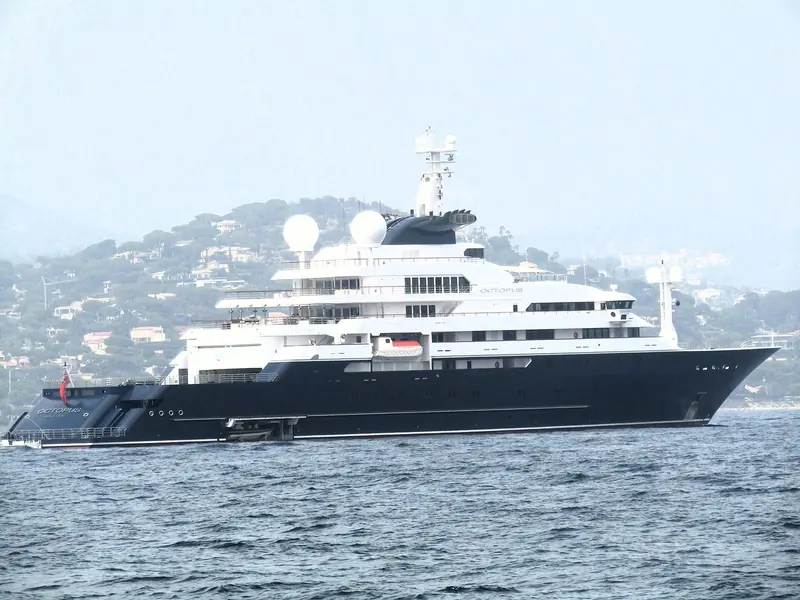
| LOA | 126,2 m |
|---|---|
| Cantiere | Lurssen |
| Consegna | 2003 |
| Stazza lorda | circa 9.932 GT |
| Design | Espen Oeino |
| Scafo | acciaio di classe ghiaccio |
| Autonomia | 12.500 nm |
| Firma | due sommergibili a bordo |
L'explorer che ha ridefinito il tipo
Quando Octopus fu consegnato nel 2003, creò di fatto l'idea moderna del grande yacht da spedizione. Con 126 metri e costruito in piena classe ghiaccio, univa capacità esplorativa vera al comfort di un grande yacht privato. Ha detenuto il titolo di più grande explorer del mondo per ben oltre un decennio intero. Lurssen ha costruito un'unità che ha davvero cambiato il modo in cui gli armatori pensano di andare per mare. Ha trasformato l'idea stessa dello yacht da spedizione in una ricerca seria e duratura.
Il brief esigente chiedeva capacità scientifica ed esplorativa vera accanto al lusso reale, e il cantiere ha consegnato entrambe in pieno. Pochissimi yacht prima o dopo hanno mai portato la sua gamma di capacità. Octopus ha dimostrato in modo conclusivo che uno yacht privato poteva raggiungere i confini della terra con stile. Resta il riferimento fisso per l'intera categoria explorer che ha contribuito a creare. La sua lunga eredità ha poi plasmato un'intera generazione di yacht explorer.
Il profilo determinato di Espen Oeino
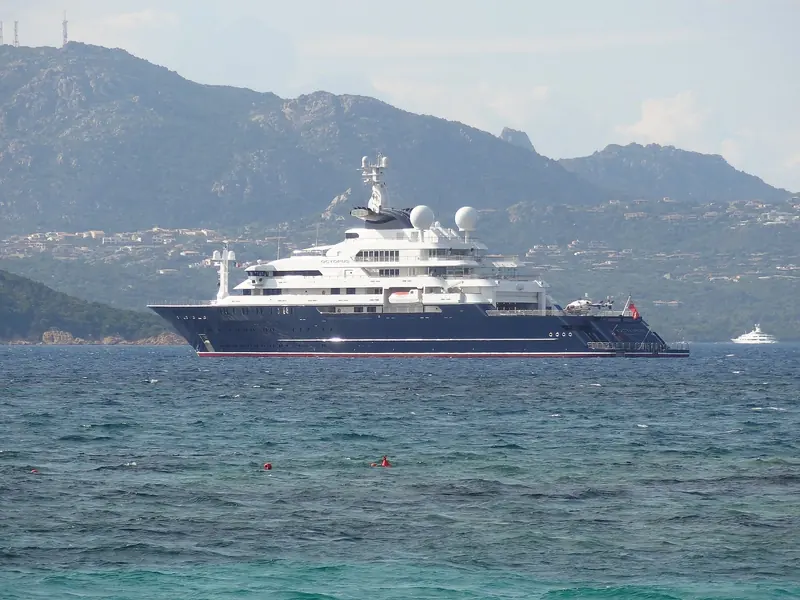
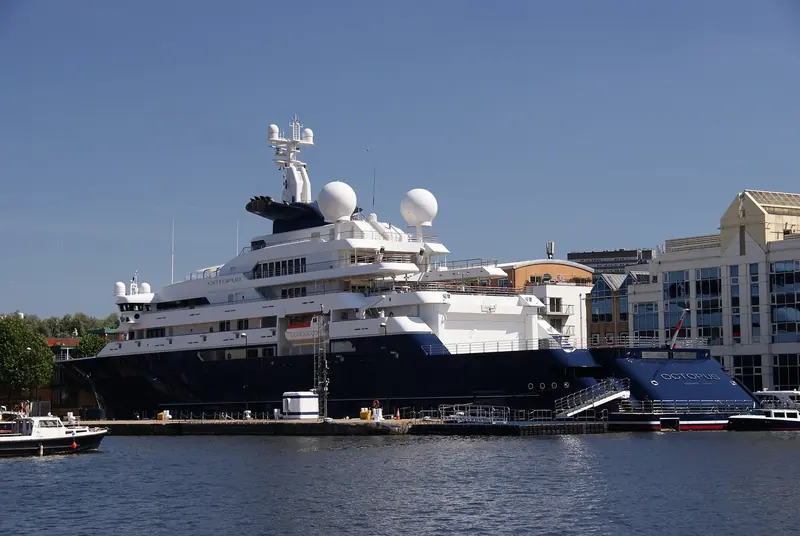
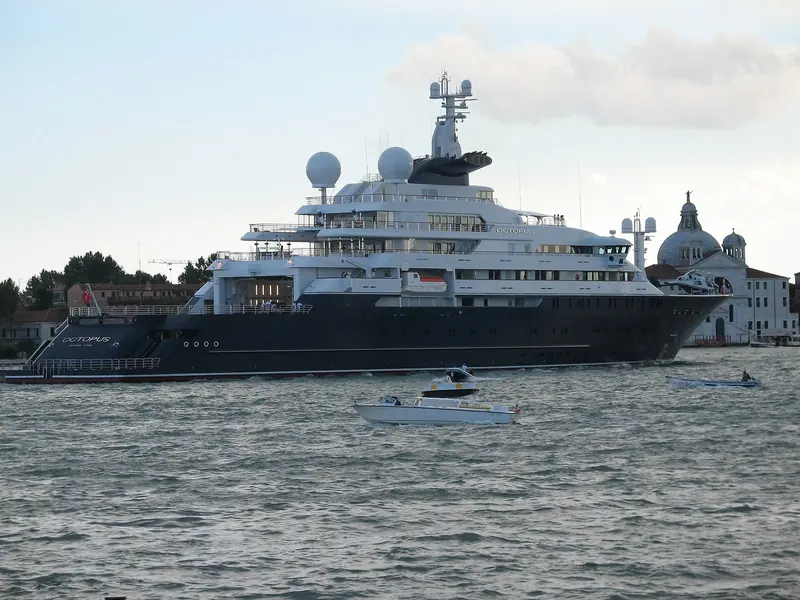
Espen Oeino ha dato a Octopus esterni robusti e profondamente determinati, costruiti nettamente per le acque più selvagge. Lo scafo in acciaio di classe ghiaccio e gli otto ponti pieni gli danno la sostanza per operare in sicurezza nelle regioni polari. Il profilo è operativo e sicuro con discrezione, modellato da vicino attorno alle sue attrezzature esplorative. Ha esattamente l'aspetto della nave da spedizione davvero capace che è. La sua forma segue chiaramente il suo scopo in ogni singola linea.
Il progetto integra con cura un'elisuperficie a prua e un ponte di atterraggio più grande a poppa con un hangar per due elicotteri. Un bacino interno ospita un tender ospiti di 20 metri accanto ai due sommergibili dello yacht. Oeino ha bilanciato tutta quella capacità seria con la presenza reale di un grande yacht privato. Gli esterni portano apertamente e con evidente orgoglio la sua missione esplorativa. Il bacino interno è tra gli impianti più capaci mai costruiti dentro uno yacht.
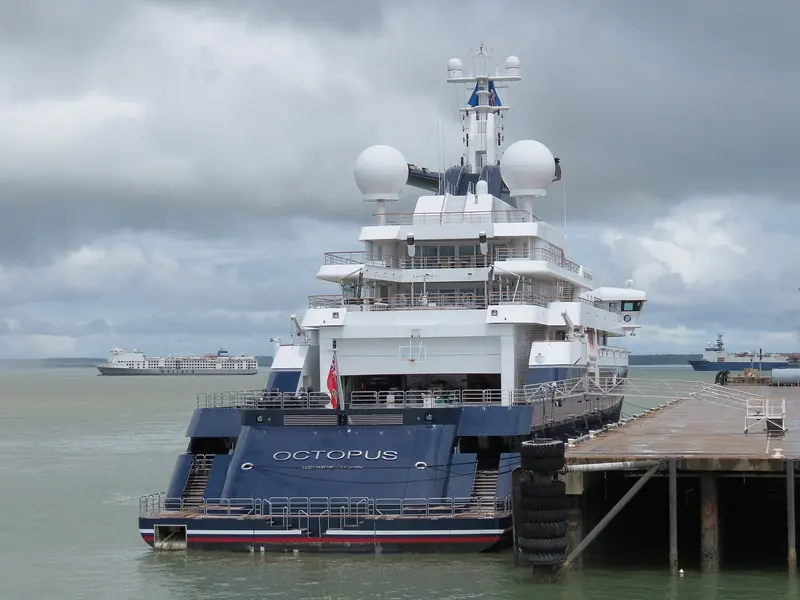
L'explorer che ha localizzato la Musashi, con due sommergibili e uno studio a bordo.
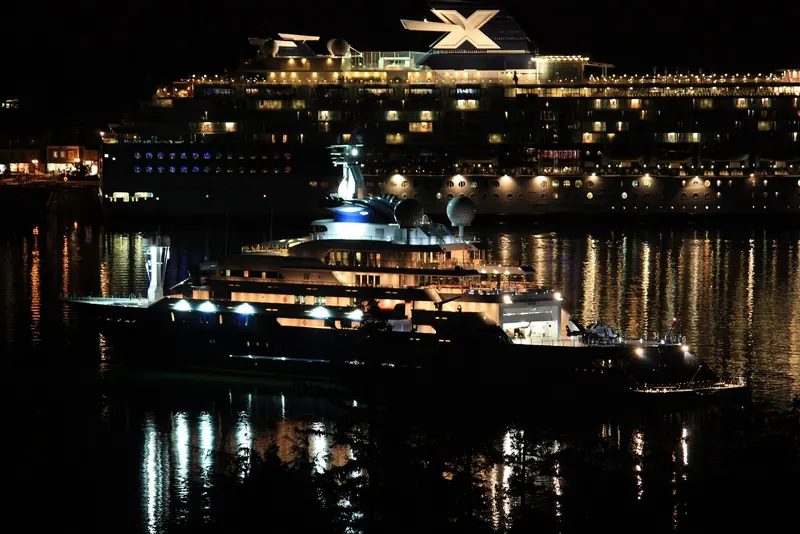
Due sommergibili e uno studio di registrazione
Octopus è altrettanto notevole all'interno e sottocoperta quanto lo è in acqua. Porta due sommergibili, uno dei quali comandato a distanza per raggiungere profondità maggiori, insieme a uno studio di registrazione professionale. Un centro immersioni, un beach club e ampi spazi ospiti completano il quadro sottocoperta. L'unità è stata attrezzata fin dall'inizio tanto per l'esplorazione seria quanto per il piacere autentico. Pochissime unità private al mondo hanno mai portato attrezzature operative così serie.
Ospita 26 ospiti in tredici cabine con un equipaggio numeroso ed esperto a supporto. Gli interni comprendono un cinema, una spa e ampie aree di socialità distribuite su tutti i ponti. Tutto a bordo è stato costruito per lunghi viaggi lontano dal porto più vicino. Octopus è stato fatto per essere vissuto per settimane intere in acque davvero remote. Gli spazi di vita rendono davvero confortevoli persino mesi in mare.
Classe ghiaccio e 12.500 miglia di autonomia
Octopus è stato progettato per un'autosufficienza vera anche nelle condizioni più dure. Lo scafo di classe ghiaccio e l'autonomia di 12.500 miglia nautiche gli permettono di raggiungere le regioni polari e attraversare interi oceani senza supporto. È stato costruito per operare ben oltre la portata ordinaria degli altri yacht. La pura resistenza è stata il principio guida dietro ogni parte del suo progetto. Autonomia e resistenza lo separano nettamente da quasi ogni yacht in acqua.
Propulsione e impianti sono stati scelti per un'affidabilità profonda in acque remote dove ogni aiuto è lontano. La ridondanza piena corre per tutta la lunghezza dell'unità. Le sue attrezzature di bordo consentono lavoro scientifico vero accanto alla crociera privata. Octopus può andare quasi ovunque sul pianeta e restarci comodamente. È stato costruito soprattutto per badare a se stesso nei luoghi più remoti della terra.
Per l'armatore che vuole esplorare
Octopus si addice a un armatore la cui ambizione più profonda è la scoperta vera. Ha navigato le regioni polari e sostenuto spedizioni che hanno localizzato relitti storici, tra cui una celebre corazzata ritrovata nel 2015. È ideale per chi vuole unire l'avventura vera al comfort di un grande yacht. La sua pura capacità apre in silenzio il mondo intero al suo armatore. Ripaga riccamente un armatore con un appetito autentico e duraturo per l'avventura.
Per un armatore attratto dal remoto e dal davvero straordinario, pochissime unità sanno eguagliarne il raggio. Ripaga la curiosità profonda e un vero spirito di esplorazione più di ogni altra cosa. Octopus resta uno degli yacht più capaci e più raccontati mai costruiti. La sua leggenda continua a crescere costantemente a ogni singolo viaggio. I suoi molti viaggi gli hanno già guadagnato un posto permanente nella storia marittima.
Built to Disappear, Not to Impress
None of it is visible at anchor. A 36-metre internal wet dock opens through a transom door onto gantry cranes that launch and recover Octopus's tenders and the ten-person submarine Pagoo, built specifically for her because no commercial submersible existed that could do the job. Two helicopters fold away into hangars fed by a dual pad aft and a second pad forward, and a hyperbaric chamber and dedicated dive centre sit below decks alongside roughly 54 tonnes of AV and IT equipment. Espen Oeino's brief was to make all of it vanish, and it does: from the water she reads as a long, low motor yacht, not the floating expedition base she has always been.
Paul Allen died in 2018 and Octopus stayed on the market for the better part of two years before Swedish businessman Roger Samuelsson bought her in 2021. She then went through two refits in quick succession, the second a nine-month rebuild at Lloyd Werft in Bremerhaven finishing in 2024 that covered her 20-year survey, a full repaint and an AV and IT overhaul. Rather than retire her, Samuelsson put Octopus back to work: she now charters through Big Blue Expeditions, running seasons in Antarctica and the Pacific for guests willing to pay roughly $2.2 million a week plus expenses for the yacht that found the Musashi.
Motori e impianti
| Main engines | Eight MTU 16V 4000 M70 diesels, 19,200 hp (14,300 kW) combined, driving two ABB electric propulsion motors in a diesel-electric arrangement |
|---|---|
| Speed | 19 knots top speed, 12.5 knots economical cruise |
| Range | 12,500 nautical miles at 12.5 knots |
| Hull | Ice-classed 1A steel hull with an aluminium superstructure |
| Tenders and toys | Seven tenders including a landing craft, two helicopters with an aft dual pad and hangars plus a separate bow pad, the ten-person submarine Pagoo, an ROV, and a 36-metre internal wet dock reached through a transom door and gantry cranes |
| Dive and research gear | A hyperbaric chamber and dedicated dive centre, plus roughly 54 tonnes of AV, IT and expedition equipment carried aboard |
Cosa riferiscono armatori ed equipaggi
The whole brief was to hide the equipment, not show it off
Exterior designer Espen Oeino called the brief very ambitious, because none of the tenders, tools, ROVs, subs or helicopters could be left outside; all of it had to be concealed, which is why Octopus reads as a clean-lined motor yacht rather than the support ship she actually is.
Espen OeinoAllen thought of her as a working tool, not a trophy
He described Octopus as more of a Land Rover than a Bentley, built to be used hard on expeditions rather than admired at anchor.
Paul AllenThe submarine did real deep-ocean work, not joyrides
Robert Kraft, director of subsea operations at Allen's company Vulcan Inc, oversaw dives that recovered HMS Hood's bell from around 2,700 metres and located the wreck of the Japanese battleship Musashi at about 1,000 metres, genuine historical finds rather than publicity stunts.
Robert Kraft, Vulcan Inc
Cosa convince e cosa va valutato
Punti di forza
- Everything stays hiddenTwo helicopters, seven tenders, a landing craft, a ten-person submarine and an ROV all stow inside the hull or under deck hatches, so she never looks like the support ship she actually is.
- A genuine expedition recordRecovering HMS Hood's bell and finding the wreck of the Musashi is real historical work, not the marketing many self-styled explorer yachts settle for.
- Still earning her keep two decades onShe now charters through Big Blue Expeditions in Antarctica and the Pacific rather than sitting idle, unusual for a yacht this old.
Da valutare
- Not actually fastA 19-knot top speed and a 12.5-knot cruise is modest for 14,300 kW of installed power; the hull is built for range and displacement, not speed.
- A slow, discounted saleListed at $325 million in 2019, she took roughly two years to sell and finally went for 235 million euros in 2021, a reminder that even a famous explorer yacht is a thin, patient market.
- Even her own builder's owner thought the category had gone too farPaul Allen said of his own yacht fleet that they're too big, and there are too many of them.
Informazioni pratiche
| Build cost (2003) | about $200 million |
|---|---|
| 2021 sale price | 235 million euros, to Swedish businessman Roger Samuelsson, after roughly two years on the market |
| Charter rate | from about $2.2 to 2.3 million a week plus expenses, through Big Blue Expeditions |
| Guests and crew, owner configuration | 26 guests in 13 staterooms, with 63 crew in 30 cabins |
| Guests and crew, charter configuration | 12 guests with a crew of 45, per the current charter listing |
| Range | 12,500 nautical miles at 12.5 knots, enough for an ocean crossing without refuelling |
| Latest refit | nine months at Lloyd Werft in Bremerhaven, finishing in 2024: 20-year survey, full repaint, AV and IT overhaul |
| What is not published | Samuelsson has never confirmed a running-cost figure; the industry rule of thumb of roughly 10 percent of build value a year would put it near $20 million, but that is an estimate, not a disclosed number |
A chi si rivolge: Per l'armatore che vuole un vero yacht da spedizione capace di raggiungere i poli portando sommergibili e uno studio di registrazione.