Aquijo
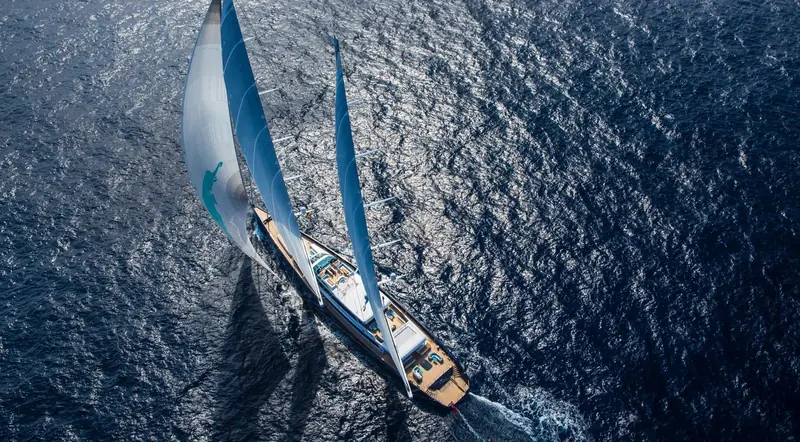
| Cantieri | Oceanco e Vitters (Paesi Bassi) |
|---|---|
| LOA | 85,9 metri |
| Consegna | 2016 |
| Architettura navale e armo | Bill Tripp Design |
| Design interni | Dolker and Voges |
| Armo | ketch, 3.821 mq di bolina (5.051 mq con il Code 1) |
| Baglio e pescaggio | baglio 14,48 metri, pescaggio 5,23 metri |
| Ospiti ed equipaggio | fino a 14 ospiti, 16 di equipaggio |
Una collaborazione velica che fa epoca
Aquijo ha messo insieme due cantieri olandesi, Oceanco e Vitters, per costruire il più grande ketch ad alte prestazioni in acqua. Consegnato nel 2016, ha rappresentato un raro progetto velico per Oceanco, la cui reputazione poggia in larga parte su motoryacht molto grandi. La collaborazione ha abbinato il considerevole muscolo ingegneristico di Oceanco alla profonda competenza sugli yacht a vela custodita in Vitters. Il risultato è un riferimento che sta davvero da solo nella sua classe. Nessun altro yacht occupa esattamente lo stesso territorio.
Una costruzione di questa ambizione ha richiesto che entrambi i cantieri lavorassero in stretto concerto, e l'esito ha pienamente giustificato lo sforzo. Aquijo ha dimostrato che un gigantesco yacht a vela poteva offrire il volume che gli armatori si aspettano da un motoryacht senza rinunciare alla velocità vera. È entrato nella flotta come pezzo unico autentico, senza una vera gemella da nessuna parte. Per gli armatori attratti dalla vela alla scala più grande in assoluto, resta un riferimento singolare. La sua rarità è una parte ampia e duratura del suo fascino.
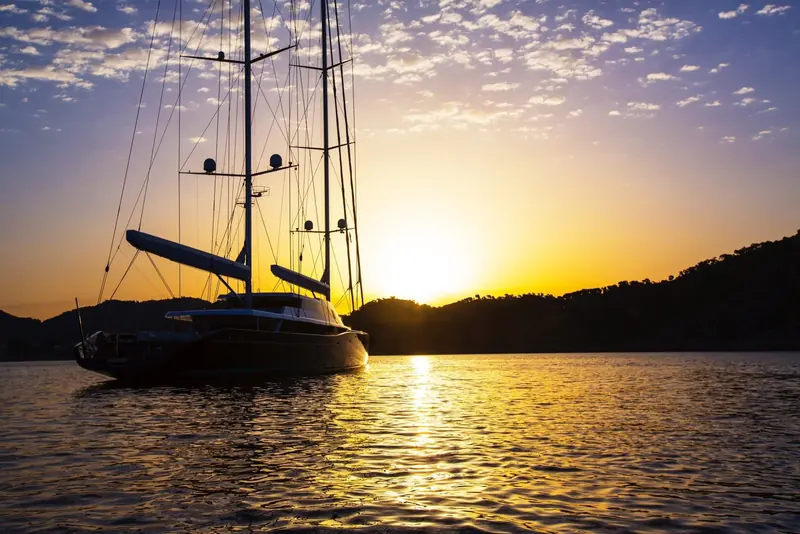
Un ketch da prestazioni firmato Bill Tripp
L'architettura navale e l'armo sono di Bill Tripp, uno dei nomi di punta negli yacht a vela da prestazione. Il brief di progetto chiedeva una crociera mondiale confortevole unita a velocità vera, e Tripp ha consegnato un ketch che porta 3.821 metri quadrati di vela di bolina. Con il Code 1 issato quella superficie complessiva sale a ben 5.051 metri quadrati. Due armi svettanti gli danno la potenza bruta per stare all'altezza della sua scala considerevole. È stato costruito con tutta evidenza per navigare forte quando il vento entra.
Lo scafo in acciaio e la sovrastruttura in alluminio portano ponti in teak e un ampio baglio di 14,48 metri. Un pescaggio profondo di 5,23 metri lo aiuta a tenere la rotta e a reggere con fermezza quel piano velico immenso. Il profilo è determinato ed elegante, chiaramente opera di uno studio da prestazione serio. Nella sua stagione inaugurale ha registrato 20,4 nodi con brezza tesa. I numeri sul giornale di bordo confermano in pieno l'aspetto in acqua.
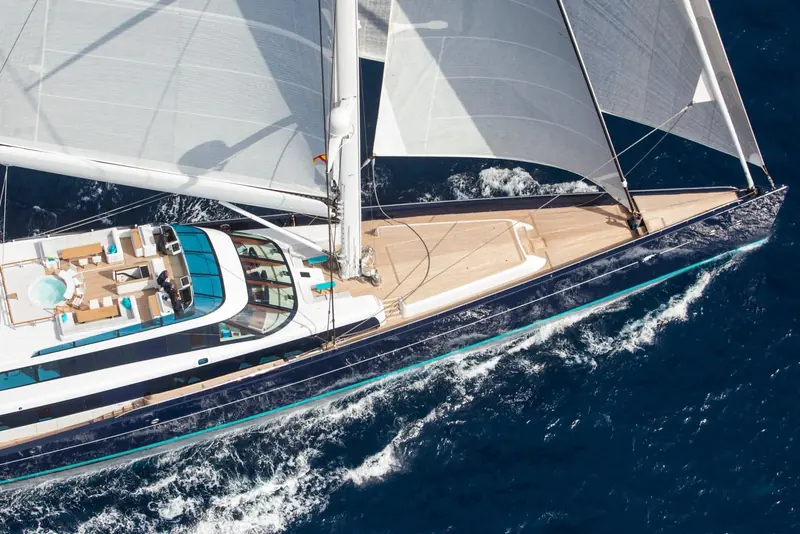
Il più grande ketch ad alte prestazioni del mondo, con volume da motoryacht e velocità vera.
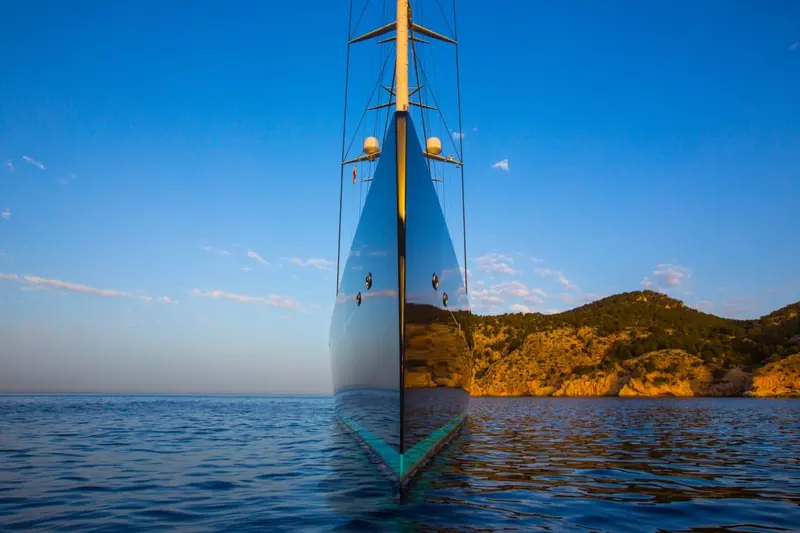
Volume sotto vela
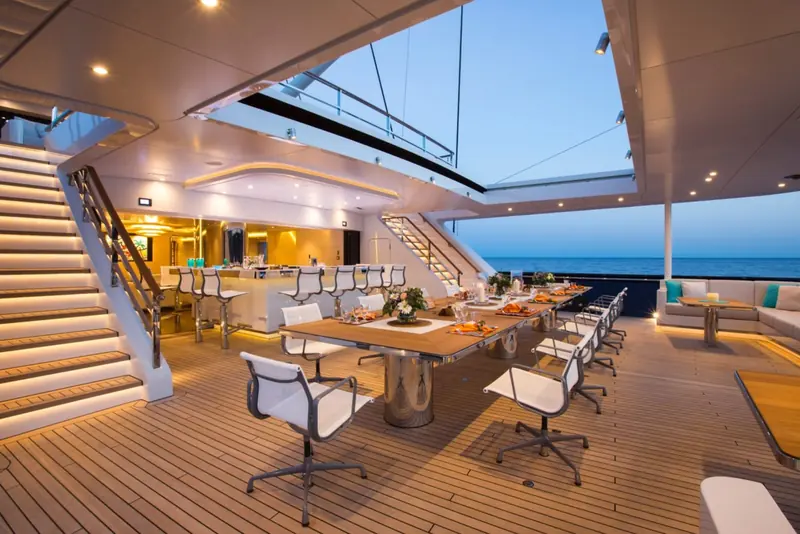
L'interno è dello studio tedesco Dolker and Voges, che ha lavorato a stretto contatto con la famiglia dell'armatore per dare forma a uno spazio caldo e vivibile. Nonostante il suo pedigree velico convinto, Aquijo offre sottocoperta il volume interno di un grande motoryacht. Un ponte armatoriale prevede una camera rivolta a poppa con viste dominanti dritte sulla scia. Il dettaglio bilancia il comfort con la praticità dura che uno yacht a vela serio richiede sempre. Non chiede mai ai suoi ospiti di adattarsi.
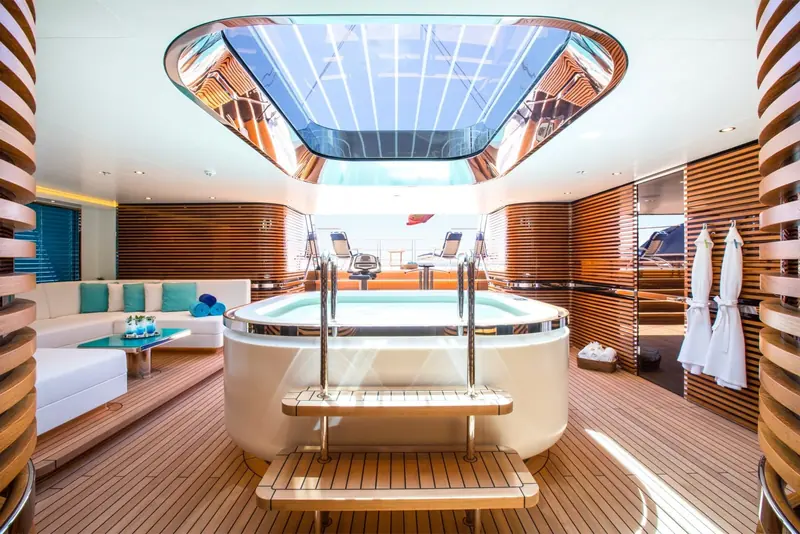
Ospita fino a quattordici persone, servite da un equipaggio dedicato di sedici. Gli spazi abitativi sono generosi e luminosi, una vera rarità su uno yacht costruito per rendere. Il layout sostiene lunghe navigazioni oceaniche in comfort autentico e prolungato. Gli armatori possono inseguire il vento con decisione e godersi comunque, ogni sera alla fonda, la comodità di un motoryacht. Quella combinazione è, alla fine, il suo colpo di scena distintivo.
Velocità e autonomia
Aquijo è stato progettato per attraversare gli oceani in fretta a vela, tenendo medie alte ogni volta che il vento lo consente. La sua stagione mediterranea inaugurale ha visto una media vicina ai 19 nodi in condizioni tese. Il guardaroba 3Di North Sails e il doppio armo gli danno una flessibilità vera su un'ampia gamma di venti. A motore porta gli impianti e i serbatoi per una crociera mondiale sicura e autosufficiente. È stato costruito per continuare a muoversi con quasi ogni tempo.
Gestire in sicurezza un armo e un piano velico di queste dimensioni ha richiesto un'ingegneria di coperta avanzata e winch e sistemi idraulici davvero potenti. Entrambi i cantieri si sono concentrati con decisione sul rendere gestibile per l'equipaggio un ketch molto grande. La chiglia profonda e il dislocamento sostanzioso lo tengono stabile e sicuro in velocità. Per un armatore, consegna prestazioni emozionanti insieme a una vera sicurezza in mare. È l'ingegneria a rendere l'emozione del tutto sicura.
A chi si addice
Aquijo si addice a un armatore velista convinto che vuole il brivido di un armo veloce senza sacrificare mai spazio e comfort. Ripaga le traversate oceaniche ambiziose e le lunghe stagioni di crociera in acque remote e ventose. Il suo carattere velico lo distingue nettamente dalla folla dei motoryacht. È uno yacht per chi vuole navigare a vela sul serio ai vertici assoluti della fascia dimensionale.
Come asset è davvero unico, il più grande ketch del suo tipo mai costruito. Quella rarità ne sostiene saldamente la posizione ogni volta che arriva sul mercato. Per chi ama la vela ma si aspetta comunque il volume di un grande yacht, non ha quasi rivali diretti. Pochi yacht al mondo sposano prestazioni e comfort a questa scala.
Why an owner chooses a sailing yacht this size
Grossmann, the German industrialist who commissioned Aquijo, has credited her sensitive steering directly: "she handles like a boat one quarter of her size". That is a claim about how she actually feels at the wheel, not a builder's marketing line, and it is echoed in her recorded sea-trial numbers: over 20 knots in 30 knots of breeze, and 10 knots close-hauled in just 8 knots of wind.
Bill Tripp, who drew both the naval architecture and the rig, has said owners who choose a yacht like this "are not looking for the sure thing, they're really looking for the unknown", pointing to sailing in South Georgia or diving with hammerhead sharks as the kind of experience that motivates the choice. He also designed the sail-handling specifically around control rather than raw speed, saying the rig was built "to keep [loads] in a range that was controlled" even though, in his words, Aquijo "is not shaped as a motoryacht, she is easily driven". That control extends to the keel: a retractable 220 tonne lead fin that lets her draught run from 5.2 metres raised to 11.6 metres fully down, so she can choose between a shallow anchorage and full sailing performance on the same afternoon.
Motori e impianti
| Rig | Twin 91 metre carbon fibre masts in a ketch configuration; 3,247 sq m of main and mizzen sail, up to 5,050 sq m with the code sail set |
|---|---|
| Keel | Retractable, 220 tonnes of lead, draught from 5.2 m to 11.6 m |
| Motoring range | 3,200 nautical miles at 13 knots |
| Sail handling | In-boom furling mainsail (about 4 seconds) and furling spinnaker (about 30 seconds); main and mizzen can be hoisted together in around six minutes |
Cosa riferiscono armatori ed equipaggi
The owner himself says she sails nothing like her size suggests
German industrialist Juergen Grossmann, who commissioned Aquijo, has said "she handles like a boat one quarter of her size", crediting the sensitivity of her steering. Naval architect Bill Tripp said owners of a yacht like this "are not looking for the sure thing, they're really looking for the unknown", citing sailing in South Georgia or diving with hammerhead sharks as the kind of thing that draws them.
Juergen Grossmann
Cosa convince e cosa va valutato
Punti di forza
- Sailed hard, and reported to perform like itOn sea trials Aquijo has been logged at over 20 knots in 30 knots of wind and sailing close-hauled at 10 knots in just an 8-knot breeze, figures that stand out even against dedicated racing yachts, let alone an 86 metre ketch.
- A retractable keel that trades 220 tonnes of lead for real flexibilityHer draught ranges from 5.2 metres with the keel raised to 11.6 metres fully down, letting her enter shallower anchorages that would be closed to her at full sailing draught.
- Sail handling built to move as fast as the boat doesIn-boom furling stows the mainsail in about 4 seconds and the spinnaker in roughly 30, and Tripp put the full process of hoisting main and mizzen together at around six minutes for a crew that knows the boat.
Da valutare
- She is not built for long stretches under engineAquijo's motoring range is 3,200 nautical miles at 13 knots, noticeably short next to comparably sized motor yachts, because the yacht's engineering priority throughout was sailing performance, not motoring endurance.
- Her 91 metre twin masts limit where she can go at allThe carbon fibre ketch rig rises 91 metres above the waterline, which rules out many bridges, overhead cables and covered berths that would pose no problem for a motor yacht of the same length.
- Sailing performance at this scale still runs on a professional crew of about thirtyBetween captain, officers and crew, roughly 30 people live aboard to support at most 12 to 14 guests - the sailing purity the owner describes is delivered by a small ship's company, not achieved single-handed.
Informazioni pratiche
| Motoring range | 3,200 nautical miles at 13 knots |
|---|---|
| Keel and draught | Retractable keel carrying 220 tonnes of lead; draught from 5.2 m raised to 11.6 m fully lowered |
| Sail handling | In-boom mainsail furling in about 4 seconds; spinnaker furls in about 30 seconds |
| What is not published | The running and rigging-maintenance cost of a carbon fibre rig this size is not public |
A chi si rivolge: Un armatore velista serio che vuole il più grande ketch da prestazione del mondo con il volume e il comfort di un grande motoryacht.