Koru (Y721)
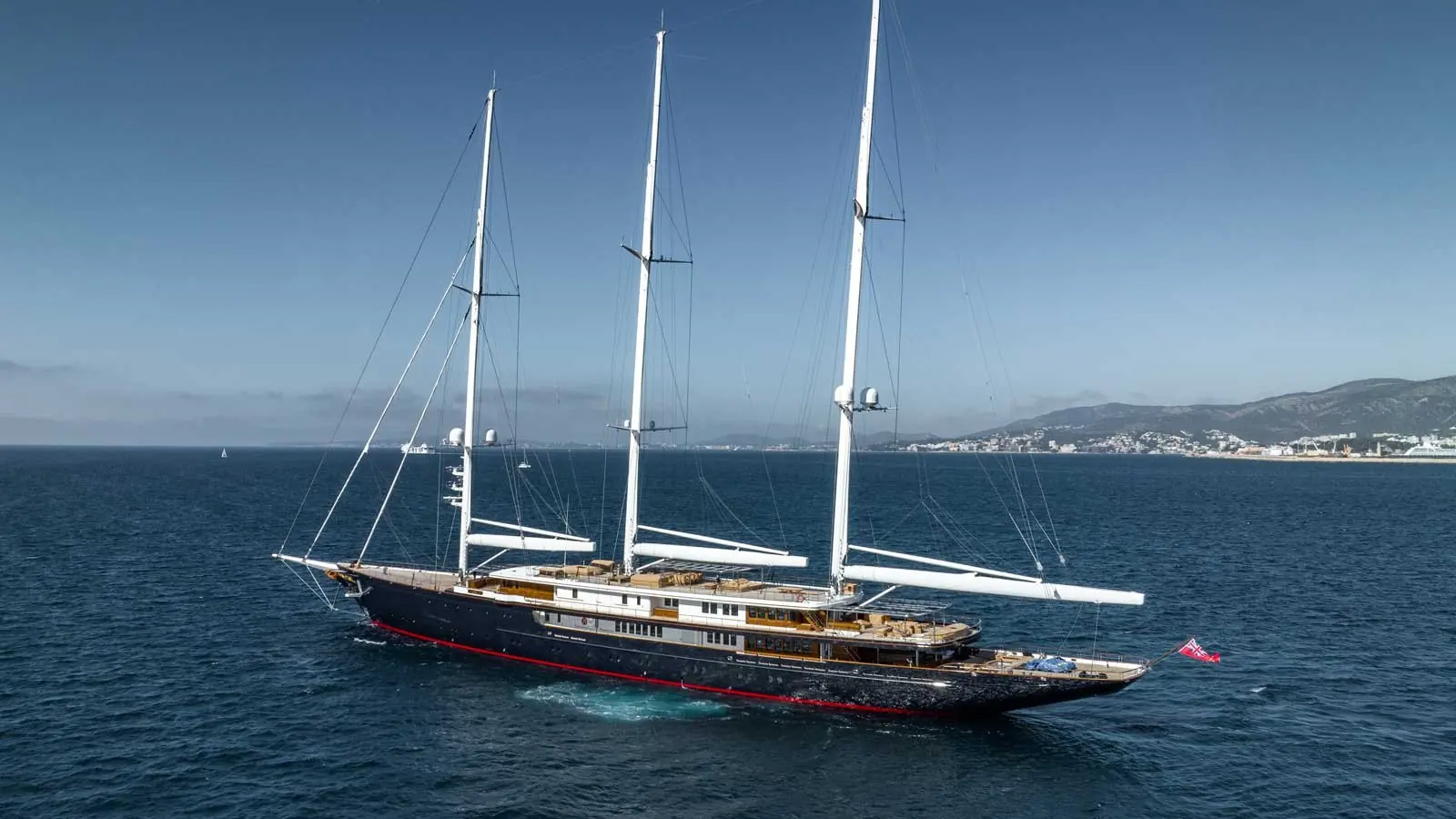
| Cantiere | Oceanco, Alblasserdam, Paesi Bassi |
|---|---|
| LOA | circa 127 metri (dato riportato) |
| Tipo | yacht a vela a tre alberi, armo a goletta |
| Consegna | 2023 |
| Stazza lorda | riportata tra circa 3.000 e 3.500 GT |
| Architettura navale e armo | Dykstra Naval Architects con Lateral Naval Architects |
| Design interni | Mlinaric, Henry and Zervudachi |
| Primato | il più grande yacht a vela del mondo e il più grande yacht costruito nei Paesi Bassi |
Il primato che ha ridefinito la classe a vela
Koru occupa una posizione che pochi yacht raggiungono, in cima assoluta alla flotta a vela per lunghezza. Con i 127 metri riportati ha superato ogni primato velico esistente ed è diventato il più grande yacht di qualsiasi tipo mai completato su suolo olandese. La scala conta perché la vela aggiunge problemi che i motoryacht evitano, dai carichi sull'armo all'altezza degli alberi rispetto a ogni ponte tra il capannone e il mare. Oceanco se ne è fatta carico anziché indirizzare il progetto verso un profilo a motore più semplice.
Il progetto è andato avanti per anni con la sigla di cantiere Y721 prima che comparisse il nome Koru, una parola maori per la fronda che si dispiega, associata ai nuovi inizi. Quella reticenza era voluta, dato che l'armatore non è mai stato reso pubblico dal costruttore. La cura intorno alla sua identità è diventata parte della storia.
Uno scafo disegnato per l'oceano aperto
L'esterno porta la mano di Dykstra Naval Architects, uno studio con una lunga esperienza sui grandi yacht a vela. Lo scafo blu notte corre lungo e basso, con tre alberi distanziati lungo una linea di sguscio pulita e pochissimo ingombro sopra coperta. Il volume ospiti sta dentro lo scafo anziché essere accatastato in una sovrastruttura alta, il che tiene la silhouette più vicina a una goletta classica che a un motoryacht moderno. È quella misura a permettere all'armo di dominare il profilo.
Il lavoro sugli interni è andato allo studio londinese Mlinaric, Henry and Zervudachi, una firma più nota per case e grandi saloni che per yacht. La scelta si adatta a un'imbarcazione che si legge come una residenza privata a vela e non come una piattaforma da charter. I dettagli attendibili sugli interni sono scarsi, in linea con la segretezza intorno a tutto il progetto. Ciò che è chiaro dall'esterno è una preferenza per la linea e la proporzione rispetto allo spettacolo.
Gli alberi che hanno quasi fatto smontare uno storico ponte di Rotterdam.
Alberi, ponti e i limiti della scala
Costruire uno yacht a vela di questa altezza ha creato un problema che nessun interno poteva risolvere. Gli alberi finiti erano troppo alti per passare sotto il ponte Koningshaven, conosciuto localmente come De Hef, sulla rotta di uscita da Alblasserdam verso il mare aperto. La proposta di smontare parzialmente lo storico ponte ha suscitato la rabbia dell'opinione pubblica a Rotterdam ed è diventata una notizia internazionale a sé stante. Alla fine il cantiere ha alberato lo yacht solo dopo aver spostato lo scafo a valle, e il ponte è rimasto intatto.
L'ingegneria sotto quell'episodio è sostanziosa. Un armo di queste dimensioni richiede percorsi di carico studiati con cura attraverso uno scafo in acciaio e una sovrastruttura in alluminio, insieme a un sistema di manovra delle vele che un equipaggio contenuto possa gestire in sicurezza. Oceanco ha lavorato con Lateral Naval Architects sul fronte navale accanto a Dykstra. Il risultato è uno yacht che si può davvero far navigare a vela e non solo esibire, cosa tutt'altro che scontata a queste dimensioni.
La vita a bordo di un primato privato
Koru è configurato per uso privato e non per il charter, e il cantiere ha diffuso poco sulle sue sistemazioni. La stampa indica spazio per una diciottina di ospiti e un ampio equipaggio professionale, con i numeri che un armo velico completo richiede. Lo scafo lungo offre lunghe corse di coperta e quel tipo di silenzio che la vela rende possibile a motori spenti. È uno yacht pensato per le navigazioni lunghe più che per la vetrina in porto.
Non viaggia da solo. Una nave appoggio separata di nome Abeona, costruita da Damen, porta un elicottero, i tender e i giochi d'acqua che lo yacht a vela tiene fuori dalle proprie coperte pulite. Quella divisione dei compiti permette al Koru di restare sgombro mentre l'armatore ha comunque l'attrezzatura di un grande motoryacht lì accanto. L'abbinamento è diventato uno schema comune nella fascia alta del mercato, e Koru ne è tra gli esempi più visibili.
Il prezzo di essere il più grande
Uno yacht di questa scala è una dichiarazione, che l'armatore ne voglia una oppure no. Le stime del suo costo hanno circolato ampiamente sulla stampa, spesso vicine al mezzo miliardo di dollari, anche se nessuna cifra è stata confermata e numeri simili vanno trattati con cautela. Ciò che è certo è che ha ridefinito il primato velico e ha attirato un'attenzione che un motoryacht di valore analogo avrebbe forse evitato. La disputa sul ponte ha garantito che anche chi sta fuori dal mondo dello yachting ne conoscesse il nome.
Per Oceanco il progetto è una dimostrazione di portata. Completare il più grande yacht a vela del mondo, e il più grande yacht mai costruito nel Paese, colloca il cantiere in una lista molto ristretta di costruttori in grado di tentare una cosa simile. Per l'armatore indicato dalla stampa è un'imbarcazione privata diventata insolitamente pubblica. Entrambi i fatti viaggiano ormai insieme al nome Koru.
A record with an asterisk, and a sale price nobody confirmed
Koru's own naval architects at Dykstra can point to real ocean-going pedigree behind her rig, and her kinetic energy recovery system is a genuine engineering first for a sailing yacht of any size, not a marketing claim. But even her headline record is contested: Sailing Yacht A is four metres longer overall, and Koru only leads the 'largest sailing yacht' table because trackers classify Sailing Yacht A as sail-assisted rather than a pure sailing yacht.
Her build cost is treated the same way across the industry - the widely repeated $500 million figure, plus a further $75 million said to have gone into the support vessel Abeona, has never been confirmed by Oceanco itself. That pattern, a specific number everyone repeats and nobody can source to the yard, runs through almost every large yacht built for a owner who values privacy over publicity, and Koru is one of the clearest examples of it afloat today. Abeona herself carries up to 45 people between crew, guests and specialist staff, which is more than double Koru's own guest capacity and underlines how much of the support operation for a yacht this size now happens on a second hull entirely.
Motori e impianti
| Rig and hull | Three-masted schooner rig on a steel hull with aluminium superstructure and teak decks; her masts are reported as the tallest fitted to any sailing yacht afloat |
|---|---|
| Auxiliary power | A prototype kinetic energy recovery system converts wave-induced motion - heave, pitch and roll - into electric power for onboard systems |
| Naval architecture | Dykstra Naval Architects drew the exterior and rig, with Lateral Naval Architects on structure; interiors by Mlinaric, Henry and Zervudachi |
| Support vessel | A dedicated 75-metre, 1,900 GT support ship, Abeona, built by Damen Yachting, carries tenders, water toys and a helicopter so Koru's own decks stay clear |
Cosa riferiscono armatori ed equipaggi
No account from the owner, his family or his crew has ever been published
Even at the height of the Rotterdam bridge controversy, when the story ran worldwide and a Facebook event calling for eggs to be thrown at the yacht drew over 5,000 members, neither Jeff Bezos nor anyone aboard Koru issued a public comment; Oceanco simply withdrew its bridge application and towed the bare hull through at night with her masts stepped downstream instead.
Heart research
Cosa convince e cosa va valutato
Punti di forza
- Genuinely novel auxiliary powerA kinetic energy recovery system turns the hull's own motion at sea into usable electricity, unusual engineering for a sailing yacht of any size
- A support vessel built to matchThe dedicated Abeona keeps Koru's own decks free of tenders and toys, a solution few sailing yachts her size can justify
- Real sailing pedigreeDykstra Naval Architects' rig and hull work makes her a genuine ocean-going sailing yacht, not a motor yacht with masts added for looks
Da valutare
- The 'largest' title is contestedBy raw length she is second to the 143-metre Sailing Yacht A; the 'largest sailing yacht' claim rests on how that vessel is classified
- No confirmed costsThe widely quoted $500 million figure, like the rest of her costs, has never been confirmed by the yard and should be treated as an estimate
- A reputational cost before she sailedThe Rotterdam bridge controversy became her most widely told story before delivery, an outcome the owner did not choose
Informazioni pratiche
| Guests / crew | 18 guests in 9 cabins, crew of 40 |
|---|---|
| Gross tonnage | 3,493 GT |
| Timeline | Launched August 2022, delivered April 2023 |
| Reported cost | Widely reported at around $500 million for Koru, plus a further $75 million reported for Abeona; neither figure has been confirmed by the yard |
| Running costs | Industry estimates put annual running costs at $30 million or more |
| The bridge episode | Rotterdam's historic De Hef bridge was not dismantled in the end - Koru's masts were stepped downstream of the bridge after the bare hull passed underneath, avoiding the demolition that had caused public outcry |
| The 'largest' claim | By length she is second among sailing yachts, after the 143m Sailing Yacht A - but Sailing Yacht A is classed as a sail-assisted motor yacht (sails supplement diesel propulsion), which is why several trackers still list Koru as the largest pure sailing yacht in the world |
Design
| Esterni | Dykstra Naval Architects (exterior styling / rig) |
|---|---|
| Interni | Mlinaric, Henry & Zervudachi |
| Architettura navale | Lateral Naval Architects (with Dykstra Naval Architects) |
A chi si rivolge: Un armatore che vuole il primato velico assoluto e la riservatezza di una residenza in mare, e che può assorbire il livello di attenzione che entrambi attirano.
Prezzo indicativo: Non ufficialmente in vendita; costo di costruzione ampiamente riportato a circa USD 500 milioni (stima, Bloomberg / BOAT International). Nessun prezzo richiesto pubblico verificato.